




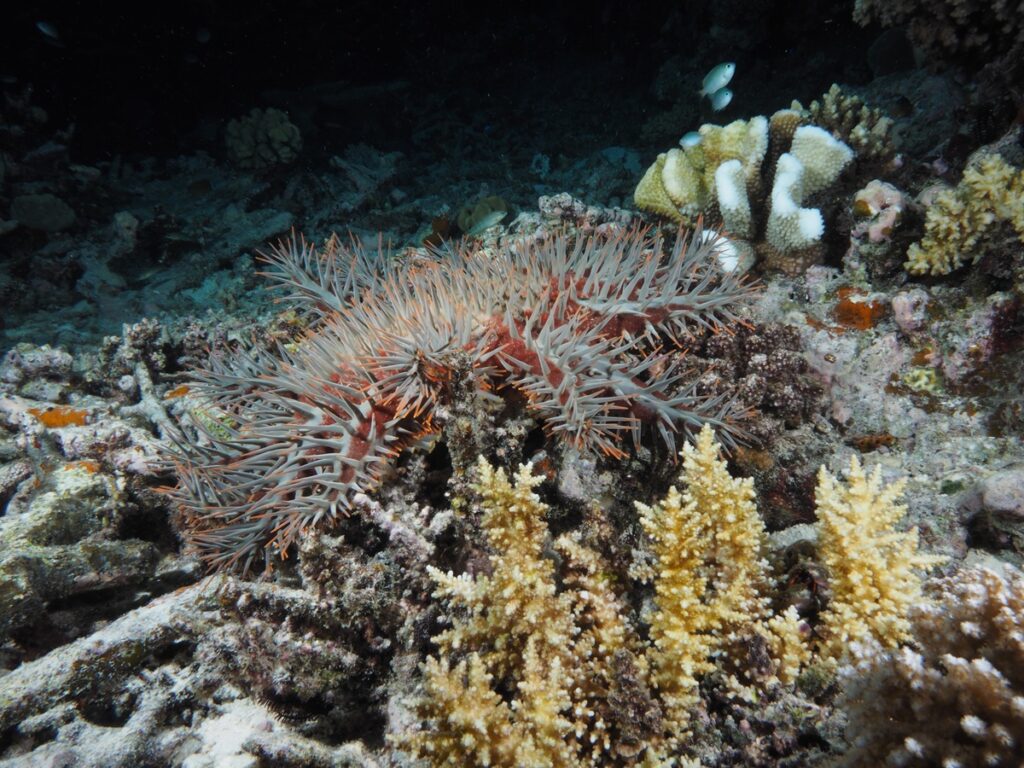
New research reveals that one of the largest-ever marine conservation initiatives has successfully curtailed the frequency of crown-of-thorns starfish (CoTS) outbreaks on the Great Barrier Reef. This significant finding emerges from a study conducted by Australia’s national science agency, CSIRO, alongside the Australian Institute of Marine Science (AIMS). The research provides compelling evidence that zoning and fisheries management strategies, implemented in 2004, have been pivotal in recovering fish populations, reducing CoTS outbreaks, and mitigating coral loss.
Dr. Scott Condie, a CSIRO researcher and lead author of the study, emphasized the critical threat posed by CoTS to the Great Barrier Reef. “Crown-of-thorns starfish are one of the biggest causes of coral death on the Great Barrier Reef, with multiple outbreaks occurring over the past four decades,” Dr. Condie stated. He explained that certain fish species, such as emperors, are natural predators of CoTS. Protective measures, including the expansion of no-take zones to 33 percent and tighter fishing regulations, were introduced in 2004 to safeguard these predatory fish.
Impact of Conservation Strategies
Dr. Condie highlighted the effectiveness of these initiatives, noting, “Our model shows that these initiatives likely averted a catastrophic tipping point that would have left the Great Barrier Reef with fewer large fish, resulting in continuous outbreaks of CoTS and substantially less coral.” Long-term monitoring data corroborates these findings, indicating that the frequency of CoTS outbreaks is consistently lower in protected zones.
Dr. Daniela Ceccarelli from AIMS further supported these conclusions, stating, “These findings provide further evidence that protective measures have been working, highlighting the need for ongoing management and the critical role played by long-term monitoring.” She noted that model projections to 2050 suggest a potential four-fold increase in the percentage of reefs experiencing CoTS outbreaks without these fish protection strategies.
Historical Context and Management Evolution
The history of CoTS management on the Great Barrier Reef reflects a significant evolution in strategies. Initially, efforts in the 1980s focused on the manual removal of starfish at individual reef sites. Over time, these efforts expanded to intensive culling at tourism sites. Presently, the CoTS Control Program, managed by the Great Barrier Reef Marine Park Authority, deploys multiple vessels to over 200 prioritized reefs annually. This program has garnered mounting evidence of its effectiveness in controlling CoTS populations.
“Without intervention over the last two decades, the model shows that grouper and emperor populations on the Great Barrier Reef would also have consistently declined under increasing fishing pressure,” Dr. Ceccarelli remarked.
Future Implications and Continued Efforts
The research underscores the importance of continued conservation efforts, especially in the face of climate change. “This modelling is an important step towards understanding the potential for crown-of-thorns starfish management to protect the Great Barrier Reef under the increasing threat of climate change,” Dr. Ceccarelli added.
The study, published in Nature Ecology and Evolution, received funding support from the CoTS Control Innovation Program, a partnership between the Australian Government’s Reef Trust and the Great Barrier Reef Foundation. This collaboration underscores the commitment to preserving one of the world’s most diverse marine ecosystems.
As the Great Barrier Reef continues to face numerous environmental threats, the findings of this study provide a hopeful narrative of resilience through effective management and conservation strategies. The ongoing success of these initiatives will be crucial in safeguarding the reef’s biodiversity for future generations.