



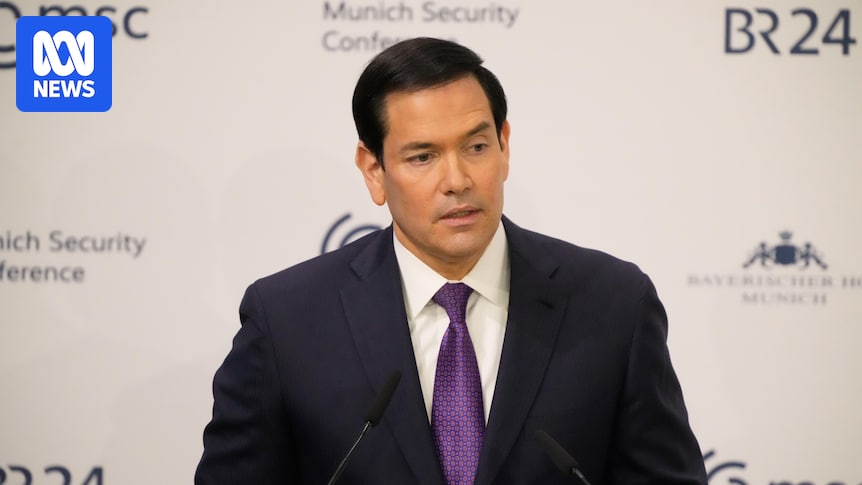
US Secretary of State Marco Rubio delivered a speech at the Munich Security Conference on Saturday, offering a reassuring message to America’s European allies. While adopting a less aggressive tone, Rubio maintained the Trump administration’s firm stance on reshaping the trans-Atlantic alliance.
This address comes after more than a year of US President Donald Trump’s often-hostile rhetoric toward traditional allies. Rubio emphasized America’s deep-rooted ties with Europe, stating that the US remains committed to the continent even as it seeks changes in the relationship and the institutions that have underpinned the post-World War II world order.
Rubio’s speech marked a departure from the previous year’s conference, where Vice President JD Vance delivered a harsh critique of European values. Since then, the Trump administration has made several controversial moves, including a short-lived threat to impose tariffs on European countries to gain control over Greenland, a semi-autonomous territory of NATO ally Denmark.
Trans-Atlantic Tensions and Calls for Unity
German Chancellor Friedrich Merz opened this year’s gathering with a call for the US and Europe to “repair and revive trans-Atlantic trust together,” emphasizing that even the US cannot navigate the complexities of the modern world alone. European leaders, however, remain steadfast in their values, particularly regarding free speech, climate change, and free trade.
Rubio, while offering a calmer tone, reiterated the administration’s firm policies. He criticized what he termed a “climate cult” and expressed concerns over mass migration, which he believes threatens societal cohesion. Rubio argued that the post-Cold War euphoria led to a “dangerous delusion” of a world without borders.
“This is why we Americans may sometimes come off as a little direct and urgent in our counsel,” Rubio stated. “This is why President Trump demands seriousness and reciprocity from our friends here in Europe.”
Despite these firm stances, Rubio reassured allies that the end of the trans-Atlantic era is neither the US’s goal nor wish. He acknowledged shared sacrifices on battlefields and emphasized America’s desire to chart a new century of prosperity alongside its allies.
European Responses and Future Prospects
European leaders responded cautiously to Rubio’s speech. Ursula von der Leyen, president of the European Union’s executive commission, described his address as “very reassuring” but noted that some in the administration maintain a harsher tone. She emphasized the need for Europe to become more independent, particularly in defense and digital sovereignty.
British Prime Minister Keir Starmer warned against complacency, urging the UK to strengthen ties with Europe to enhance the continent’s defense capabilities. Estonian Defense Minister Hanno Pevkur praised Rubio’s speech but stressed that much work remains to be done.
“It was a good speech, needed here today, but that doesn’t mean that we can rest on pillows now,” Pevkur remarked.
Greenland Dispute and Ongoing Negotiations
Notably absent from Rubio’s speech was any mention of Greenland. Following last month’s tensions over Trump’s interest in the Arctic island, the US, Denmark, and Greenland have initiated technical talks on an Arctic security deal. Rubio met briefly with Danish and Greenlandic leaders in Munich, a meeting described as constructive by Danish Prime Minister Mette Frederiksen.
Despite the cooling of the dispute, Frederiksen remains cautious. When asked if the crisis has passed, she replied, “No, unfortunately not. I think the desire from the US president is exactly the same. He is very serious about this theme.”
As the US and Europe navigate these complex issues, Rubio’s speech marks a step towards mending ties, though significant challenges remain. The conference highlighted the need for cooperation and dialogue in addressing global challenges, reinforcing the enduring importance of the trans-Atlantic partnership.