

Back in the mid-1990s, when I was a staff writer for Edge magazine, Marathon was our multiplayer shooter of choice. We all worked on Apple Macs, not PCs, so Bungie’s sci-fi opus was one of the only networked shooters we could all play together. At the end of every day, staff from magazines around the company loaded it up and played for hours, usually with Chemical Brothers or Orbital blasting from the stereo. This was the era in which video games discovered club culture, with Sony employing the legendary Sheffield studio, the Designers Republic, to create its box art and licensing the latest dance tunes for its marketing and game soundtracks.
Western developers swooned over cyberpunk anime, newly available thanks to video distributors such as Viz Media and Manga Entertainment, and the internet was emerging as a weird, wild global meeting place. It felt, for a while, as if we were living in a William Gibson novel. I’m reminded of these things while playing the new version of Marathon, released this week by Bungie and heavily inspired by 1990s futurism.
A Return to Retro-Futurism
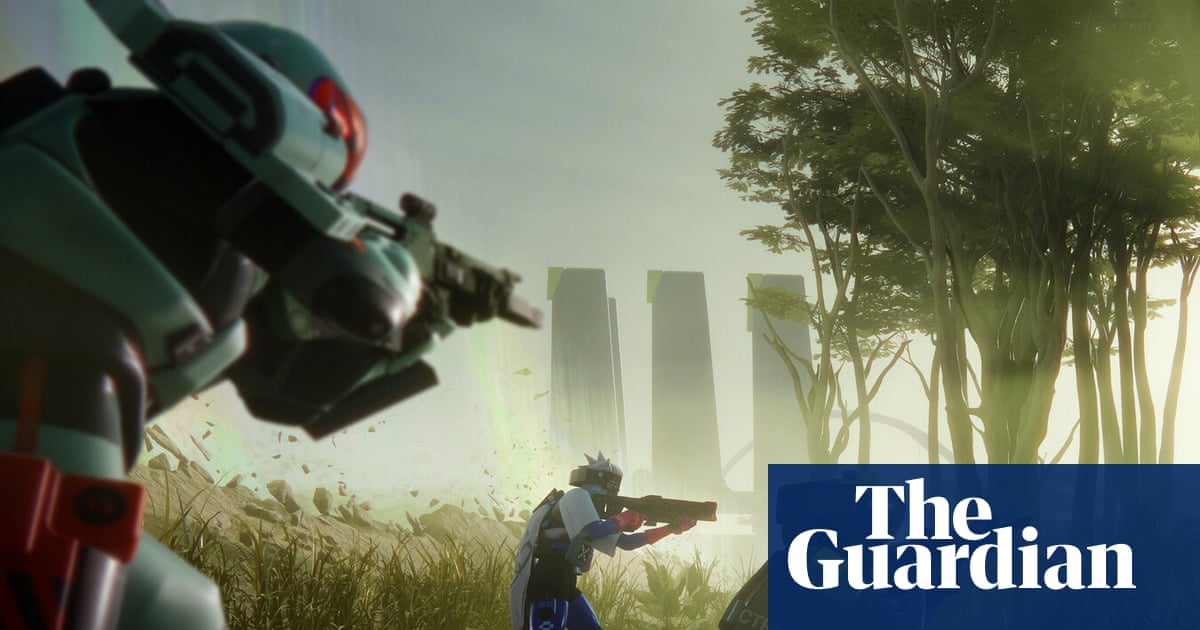
The new Marathon is now an online sci-fi extraction shooter where players beam down to the planet Tau Ceti IV to scavenge for loot, carry out missions, and potentially blast each other in the process. Its closest rival is Arc Raiders, which makes a similar use of stylized retro-futurism. In a recent Twitter exchange, Bungie’s global franchise director, Philip Asher, namechecked Sony’s Wipeout game, its Mental Wealth ads for PlayStation, and its translucent Dual Shock controllers as inspirations.
And, wow, he’s not kidding. As soon as you load the new game, you are assaulted by discordant digital synth noises, Day-Glo-style colors, and warped pixelated images. With their spiked helmets and fluorescent gloves, the character models look like 90s ravers; the load-out screen is a fever dream of retro fonts and weird icons; and loading the game plies you with distorted videos of moths crawling over robotic faces. For a few minutes, it is almost incomprehensible.
Nostalgia Meets Innovation
Then, as I settle into the kinetic hyper-rush of glitching images, I felt overriding nostalgia and admiration. Nostalgia for the era the game evokes so perfectly – that very specific period in which Johnny Mnemonic and Ghost in the Shell blasted cyberpunk visual language into the mainstream consciousness; when everyone was reading Jeff Noon and Neal Stephenson; when every video game ad looked like something from Blade Runner.
I admire how strongly Bungie has committed to this aesthetic: how its menus are crammed with ASCII text and animating images like an old HTML website; the way this theme extends to the visual signs and systems in the game’s environments; and how the fiction of the universe is crammed with psychotic mega-corporations and anarchist hackers. I love the use of a very particular, very stately serif font – a lot like the Century Old Style in many Japanese games of the 90s. On the planet of Tau Ceti IV, every UESC building is loaded with boxy computer displays scrolling green text read-outs. Every piece of architecture looks like a giant MiniDisc player.
The Bold Gamble in Gaming
Over the past five years, we have become used to homogenized aesthetics in games and wider pop culture – a hint of cartoonish charm here, a bit of dystopian sci-fi bleakness there. Nothing that might disorientate a mass user-base. Marathon unapologetically injects its influences straight into your eyeballs. It is a brave gambit, because so many online shooters – from Concord to XDefiant to Highguard – have been shut down recently. They were no doubt iterated over months and years, then user-tested to death. So to go into the most competitive game genres with such an uncompromising vision is, to me, wildly optimistic.
According to industry analysts, the gaming market has seen a surge in nostalgia-driven content, with players seeking experiences that remind them of the formative years of gaming. This trend is not only a nod to the past but also a strategic move to capture a demographic that longs for the simplicity and creativity of earlier gaming eras.
As Bungie continues to embrace this retro-futuristic approach, the gaming community watches closely to see if this bold move will pay off. Whether Marathon will stand the test of time remains to be seen, but its commitment to a distinct aesthetic is already making waves in the industry.
In conclusion, Marathon serves as a vibrant reminder of a bygone era while pushing boundaries in today’s gaming landscape. As players dive into the neon-drenched world of Tau Ceti IV, they are not just playing a game; they are experiencing a piece of gaming history reimagined for a new generation.