


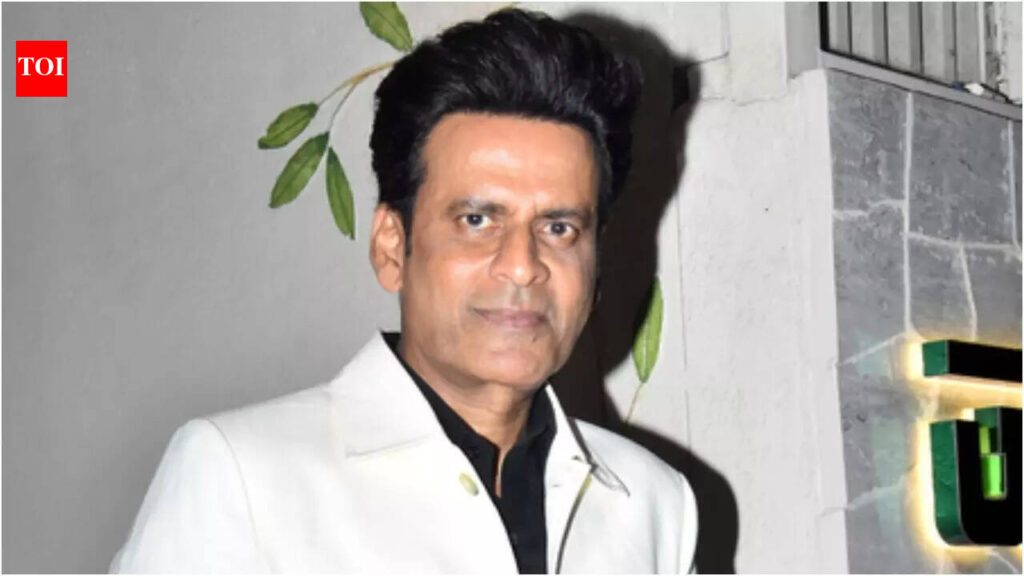
Renowned actor Manoj Bajpayee has spoken out regarding the controversy surrounding his upcoming Netflix series, Ghooskhor Pandat. The series, directed by acclaimed filmmaker Neeraj Pandey, has faced backlash and legal challenges over its title, which some have claimed is disrespectful to the Brahmin community. Bajpayee took to Instagram to clarify that the series is not intended to target any community but rather to depict the journey of a flawed individual.
In his statement, Bajpayee expressed respect for the sentiments of those who were offended by the title. He emphasized that his role in the series is focused on character development and self-realization, not on making a statement about any particular group. “I respect the emotions and concerns people have shared, and I take them seriously,” Bajpayee wrote. “For me, this was about portraying a flawed individual and his journey of self-realisation. This was not meant to be a statement about any community.”
Neeraj Pandey’s Response and Filmmaking Approach
The controversy has also prompted a response from Neeraj Pandey, who is known for his meticulous approach to filmmaking. Pandey issued a clarification on social media, explaining that the term “Pandat” was used as a casual reference for a fictional character, without any intention to offend. He apologized to those who felt hurt by the title and highlighted the team’s commitment to respectful storytelling.
Reflecting on his collaboration with Pandey, Bajpayee praised the director’s dedication and sensitivity. “In my experience of working with Neeraj Pandey, there has been a consistent seriousness and care in how he approaches his films,” Bajpayee shared. He noted that the decision to remove promotional material in response to public feedback underscores the team’s genuine respect for audience sentiments.
Legal and Social Repercussions
The controversy escalated when an FIR was filed against the makers of Ghooskhor Pandat at the Hazratganj police station in Lucknow. This legal action was accompanied by warnings from several organizations threatening strong demonstrations if the title was not changed. The situation reflects the broader cultural sensitivities and the challenges filmmakers face in navigating them.
The FIR and public outcry highlight the ongoing tension between creative expression and cultural respect in India’s entertainment industry. This incident is not isolated; it follows a series of similar controversies where titles or content have sparked debates about representation and respect for cultural identities.
Historical Context and Industry Challenges
India’s film and television industry has a history of facing backlash over content perceived as offensive. In recent years, several films and series have been subject to protests and legal challenges, often leading to changes in titles or content. This dynamic underscores the delicate balance creators must maintain between artistic freedom and cultural sensitivity.
Expert opinions suggest that such controversies are likely to continue as the industry grows and diversifies. “The challenge for filmmakers is to tell compelling stories without crossing cultural lines,” says film critic Anupama Chopra. “It’s a tightrope walk that requires both creativity and cultural awareness.”
“The challenge for filmmakers is to tell compelling stories without crossing cultural lines.” — Anupama Chopra, Film Critic
Looking Ahead: Implications for the Industry
The Ghooskhor Pandat controversy serves as a reminder of the power and responsibility of storytelling in a diverse society. As filmmakers and actors navigate these challenges, the industry may see a shift towards more inclusive and thoughtful content creation. This could involve greater collaboration with cultural experts and more rigorous vetting processes for titles and scripts.
For Bajpayee and Pandey, the immediate focus is on addressing the concerns raised and finding a resolution that respects all parties involved. As the series’ release approaches, the team will likely continue to engage with audiences and stakeholders to ensure a respectful and successful launch.
The outcome of this controversy could set a precedent for how similar issues are handled in the future, potentially influencing both creative decisions and audience expectations in India’s vibrant entertainment landscape.