



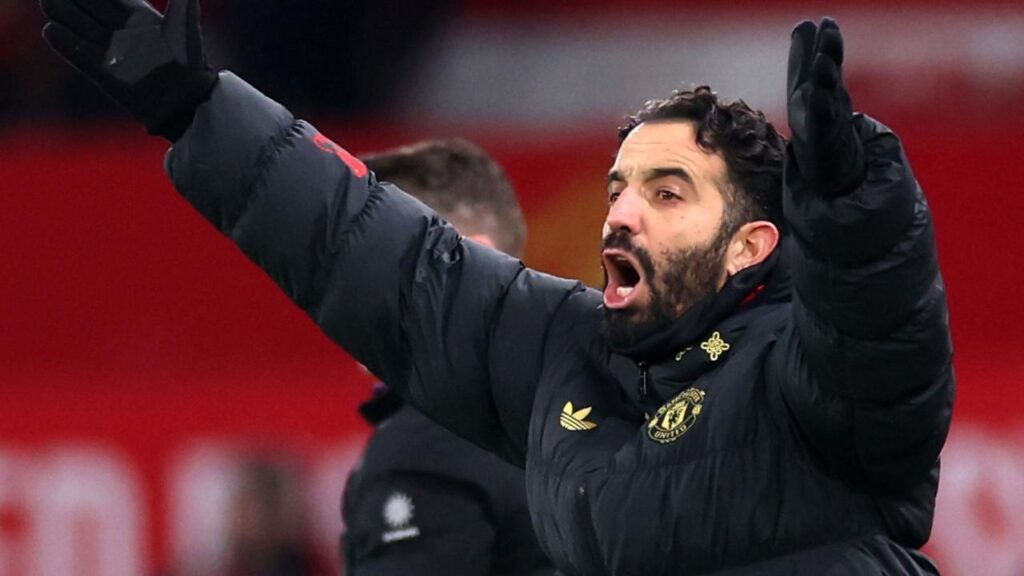
In a dramatic turn of events, Manchester United has parted ways with manager Ruben Amorim just hours after he publicly criticized the club’s internal dynamics. The decision was announced following a 1-1 draw against Leeds United, marking the end of Amorim’s 14-month tenure at Old Trafford.
The draw left Manchester United in sixth place in the Premier League standings, tied on points with Chelsea, who are in fifth, and trailing Liverpool by three points in the race for a top-four finish. The club has appointed former midfielder Darren Fletcher, currently the under-18s coach, as the interim manager.
Backroom Drama and Leadership Decisions
The sacking of Amorim was reportedly decided by Manchester United’s leadership team, including chief executive Omar Berrada and director of football Jason Wilcox. According to The Athletic’s David Ornstein, the decision followed a breakdown in relations behind the scenes. Amorim had openly challenged the club’s hierarchy to allow him to operate without interference, a plea that seemingly fell on deaf ears.
Amorim’s dissatisfaction became apparent during a tense press conference after the Leeds match, where he questioned the club’s commitment to his leadership. “I came here to be the manager of Manchester United, not to be the coach,” Amorim stated, emphasizing his desire for autonomy.
Amorim’s Tenure and Challenges
Throughout his time at Manchester United, Amorim faced several challenges, including adapting to the club’s transfer strategies and dealing with internal pressures. His recent comments about the club’s transfer plans hinted at underlying tensions, which were further exacerbated by reports of interference from the head of recruitment, Christopher Vivell. Vivell reportedly advised Amorim to modify his tactics following insights shared by Fulham’s Marco Silva.
“I know that my name is not Tuchel, it’s not Conte, it’s not Mourinho but I’m the manager of Manchester United. And it’s going to be like this for 18 months or when the board decides to change,” Amorim asserted in his final press conference.
Historical Context and Future Implications
Amorim’s departure adds to a growing list of managerial changes at Manchester United in recent years, reflecting the club’s ongoing struggle to find stability and success post-Sir Alex Ferguson. The decision to appoint Fletcher as interim manager reflects a trend of looking internally for solutions, a strategy that has seen mixed results in the past.
As Manchester United navigates this transition, the club faces critical decisions regarding its long-term managerial strategy and internal cohesion. The next appointment will be crucial in determining the club’s trajectory, both in domestic competitions and on the European stage.
Meanwhile, the football community will be watching closely to see how the club addresses the underlying issues that led to Amorim’s departure. The need for a clear vision and unified leadership is more pressing than ever as Manchester United aims to reclaim its status as a dominant force in English football.
With the January transfer window approaching, the club’s next moves will be pivotal in shaping the remainder of the season. Fans and analysts alike will be eager to see how the team performs under Fletcher’s interim leadership and whether the club can secure a top-four finish in the Premier League.