




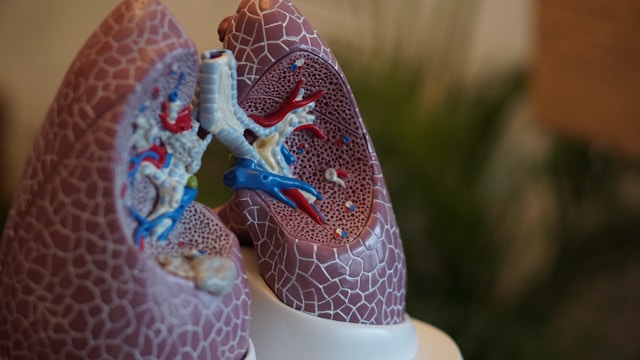
Scientists at Northwestern University have made a groundbreaking discovery that could alter the way pneumonia is understood and treated. Their study reveals that the lung’s microbial community, or microbiome, plays a significant role in how pneumonia progresses, how patients respond to treatment, and ultimately, their recovery outcomes. This revelation could pave the way for more personalized and effective treatment strategies.
Using advanced multiomics techniques, the research team analyzed lung samples from pneumonia patients to identify key drivers of disease progression. They discovered that patients who recovered successfully shared common traits: their lung microbiomes resembled those found in the mouth, and their microbial communities were dynamic rather than static. These findings, published in Cell Host & Microbe, could help physicians predict patient outcomes and tailor antibiotic treatments more precisely.
The Hidden World of Lung Microbiomes
Dr. Erica Hartmann, the study’s lead author and an associate professor at Northwestern’s McCormick School of Engineering, explained the significance of these findings. “Most people are familiar with the gut or skin microbiome but are surprised to learn the respiratory tract also has a microbiome,” she said. “For a long time, people thought the lungs were sterile, with microbes present only during infection. Our study challenges that notion.”
Hartmann and her team collected lung samples from over 200 critically ill pneumonia patients in intensive care units. By employing a comprehensive multiomics approach, they identified four distinct microbial patterns, or “pneumotypes,” associated with different types of pneumonia, including community-acquired, hospital-acquired, and ventilator-acquired pneumonia.
Unraveling Pneumonia’s Complexity
Pneumonia affects approximately 1.2 million people in the United States each year, according to the Centers for Disease Control and Prevention (CDC). Despite its prevalence, predicting and treating pneumonia remains a challenge. Dr. Richard Wunderink, a co-author of the study and a professor of medicine at Northwestern University Feinberg School of Medicine, highlighted the unpredictability of pneumonia. “For too long, we’ve relied on outdated bacterial cultures to study a complex 21st-century problem,” he noted.
The study found that patients’ lung microbiomes were either dominated by microbes typically found in the mouth, on the skin, or a mix of both. A fourth pneumotype was dominated by the pathogen Staphylococcus aureus. Patients with oral-like pneumotypes were more likely to recover successfully, while those with Staphylococcus-dominated pneumotypes had poorer outcomes.
Implications for Future Treatments
The researchers believe that understanding these microbial patterns could lead to better diagnostic tools and treatment plans. Hartmann speculated that the immune system might be more adept at handling oral-like microbes due to constant exposure from the upper respiratory tract. “The immune system might already be adapted to those oral-like microbes, so it knows how to respond when it encounters them,” she said.
The study also suggests that the stability of the lung microbiome could influence treatment success. “We hypothesize that microbiota state transition is an underlying mechanism of successful response to pneumonia therapy,” the authors wrote. The researchers plan to conduct further experiments to explore these hypotheses, using cellular cultures to observe microbial interactions.
Looking Ahead: The Future of Pneumonia Research
The study’s authors are optimistic about the potential for their findings to transform pneumonia treatment. As research continues, they hope to refine diagnostic techniques and improve mid-treatment evaluations. “As research focusing on large-scale center-wide studies emerges, our understanding of the temporal dynamics of the lung microbiome will continue to expand,” they concluded.
Ultimately, this research could lead to radically improved pneumonia therapies, offering hope to millions of patients worldwide. The insights gained from studying the lung microbiome may redefine what is understood about pneumonia and its treatment, marking a significant step forward in medical science.