


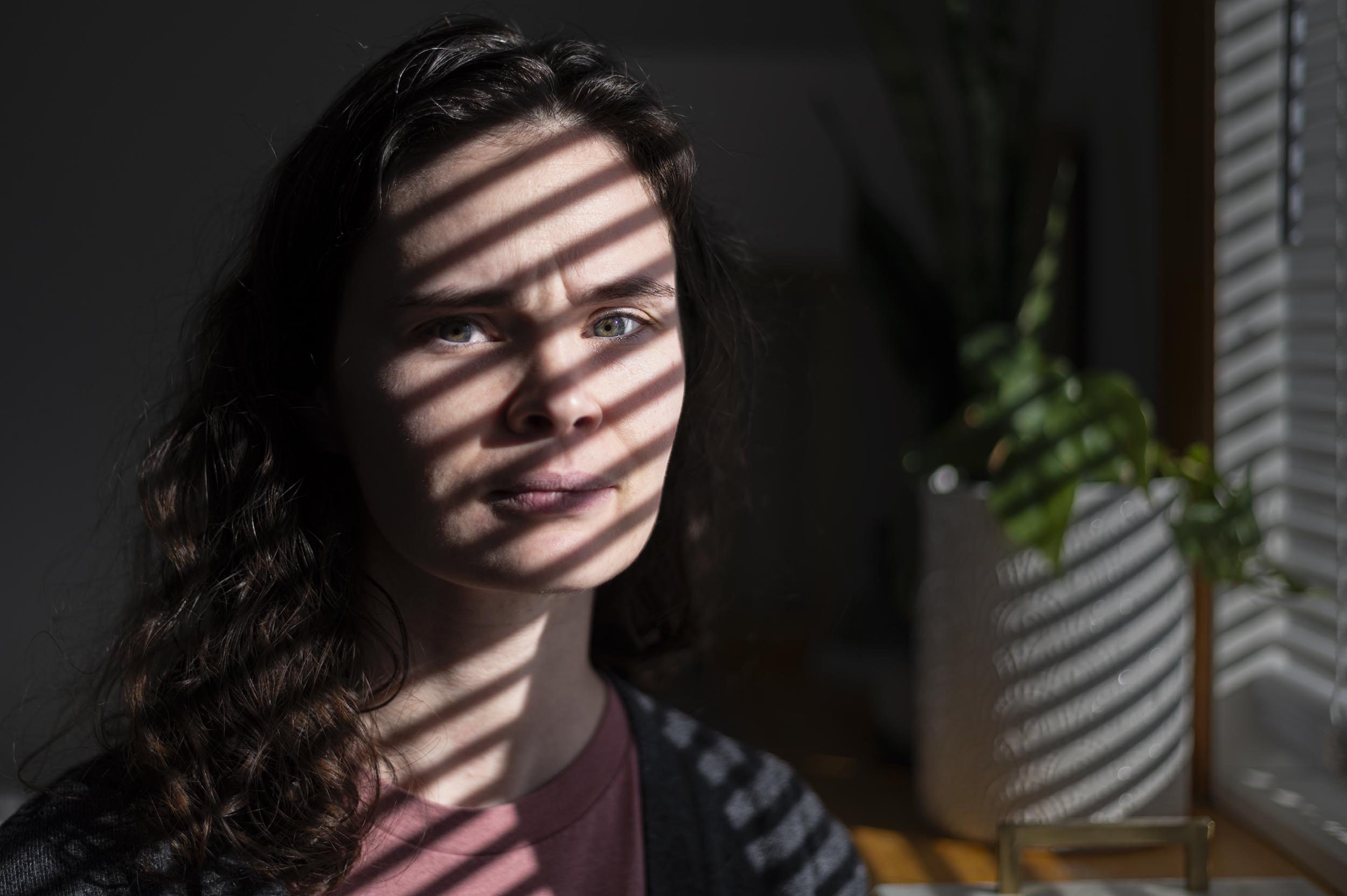
Mary Kate Shanahan has long covid. Seen in South Burlington on Friday, February 13, 2026. Photo by Glenn Russell/VTDigger
Ali, an active Vermonter and full-time nurse, knew something was amiss with her health. In 2024, she began experiencing alarming symptoms: shortness of breath, chest pain, and extreme exhaustion following minimal exertion. Despite multiple visits to the emergency room and a series of tests, including a chest CT scan and echocardiogram, no clear diagnosis emerged.
“Why do I feel this horrible all the time?” Ali questioned. It wasn’t until months later that a neurologist connected her debilitating symptoms to a mild case of Covid she had previously contracted, diagnosing her with long Covid.
Nearly six years after Covid-19 first appeared in Vermont, long Covid remains a mysterious and challenging condition. It can lead to chronic fatigue, respiratory issues, brain fog, and other symptoms, yet lacks definitive diagnostic tests or successful treatments. Many Vermonters with long Covid find themselves in a state of uncertainty, facing stigma and disbelief from their communities, and struggling to access necessary accommodations and services.
Systemic Barriers and Rising Costs
Long Covid patients are particularly vulnerable to the rising costs and reduced benefits in the healthcare system. Ali recently discovered her insurer might no longer cover a crucial medication, potentially costing her $80,000 annually out of pocket. “I was a lot more functional on the medication,” Ali explained, highlighting the financial strain of her condition.
Interviews with disability rights advocates and long Covid patients reveal systemic barriers that extend beyond political administrations, rooted in healthcare disparities and societal ableism. Chawna Cota, a member of the Vermont Democratic Disability Caucus, emphasized the need for research and resources from informed providers. “We are still not there yet,” she stated.
Adapting to New Realities
For many, living with long Covid requires significant lifestyle adjustments. Krista Coombs, who leads a support group for Vermonters with long Covid, often works from her bed to manage fatigue. Despite the challenges, she remains committed to her work, providing a space for others to share experiences and coping strategies.
A 2025 patient survey identified over 40 symptoms linked to long Covid, with studies classifying the condition into various trajectories. This complexity complicates efforts to assess its prevalence in Vermont. A 2023 report noted that 11% of adult Vermonters who tested positive for Covid experienced symptoms lasting three months or longer.
Seeking Recognition and Understanding
Despite official recognition from bodies like the CDC and WHO, misinformation about long Covid persists. Ali shared her struggle to convey the severity of her condition to loved ones. “My parents didn’t totally believe how sick I was,” she said, illustrating the personal challenges faced by many patients.
Mary Kate Shanahan, a birth doula, recounted her initial embarrassment when requesting a wheelchair at the airport due to her symptoms. “Normal people don’t fall asleep driving,” she noted, highlighting the unique difficulties of living with long Covid.
Efforts to raise awareness have seen setbacks, such as the stalling of a proposed $1 billion long Covid research bill in Congress. Many advocates feel let down by promises unfulfilled, such as those made by Robert F. Kennedy, Jr., during his tenure as Secretary of Health and Human Services.
Research and Treatment Efforts
Despite challenges, clinical studies on long Covid continue globally. The University of Vermont’s COVID Recovery Program aims to bridge gaps in care by connecting patients with multiple specialists. Program lead David Kaminsky stressed the importance of ongoing research, stating, “If we lose research, then we lose the opportunity to learn about new things and what works.”
Gretchen Kitsos, a social worker, noted that the fragmented nature of medical specialties often hinders effective treatment. Long Covid patients must navigate a complex healthcare landscape while managing symptoms that can impair cognitive function.
Living with Long Covid
After contracting Covid three times, Zoe Newmarco moved from Vermont to New York for better healthcare access. “For the first time, I have access to health care,” they said, underscoring the critical role of healthcare availability for long Covid patients.
Staffing shortages and rising costs exacerbate challenges for Vermonters with chronic illnesses. Coombs shared her struggles with insurance reauthorization and the pursuit of new treatments. “I’ll be the first person within my doctor’s office who’s able to figure out how to get it,” she said of an experimental therapy.
Ali, the nurse, described the bureaucratic hurdles she faced to secure benefits under the Family and Medical Leave Act. Despite running out of medical leave, she continues to navigate her condition while maintaining her employment.
Amidst these difficulties, moments of progress and hope persist. Coombs noted her gradual recovery, while Shanahan emphasized the importance of pacing to manage energy levels effectively. Ali’s experience has deepened her empathy for patients with disabilities, enhancing her nursing practice.
Newmarco reflected on the dual nature of their experience, acknowledging both the challenges and the personal growth that has come with living with long Covid. “I miss my body before long Covid,” they said, “but it has totally changed my world. And I really love my life right now.”