

Screenshot
When Lithuania challenged China over Taiwan four years ago, it anticipated a diplomatic clash. Instead, it was met with a profound silence. This quiet response from China underscored the gravity of Lithuania’s decision to allow Taiwan to open a representative office in Vilnius under the name “Taiwan” instead of the customary “Taipei,” directly challenging China’s stringent “One China Policy.”
In 2021, Vilnius justified its decision as a stand for democracy and human rights. However, the repercussions were unexpected. Rather than overt threats or sanctions, China opted for silence, coupled with subtle “administrative” measures. Beijing ceased all diplomatic engagement with Lithuania, leaving requests for dialogue unanswered and the Chinese embassy in Vilnius largely vacated. The implicit message was clear: dialogue would resume only if Lithuania reversed its decision.
Economic Consequences and Strategic Adjustments
The silent treatment extended to economic measures as well. Lithuania found its name removed from Chinese customs systems, effectively choking off trade. Supply chains across Eurasia were rerouted, bypassing Lithuania without public explanation. Despite these challenges, Lithuania managed to partially recover by redirecting some of its trade. However, the economic shock was significant.
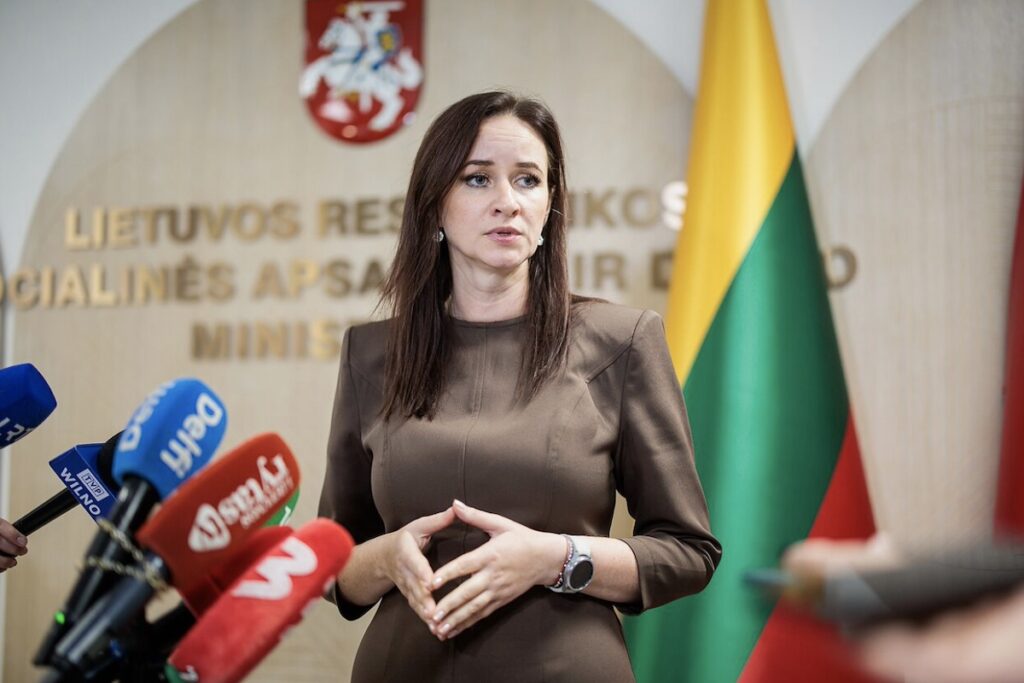
Prime Minister Inga Ruginiene, elected in September last year, candidly acknowledged the misstep, stating,
“I think Lithuania really jumped in front of a train and lost.”
Her remarks reflected a shift from idealism to a more pragmatic approach in dealing with the consequences of challenging a global superpower.
Idealism Meets Realism
Lithuania’s stance was driven by idealism, yet the disparity between the two nations is stark. With a population of just 3 million, Lithuania is dwarfed by China’s vast population and economic might. The initial economic impact of China’s silent measures was severe, affecting various sectors of the Lithuanian economy.
China signaled to European companies that goods containing Lithuanian components might face obstacles in the Chinese market. Consequently, major European manufacturers began to quietly drop Lithuanian suppliers. For Lithuania, an export-oriented economy deeply integrated into EU value chains, this amounted to systemic exclusion.
Moreover, Lithuania’s strategic position as a node in Eurasian rail networks was compromised. Freight routes were rerouted through neighboring countries, causing a sharp decline in rail volumes and depriving the national railway system and the port of Klaipėda of significant revenue.
International Reactions and Diplomatic Dynamics
In January 2022, the European Union launched a formal WTO dispute settlement case, accusing China of discriminatory and coercive measures against Lithuanian goods and EU products containing Lithuanian components. This move signaled European solidarity, and some trade flows gradually resumed, allowing the EU to withdraw the case in late 2025. However, China did not acknowledge any wrongdoing, maintaining its broader strategy of diplomatic silence.
Lithuania is not alone in experiencing China’s silent treatment. Norway faced a similar situation after the 2010 Nobel Peace Prize was awarded to dissident Liu Xiaobo. China froze high-level contact with Oslo for six years, only normalizing relations after Norway acknowledged China’s “core interests.”
Australia also endured years of diplomatic non-engagement and informal trade restrictions after calling for an inquiry into the origins of Covid-19. The dispute eased only after a change in tone by new leadership, demonstrating that in China’s “cold-handling” diplomacy, dialogue is the reward, not the starting point.
The Strategy of Silent Diplomacy
China’s approach of silent diplomacy is neither emotional nor improvised. It is a disciplined, calculated form of statecraft, particularly suited to a multipolar world. This strategy aligns with the ancient Chinese notion of wu wei, often misunderstood as “non-action,” but more accurately described as informed restraint—acting through alignment, timing, and structural positioning instead of direct force.
In strategic terms, wu wei offers clear advantages: overt confrontation invites escalation and reputational costs, whereas calibrated non-engagement allows pressure to accumulate quietly, minimizing blowback and preserving space for eventual normalization on China’s terms.
Domestic Reactions and Future Implications
Prime Minister Ruginiene’s admission of Lithuania’s costly mistake prompted a muted response domestically. The Lithuanian media treated it as a pragmatic acknowledgment of long-evident realities. Coverage shifted from moral defiance to a sober assessment of economic damage and diplomatic isolation.
Public reaction was divided but restrained. While a core constituency defended the Taiwan decision on moral grounds, a broader segment of society appeared fatigued by the economic costs. Business owners and workers affected by lost markets increasingly accepted that the costs of confrontation had been underestimated.
Lithuania’s experience illustrates China’s ability to project power through strategic withdrawal of engagement. Small states may act on values, but when they collide with China’s core interests, the outcome is determined by leverage, not the nobility of intent.