


It is the day after a tumultuous night in British politics. On Monday, Labour leader Keir Starmer appeared beleaguered, with calls for his resignation from Scottish Labour leader Anas Sarwar. However, by evening, Starmer had managed to rally his party, surviving the immediate crisis. Yet, the upcoming Gorton and Denton by-election looms large, threatening to reignite tensions.
By Tuesday afternoon, a palpable quiet has descended over 100 Parliament St, the home of the government’s culture, media, and sport department. The atmosphere is tense, reflecting the shock permeating through the political and civil service ranks.
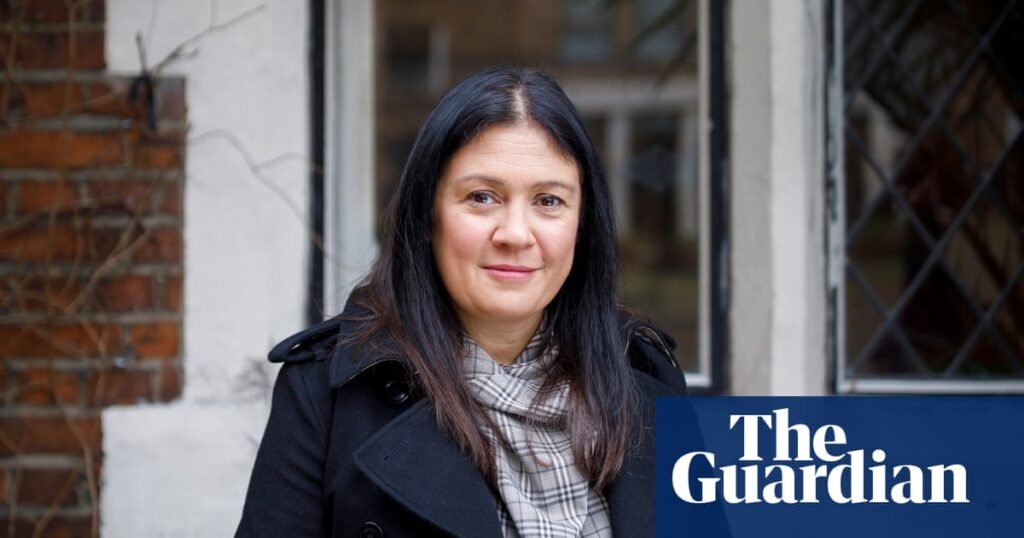
“It’s been a quiet week!” remarks Lisa Nandy, the culture secretary, with surprising levity given the recent political upheaval. Nandy, resilient despite her government’s near-collapse, introduces her communications adviser, Owen, who is present to ensure no missteps occur during the interview. “Owen is going to sit in, in case I say something really stupid, and I have to apologize to the nation,” she jokes.
Inside the Culture Secretary’s Office
Nandy’s office is a testament to her passions, adorned with cultural artifacts and sports memorabilia. A poster of Hamlet and a painting of a ginnel in Burnley highlight her cultural interests, while a football and rugby ball atop a model of Trafalgar Square’s fourth plinth signify her commitment to sports. The football, from Bury FC, symbolizes her work in establishing the Independent Football Regulator, a key achievement of her tenure.
Despite her enthusiasm for culture and sports, critics argue that Nandy’s performance in media matters has been lacking, especially during crises involving the BBC and online regulations. However, she remains focused on her priorities, drawing inspiration from her mentor, the late Tessa Jowell, a revered former culture secretary.
The Labour Party’s Internal Struggles
The Labour Party’s brief time in power has been marred by controversy. U-turns, financial scandals, and the Peter Mandelson debacle have plagued the government. Mandelson’s appointment as US ambassador, despite his ties to convicted sex offender Jeffrey Epstein, has raised significant concerns. Now, allegations that Mandelson may have leaked confidential information to Epstein have further tarnished the party’s reputation.
Nandy is candid about the situation. “You call it a shitshow, I say it’s unforgivable,” she states. She emphasizes the need for Labour to focus on the public rather than internal chaos. “What was laid bare in the Epstein files is that there are a group of powerful, wealthy people who control the system and screw everyone else,” she asserts.
“It works against the interests of most people in most parts of the country.” – Lisa Nandy
Labour’s Path Forward
Nandy believes that Labour must address the root causes of power imbalance and societal inequities. “At times in our history, the Labour movement understood that our job is not just about redistributing wealth, it’s about who holds power,” she explains. She calls for a renewed focus on empowering ordinary citizens and breaking the grip of entrenched elites.
Addressing criticisms that Labour has neglected its traditional base, Nandy acknowledges past mistakes. She highlights efforts to redirect arts funding away from London to communities nationwide, a move aimed at fostering inclusivity and cultural engagement.
Despite the challenges, Nandy remains hopeful about Labour’s potential to effect meaningful change. “Every day we have to get up and say: how do we rebalance this country in favor of ordinary people?” she insists.
Rebuilding Trust and Hope
Nandy acknowledges the need for Labour to project a message of hope and vision. She critiques the party’s current tone, which she describes as more angry than hopeful. Reflecting on Starmer’s recent speech, she expresses discomfort with its rhetoric and emphasizes the importance of fostering understanding across diverse communities.
As the interview concludes, Nandy outlines her vision for Labour’s future. She advocates for empowering young people through initiatives like youth hubs, where decision-making is driven by the youth themselves. “We’re putting people back in charge of their own lives and their own destiny,” she declares.
In her final remarks, Nandy stresses the importance of teamwork and collective action within the Labour Party. “It takes a movement to create change, and I think we’ve forgotten that,” she reflects, urging her colleagues to embrace a broader, more inclusive approach to governance.
As Nandy departs for a meeting with Deputy Prime Minister David Lammy, she remains optimistic about Labour’s ability to navigate the current political landscape. “We’ve got to wear our colors on our sleeves again, because people need to know why we, in particular, are the answer to their problems,” she concludes.