




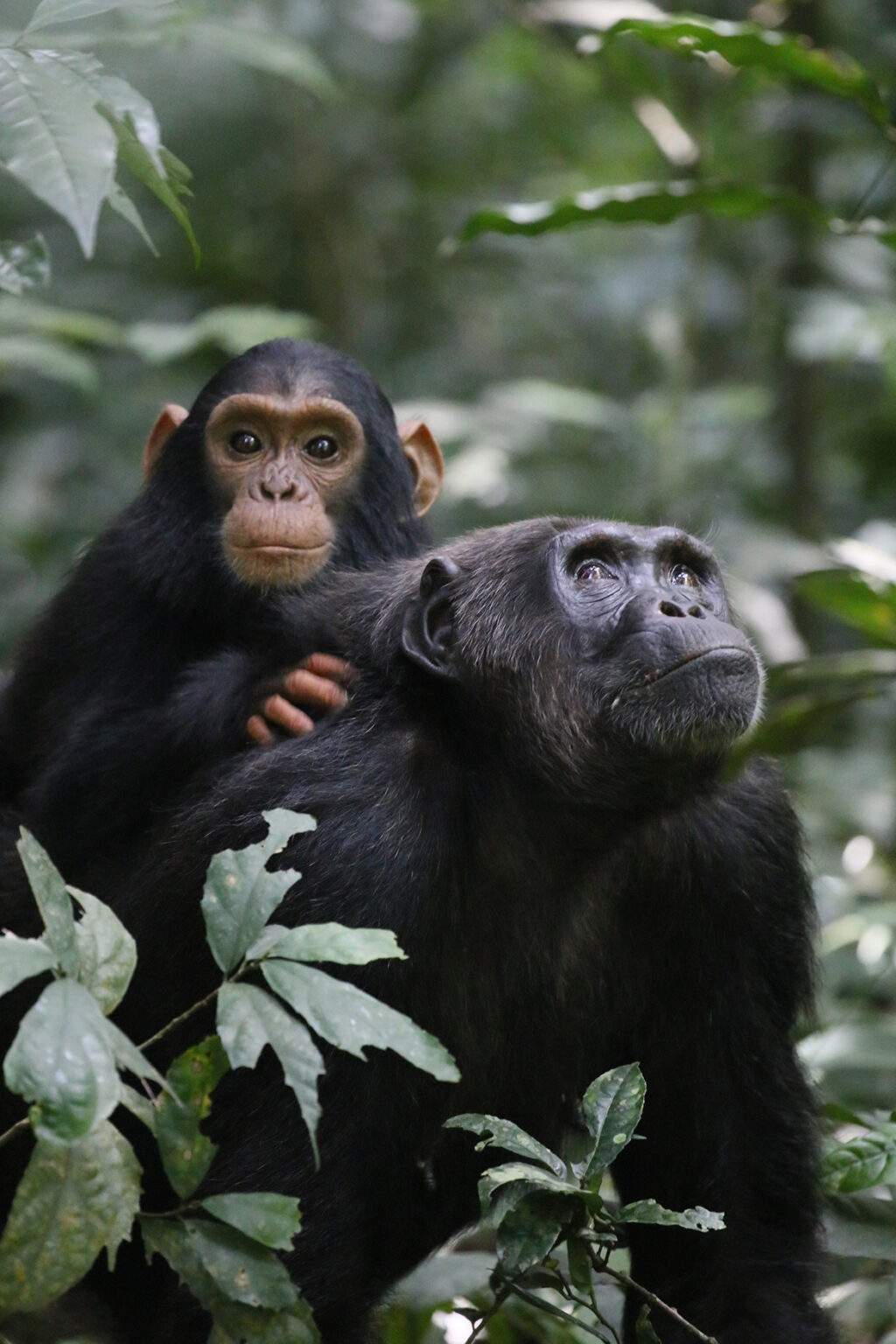
The Ngogo chimpanzees of Uganda’s Kibale National Park have long been infamous for their violent encounters with neighboring groups, often resulting in fatalities. This phenomenon, sometimes referred to as “chimpanzee warfare,” has now been linked to reproductive success, according to a groundbreaking study led by UCLA anthropologist Brian Wood, in collaboration with John Mitani of the University of Michigan.
The study, published in the Proceedings of the National Academy of Sciences (PNAS), reveals that territorial expansion following lethal conflicts can directly enhance reproductive success. After a series of coordinated attacks that resulted in the deaths of at least 21 chimpanzees, the Ngogo group’s territory expanded by 22%. In the subsequent years, the birth rate among females increased significantly, and infant survival rates improved.
Evidence of Evolutionary Roots
The findings provide critical insights into the evolutionary roots of intergroup aggression and its fitness consequences for chimpanzees. “Our findings provide the first direct evidence linking coalitionary killing between groups to territorial gain and enhanced reproductive success in chimpanzees,” said Wood.
In the three years preceding the territorial expansion, Ngogo females gave birth to 15 offspring. In the three years after, they gave birth to 37, more than doubling their fertility rate. Infant survival also improved dramatically: from a 41% chance of death before age 3 to just 8% afterward.
John Mitani, professor emeritus of anthropology at the University of Michigan, expressed surprise at the extent of the increase in births and survival rates. “In retrospect, we knew what happened. We were observing all these births, and there are good theoretical and empirical reasons for thinking something like this might happen,” said Mitani. “What we saw were very high numbers.”
Decades of Observation
Mitani has been part of a team observing this group of chimpanzees for over three decades. Approximately 15 years ago, the researchers witnessed the chimps overtaking the territory of neighboring chimps they had killed. The question of what evolutionary advantage this behavior might provide has now been answered with these reproductive benefits.
After ruling out other explanations, the research team, which also includes David Watts of Yale University and Kevin Langergraber of Arizona State University, concluded that territorial expansion improved female nutrition and overall health, leading to higher fertility and survival rates among their young.
Alternative Hypotheses Tested
The team tested several alternative hypotheses. One possibility was that females reproduced more frequently due to high infant mortality, a pattern sometimes seen in primates. However, the data showed the opposite: both fertility and infant survival improved. Another hypothesis considered changes in food availability, but fruit abundance in Ngogo’s core (pre-expansion) territory remained stable or even declined slightly after the expansion.
Implications for Understanding Chimpanzee Behavior
“These findings help us understand why chimpanzees, and perhaps our own early ancestors, evolved a capacity for coordinated violence,” said Wood. “When food is scarce, territorial gains can translate into real reproductive advantages. Humans have, thankfully, evolved an extraordinary capacity to resolve and avoid such conflicts, offering a way to escape cycles of food scarcity, territorial violence, and zero-sum competition among neighboring groups.”
The research was conducted with permission from the Uganda Wildlife Authority, the Uganda National Council for Science and Technology, and the Makerere University Biological Field Station. It was funded in part by the National Science Foundation.
Research at Gombe, Tanzania, led by Jane Goodall, first documented lethal territorial violence in chimpanzees, also known as “chimpanzee warfare.” This new study builds on that foundation, offering a deeper understanding of the evolutionary benefits of such aggression.
The study not only sheds light on the violent behaviors observed in chimpanzees but also offers a window into the evolutionary pressures that may have shaped the social strategies of our own ancestors. As researchers continue to explore these dynamics, the implications for understanding both chimpanzee and human evolution remain profound.