


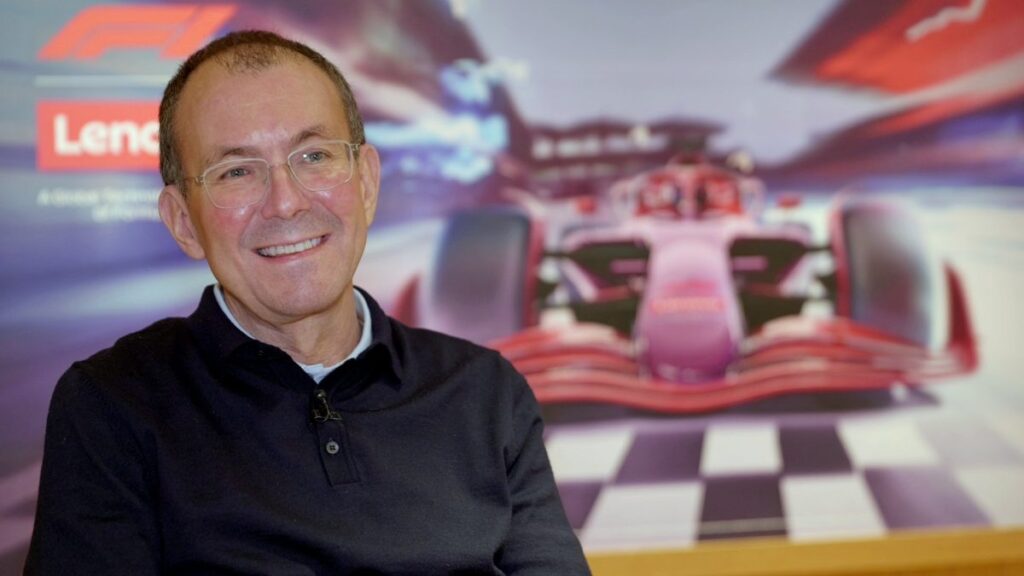
LAS VEGAS—Lenovo’s latest innovation, Qira, has captured attention at CES, earning the accolade for Best AI with its ambitious plan to seamlessly integrate user experiences across devices. In an exclusive interview following Lenovo’s keynote at the Sphere, Luca Rossi, Lenovo’s Executive Vice President and President of its Intelligent Devices Group, shared insights into the company’s vision for Qira.
Qira, pronounced “keer-ah,” is positioned as Lenovo’s response to Apple’s Intelligence, offering a cross-brand AI assistant that will debut in select Lenovo laptops, tablets, and Motorola smartphones. The concept is simple yet revolutionary: if a user begins research on a Motorola Razr during their commute, Qira ensures the same content is available on their Lenovo Yoga laptop upon reaching the office. This continuity aims to provide an uninterrupted user experience, with Qira predicting the user’s “Next Move” and directing the AI to the appropriate computing resource, whether in the cloud or on-device.
Qira’s Vision: A Unified AI Experience
During the interview, Rossi emphasized Lenovo’s unique market position, leveraging its presence across phones, tablets, PCs, and wearables. “We identified an opportunity for a personal AI twin that maintains context across all platforms,” Rossi explained. “Qira is our AI super agent, orchestrating information across devices to know everything about you and share it seamlessly.”
Rossi hinted at potential expansions beyond Lenovo and Motorola, suggesting a future where Qira could integrate with other brands. This openness to collaboration is underscored by Lenovo’s partnership with Microsoft, where Qira and Microsoft Copilot will work in tandem rather than compete.
Technical Challenges and Device Compatibility
When discussing the technical aspects of Qira, Rossi acknowledged that not all devices would support Qira initially. “Qira will debut on new, performance-capable devices,” he noted, with plans to lower technical requirements as the platform evolves. This evolution will allow Qira to expand its reach across more devices over time.
Rossi also addressed the importance of robust neural processing units (NPUs) in the development of AI PCs. “Strong NPUs are crucial for Qira and the broader AI PC ecosystem,” he said, highlighting the rapid advancements in NPU capabilities.
Exploring Wearables and Future Innovations
Lenovo is also exploring the potential of wearables, with Rossi describing the Motorola Maxwell AI pin as a promising proof of concept. “We believe in the viability of manufacturing it at scale,” Rossi said, though a launch date remains unannounced. The company is also investigating other wearable devices, such as smart glasses, to enhance the personal AI twin experience.
Rossi sees significant opportunities for ambient AI sensing devices, which could be placed on desks or walls to capture data. “There’s a lot of potential in these devices,” he remarked, indicating Lenovo’s commitment to innovation in this area.
Security and Privacy Considerations
With the integration of AI across devices, security and privacy are paramount concerns. Rossi emphasized Lenovo’s commitment to transparency, ensuring users have control over their data. “We will make sure users know which data stays on their device and which data they permit to share,” he assured. This focus on user permission was a key theme during Lenovo’s keynote, reflecting the broader industry challenge of balancing innovation with privacy.
Lenovo’s Broader Technological Impact
Beyond Qira, Lenovo’s technological advancements extend to partnerships with major events like Formula One and the upcoming World Cup in 2026. Rossi highlighted Lenovo’s role in providing technology solutions for F1, reducing the logistical footprint of their operations and enhancing branding through high-profile partnerships.
As Lenovo continues to push the boundaries of AI integration, Qira stands as a testament to the company’s forward-thinking approach. With plans to expand its capabilities and device compatibility, Qira represents a significant step towards a future where AI seamlessly connects every aspect of our digital lives.