


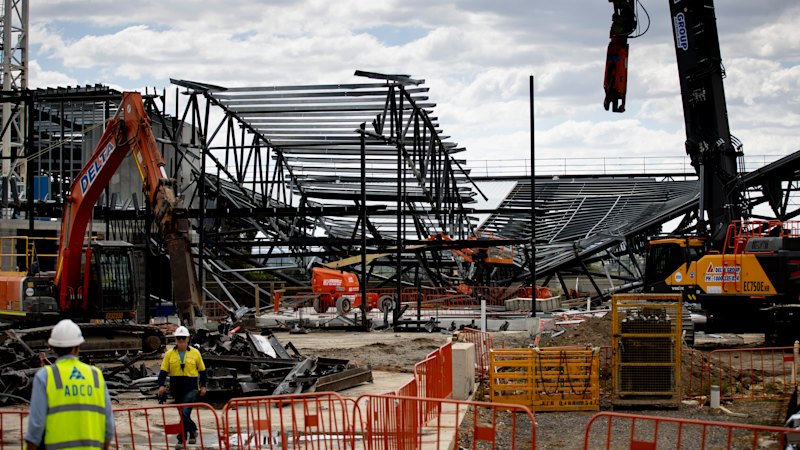
A fierce legal battle has erupted between Boroondara Council and construction company ADCO Group over the collapse of the Kew Recreation Centre’s roof. The collapse, which occurred in October 2022, has sparked accusations of substandard materials and flawed engineering practices, while the construction firm points to defective design as the root cause.
The $73 million project on High Street saw its roof structure cave in, with the main steel truss buckling and falling 10 meters. Fortunately, no injuries were reported, but the incident has led to separate prosecutions by WorkSafe and the Building and Plumbing Commission (BPC) against ADCO Group, further complicated by ongoing lawsuits between the company and the council.
Background of the Collapse
In the months leading up to the collapse, several issues were identified. An investigation by The Age uncovered that the Chinese manufacturers had altered the original design by cutting a 40-meter steel truss into four pieces for shipping convenience, contradicting the approved building permit specifications.
A source involved in the project, who wished to remain anonymous due to ongoing legal proceedings, stated, “They chopped it three times to make four pieces. The drawing shows it as one continuous piece, and that is what you are supposed to build – you follow the drawings.”
Material Quality Concerns
Further compounding the issue, laboratory tests conducted four months before the collapse revealed that the imported Chinese steel was of such low quality that some samples could not even be classified as steel. Two sources confirmed that ADCO sent eight steel samples to Ultratest, a specialist metal testing company, to ensure compliance with Australian standards.
None of the eight samples met Australian building standards, and would also not have met Chinese standards.
The tests found two samples lacked carbon, rendering them too brittle and weak for structural use. The testing process was further hindered by ADCO’s failure to provide a ProFab mill certificate, which would have detailed the steel’s intended specifications.
Legal and Regulatory Actions
The legal ramifications of the collapse are extensive. ADCO has filed a lawsuit against Boroondara Council, alleging that the council’s defective design led to the roof’s failure. The company claims the council engaged in misleading conduct, which they argue voids their construction contract and entitles them to damages.
WorkSafe has charged ADCO and facade contractor Colab Building Tech for not verifying the quality assurance documents of the imported steel truss. The BPC has also filed 18 charges against ADCO and its nominee director, John Conroy, for knowingly erecting a non-compliant steel roof truss.
Expert Opinions and Industry Implications
Experts in the construction industry have weighed in on the situation, highlighting the critical importance of adhering to design specifications and ensuring material quality. The case underscores the potential risks associated with using imported materials without rigorous testing and verification.
Richard Zhang, ADCO’s procurement manager, acknowledged the inconsistencies in the steel during a Melbourne Magistrates’ Court hearing, stating, “I have been copied into some emails, discussions about the testing ADCO had an independent lab did, and the results showing some inconsistencies of the steel. That’s when we realised there could be some issues with the steel complying to the standards.”
Future Developments
Construction on the Kew Recreation Centre has resumed, but the legal proceedings are far from over. The outcome of the lawsuits and regulatory actions will likely have significant implications for both the council and ADCO, potentially influencing future construction practices and regulatory standards.
As the legal battle unfolds, the case serves as a stark reminder of the complexities and responsibilities involved in large-scale construction projects. Stakeholders across the industry will be watching closely to see how this high-profile dispute is resolved.