

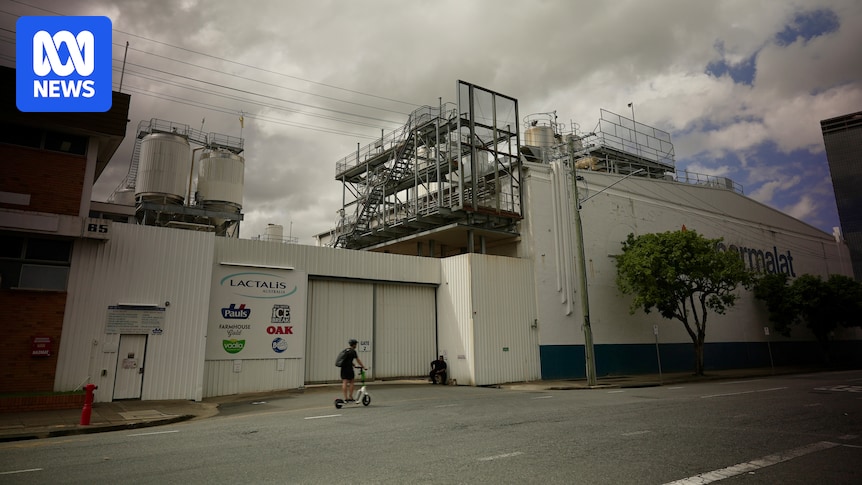
Queensland’s largest and oldest milk processing plant, located in South Brisbane, is set to close in July, paving the way for potential development opportunities on the valuable riverfront site. The decision, announced by Lactalis Australia, marks the end of an era for the historic facility that has been a staple in the community since the 1930s.
In a statement, Lactalis Australia CEO Mal Carseldine emphasized that the closure decision was not made lightly and assured that it would not impact the national food supply. The processing operations currently conducted at the South Brisbane site will be gradually reallocated to other Lactalis facilities within Queensland and interstate, optimizing the use of existing, fit-for-purpose sites.
Impact on Employees and Community
Mr. Carseldine acknowledged the significant impact this decision would have on the South Brisbane team, many of whom have dedicated decades to the site and the Pauls business. “This is not a reflection of the dedication or performance of our people,” he stated. “We are committed to treating employees with care, respect, and transparency, and to supporting affected team members through a comprehensive consultation and transition process.”
The Australian Workers Union (AWU) expressed its disappointment with the decision. AWU Queensland state secretary Stacey Schinnerl noted that the union’s priority is to support workers and their families, ensuring that affected members receive their full entitlements. The union is actively engaging with its members to address their concerns about the future.
Historical Significance and Future Prospects
The milk factory on Montague Road, now surrounded by the William Jolly and Merivale bridges, has been a fixture on the banks of the Brisbane River since the 1930s. Despite its long history, Mr. Carseldine explained that the site’s location and infrastructure no longer align with the needs of a modern, efficient manufacturing network.
Lactalis, a French family-owned business, is the world’s largest fresh dairy company, boasting over 250 production sites and 80,000 employees across 94 countries. The company owns well-known brands such as Pauls Milk, Ice Break Iced Coffee, Tamar Valley, Vaalia yoghurt, Oak and Breaka flavoured milk, and Lemnos cheese. The decision to close the South Brisbane factory does not indicate a reduction in Lactalis’s commitment to Australia or Queensland. In fact, the company has pledged more than $200 million towards modernizing its manufacturing facilities across Australia through 2025–26.
Reactions from the Dairy Industry
The closure has caught many by surprise, including Waylon Barron, a fourth-generation dairy farmer, Lactalis supplier, and vice-president of the advocacy group eastAUSmilk. “It’s a bit shocking isn’t it? For everyone, for the farmers, the employees,” Mr. Barron remarked. “I feel sorry for the people who have worked there for years. That’s not how you want to start 2026.”
Despite the closure, Mr. Barron reported that Lactalis has reassured dairy farmers that their operations would continue as usual. “They’ve reassured us that the milk will be processed in Nambour and they’ll honour our contracts, and nothing’s going to change other than where they process our milk,” he said.
Development Opportunities and Future Plans
The closure of the South Brisbane factory could accelerate plans to redevelop the area, transforming the remnants of the once-thriving industrial precinct ahead of the 2032 Olympic and Paralympic Games in Brisbane. In October 2025, the Queensland government announced plans to collaborate with the private sector to transform the nearby 7.1-hectare Visy glass recycling and manufacturing facility into a “thriving mixed-use precinct.” The redevelopment could deliver over 4,000 new homes, entertainment spaces, riverfront promenades, event lawns, and community spaces.
This development represents a significant shift in the landscape of South Brisbane, offering both challenges and opportunities for the local community and businesses. As the area prepares for a new chapter, the legacy of the historic milk factory will remain a poignant reminder of its contribution to Queensland’s dairy industry.