
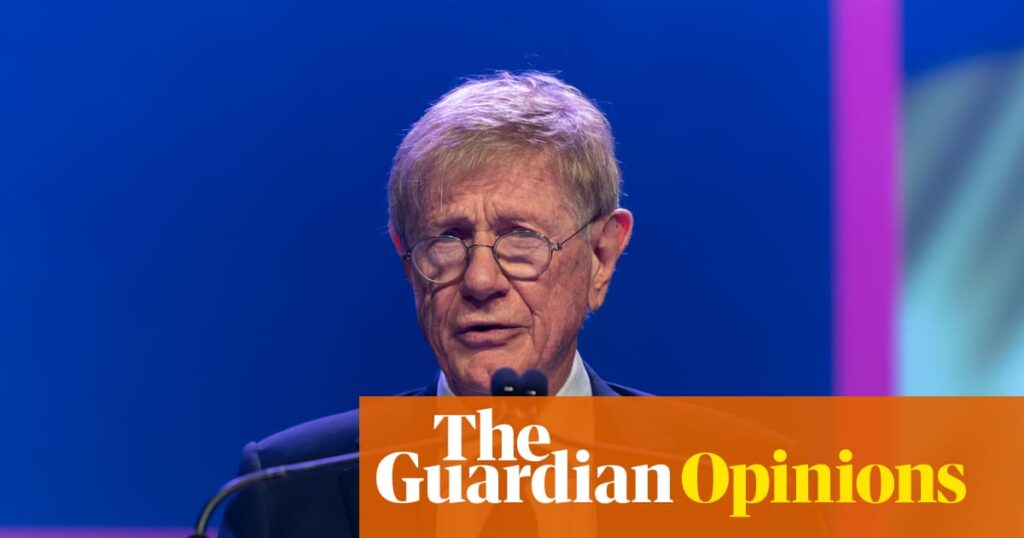
The former ABC broadcaster Kerry O’Brien delivered a stirring speech at the 70th Walkley Awards on Thursday night, earning a standing ovation from the audience gathered in the ICC Sydney ballroom. O’Brien, a six-time Walkley award winner, including the prestigious Gold Walkley, cautioned the media about the “clear and present danger” facing a strong, free, and independent press globally.
O’Brien’s address was a rallying cry for the industry to unite in defense of press freedom. He began by honoring Palestinian journalists who have shown the world “powerful evidence that has gradually taken on the look and feel of genocide in real time,” while condemning the “outrageous casualty list of Palestinian journalists and other media workers” in the ongoing conflict in Gaza.
Press Freedom and Political Promises
The former host of the ABC’s 7.30 program highlighted unfulfilled promises made by Australian Prime Minister Anthony Albanese during his time in opposition. These promises, according to O’Brien, have yet to lead to significant improvements in press freedom, whistleblower protection, or the establishment of uniform national shield laws.
“He’s certainly talked the talk, and to a degree he’s walked the walk,” O’Brien remarked. “But given what’s at stake now and in a potentially very volatile climate ahead … we as an industry cannot afford to lose sight of important unfinished business.”
“And if we think we’re doing it tough … remind yourself of those journalists in Gaza or Ukraine, or Russia or China, or Myanmar or Afghanistan who’ve been shut down or gone to prison, or gone to their graves for an ideal – for seeking to report the truth.”
Media Diversity Under the Spotlight
Meanwhile, the issue of media diversity was thrust into the spotlight by Paula Kruger, CEO of Media Diversity Australia. Kruger criticized the ABC for its lack of diversity following an all-male lineup at ABC Sydney after Chris Bath’s unexpected departure. Kruger, a former ABC radio presenter, highlighted that not only were all the Sydney local radio presenters male, but they were also all white.
“If you are content with delivering an ‘all white is alright’ and ‘all bloke means we’re not woke’ line up to a 2025/26 audience, there is no saving you,” Kruger stated on LinkedIn. She challenged the ABC’s commitment to diversity, responding to audio director Ben Latimer’s comment that “there is always more to do” by pointing out the lack of progress over the past decade.
“It has been more than a decade of ‘there is always more to do’. We’re told ‘there isn’t any culturally diverse talent’, ‘they still need a lot of work’, ‘we don’t want to set them up to fail’. Mate, the problem is you. The failure is yours.”
The Rise of AI and Its Implications
In a separate development, Kim Williams, appointed as ABC chair in January 2024, has been vocal about the implications of artificial intelligence (AI) on the media industry. Williams, described by Prime Minister Albanese as a “true renaissance man,” has expressed concerns over the unchecked development of AI technologies.
Earlier this month, Williams warned of the “dangerous and sinister” potential of AI during an interview with technology reporter Josh Taylor. He noted that while AI could devastate entry-level jobs in fields like accounting or law, its impact on journalism might be less severe. This week, Williams delivered another keynote address at the UTS Centre for Media Transition, advocating for “ground rules” to regulate AI development.
“I cannot begin to describe the frustration I have with the way in which proponents of AI and proponents of AI investment are treated with kid gloves,” Williams stated. “It’s foolhardy to see capital as being the determinator of all human destiny.”
Media Mishaps and Industry Reflections
In a lighter vein, Seven News recently faced criticism for a video story about Pauline Hanson that mistakenly featured images of the US Capitol and a kangaroo in a political context. The video, which was quickly taken offline, highlighted the potential pitfalls of relying on AI for content creation.
In academia, the media industry mourned the loss of Prof. Graeme Turner, a leading cultural studies academic who passed away at 78. Turner’s work spanned literature, film, new media, and journalism, and he was known for his incisive analysis of television current affairs.
Finally, The Australian newspaper celebrated its audience growth, attributing its success to its commitment to quality journalism. According to the latest Ipsos Iris update, The Australian ranked 14th among digital sites, with an audience of 3.5 million, underscoring its influence in the media landscape.
The media industry continues to grapple with challenges and opportunities, from ensuring press freedom and diversity to navigating the rise of AI. As these stories unfold, the role of journalism in shaping public discourse remains as crucial as ever.