




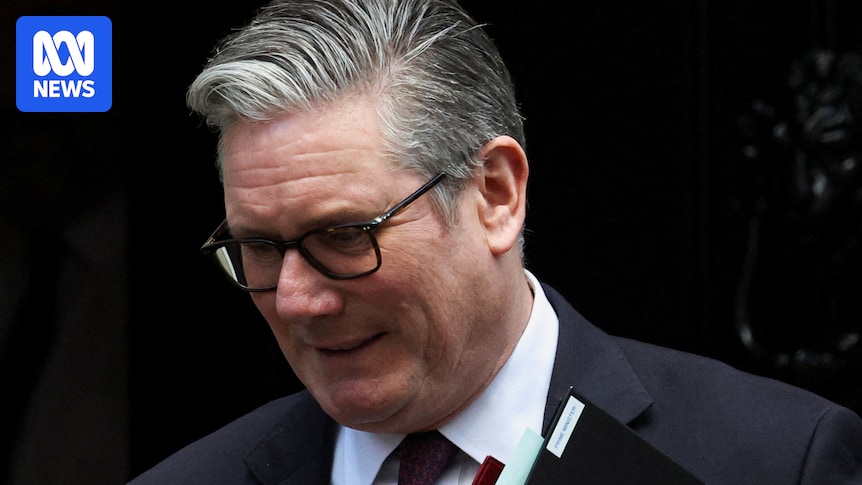
The demise of a political leader often unfolds in two stages: gradually, and then all at once. For Sir Keir Starmer, Britain’s Prime Minister, that “all at once” moment has arrived this week. Ironically, for a leader elected to restore integrity in politics, the crisis centers on a catastrophic misjudgment regarding public life standards.
Starmer appointed Lord Peter Mandelson as the UK ambassador in Washington, a decision that has backfired spectacularly. It emerged that Mandelson maintained a friendship with Jeffrey Epstein even after Epstein’s conviction for soliciting prostitution from a minor—a fact Starmer has acknowledged he was aware of. More explosively, Mandelson is alleged to have shared market-sensitive information with Epstein during the 2008 banking crisis, an act seen as a profound betrayal of trust.
The Fallout from Mandelson’s Appointment
Less than two years after leading Labour to a landslide victory, Starmer’s premiership is marred by policy U-turns, ministerial resignations, and internal conflicts. This latest scandal, however, is perceived as a failure too significant to overlook, outraging MPs and the public alike, and striking at the heart of Starmer’s political identity.
For the first time, even Starmer’s loyalists are privately questioning whether his authority can be restored. The scandal has prompted a major fallout, with the spotlight on Mandelson’s controversial career.
‘Prince of Darkness’ Sparks Major Fallout
A former director of public prosecutions, Starmer presented himself as the lawyer who would restore trust in public life, earning the nickname “Mr. Rules” from his Cabinet colleagues. Mandelson, however, carried a different reputation.
Known as Tony Blair’s “Prince of Darkness,” Mandelson’s four-decade political career has been fraught with controversy. Twice forced to resign from government over conduct questions, he later amassed wealth through political consultancy and lobbying. His appointment as ambassador was seen as a risky move, given his proximity to wealth and power had long unsettled Labour MPs.
Starmer defended the decision at a Washington event, stating, “Many people love him. Others love to hate him. But to us, he’s just Peter.” However, he has since apologized in the House of Commons to MPs, the public, and Epstein’s victims.
“Mandelson betrayed our country, our parliament, and my party,” Starmer told his MPs this week.
The Political and Moral Implications
The US Justice Department documents revealed an enduring friendship between Mandelson and Epstein, even after Epstein’s 2008 conviction. The political fallout was severe, with allegations that Mandelson shared sensitive information during the banking crisis, including discussions about then-Prime Minister Gordon Brown’s potential resignation.
Mandelson resigned as ambassador last year and is no longer a Labour member or peer. He now faces a police investigation into alleged misconduct in public office, with Metropolitan Police officers recently raiding properties linked to him.
For many in Labour, the critical question is not what Starmer knows now, but what he knew then and why he chose to override advice. Some MPs are furious, seeing no path back to supporting him. Others blame his inner circle, arguing that repeated warnings were ignored, exposing a defensive leadership culture.
Starmer’s Leadership Under Scrutiny
Starmer has attempted to stabilize his leadership by inviting MPs to his countryside retreat, Chequers. One MP described him as “brilliant” in private, lamenting that he doesn’t come across as such in the media. However, even this MP conceded that the situation might be “terminal.”
With a parliamentary by-election and local elections approaching, Starmer’s fate may be decided at the ballot box rather than through an internal leadership challenge. Labour is losing support to Reform UK and the Greens, and if poor polling results in electoral losses, MPs’ patience may finally run out.
The Absence of a Clear Successor
Starmer’s immediate protection lies in the absence of an obvious successor. His former deputy, Angela Rayner, has strong left-wing support but is tainted by a housing tax controversy. Wes Streeting, the health secretary, is popular with centrists but may struggle due to his perceived closeness to Mandelson. Others suggest a fresh face from the 2024 intake or even a return of former leader Ed Miliband.
Starmer’s allies hope he can reset the agenda and prove his capability to govern effectively. Procedural delays, such as the police request to withhold certain Mandelson-related documents, provide temporary relief. Starmer insists that Mandelson lied during the vetting process and that documents exist to prove it. However, he must convince both his MPs and the public.
According to a YouGov poll released on Friday, half of voters want Starmer to resign, while just 25 percent think he should stay.
Before this week, the challenges facing Starmer’s No. 10 seemed manageable—issues that might be resolved over time. However, the Mandelson affair has shifted that perception. What was once a distant threat is now an immediate crisis.