

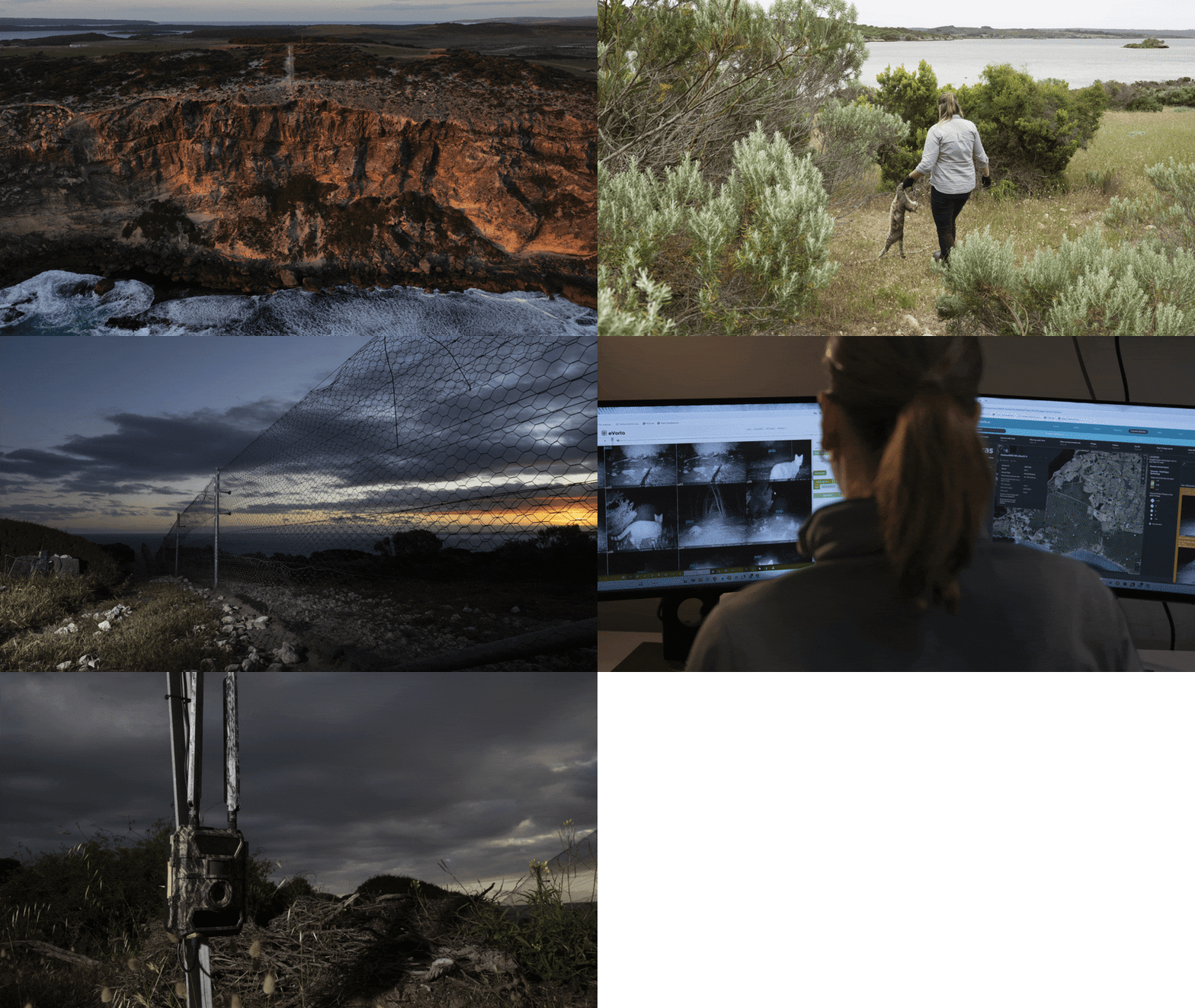
In a bold move to protect its unique ecosystem, Kangaroo Island has embarked on an ambitious plan to eradicate feral cats, a project that mirrors successful conservation efforts from around the world. The initiative, which has garnered significant community support, aims to restore the island’s biodiversity by eliminating one of its most destructive invasive species.
The plan involves a combination of cutting-edge technology and traditional methods, including the use of GPS-collared dogs, thermal drones, and AI-enabled cameras. The eradication effort is part of a larger government initiative to protect threatened species across Australia.
Lessons from Global Conservation Successes
The Kangaroo Island project draws inspiration from successful island conservation programs worldwide. One of the earliest and most notable examples is the removal of goats from the Galapagos Islands in Ecuador, a project that began in the late 20th century. Introduced by pirates and whalers in the 1800s, goats had devastated the ecosystem of the Galapagos, particularly on Isabela Island, where they destroyed vital habitats for native species like the giant tortoises.
Project Isabela, which ran from 1997 to 2006, successfully eradicated goats, pigs, and donkeys from the Galapagos. The project employed innovative techniques such as aerial shooting and the use of “Judas goats,” which led to the removal of over 62,818 goats from northern Isabela alone. The Galapagos Conservancy reported a remarkable recovery of native vegetation and wildlife following the eradication.
Island Conservation’s Broader Impact
Island Conservation, an organization founded by Don Croll and Bernie Tershy, has been instrumental in similar projects worldwide. Their efforts have led to the removal of invasive species from islands like the Robinson Crusoe Islands in Chile and Loosiep Island in Micronesia, resulting in increased survival rates for endangered species and the return of native flora and fauna.
“What you’re seeing there is a direct and immediate correlation between control of invasive species, regeneration of natural habitat, and the capacity of the natural world to survive and to thrive,” said Cameron Diver, Island Conservation’s chief conservation officer.
Technological Innovations on Kangaroo Island
On Kangaroo Island, the landscape board has embraced technology to enhance the effectiveness of their eradication efforts. A network of 750 traps is monitored by 280 4G cameras, with AI-enabled software analyzing thousands of images nightly. This technology allows for a more efficient monitoring process, reducing the need for manual checks and enabling a broader scope of operation.
Complementing the technological approach, traditional methods such as the use of trained dogs and thermal drones are employed. Dogs fitted with GPS collars track and corner cats, while drones equipped with thermal cameras identify nocturnal feline activity. Night hunter Brenny Florance, a veteran of previous eradication projects, uses audio lures and scent devices to exploit the cats’ natural curiosity.
Community Support and Challenges
The eradication effort has received overwhelming support from the local community, with former mayor and sheep farmer Jayne Bates noting a significant decline in cat sightings and an increase in native wildlife. However, the project faces financial challenges, with concerns about sustaining funding and maintaining community support over the long term.
“If the funding runs out before the job is finished, it will all have been wasted,” Bates warns.
Recently, the Australian government provided a much-needed boost with an additional $1.61 million in funding, part of a broader initiative to combat invasive species on six other islands. The Invasive Species Council has proposed a $400 million national island eradication fund to ensure the sustainability of such conservation efforts.
The Path Forward
The Kangaroo Island project is a testament to the power of community-driven conservation efforts and the potential for innovative solutions to address ecological challenges. As the island continues its battle against feral cats, it serves as a model for similar initiatives worldwide, highlighting the importance of sustained funding and community engagement in achieving long-term environmental goals.
With continued support and innovative approaches, Kangaroo Island’s ambitious plan to eradicate feral cats could pave the way for a brighter future for its unique ecosystem and inspire conservation efforts globally.