



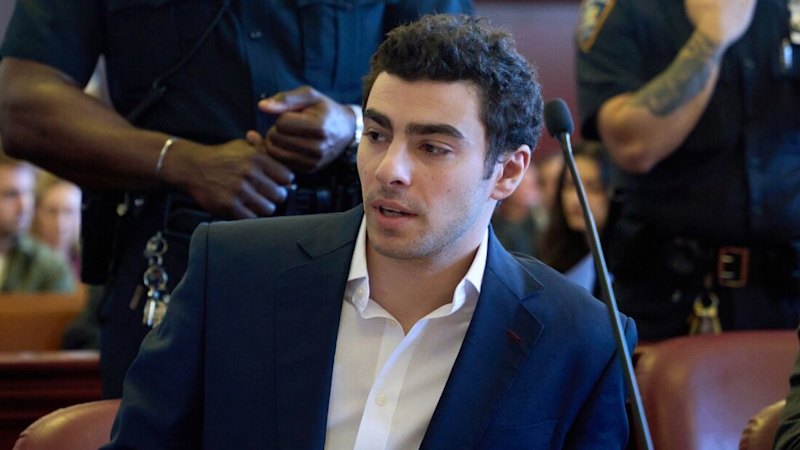
Luigi Mangione will not face the death penalty after a U.S. judge dismissed murder and weapons charges against him in connection with the killing of UnitedHealthcare CEO Brian Thompson. The decision, issued on Friday by U.S. District Judge Margaret Garnett in Manhattan, represents a significant setback for federal prosecutors.
Judge Garnett stated that her decision was guided by Supreme Court precedents, which rendered the murder charge legally incompatible with the two stalking charges Mangione still faces. Despite acknowledging that the outcome might perplex the public, the judge emphasized her obligation to adhere to legal standards.
Mangione, 27, could still face life imprisonment without parole if convicted on the stalking charges. Federal prosecutor Dominic Gentile mentioned at a court hearing that the government has not yet decided whether to appeal the decision.
Background of the Case
Brian Thompson, who led UnitedHealth Group’s health insurance division, was fatally shot on December 4, 2024, outside the Hilton hotel in midtown Manhattan. Mangione, arrested in Pennsylvania five days later, pleaded not guilty to all charges related to Thompson’s death and has remained in custody since.
The case has drawn significant public attention, with some viewing Mangione as a folk hero amid widespread criticism of high medical costs and insurance practices. However, public officials have universally condemned Thompson’s killing.
Legal Proceedings and Challenges
Judge Garnett has scheduled jury selection for September, with the trial’s evidence phase set to begin on October 12. Mangione also faces separate murder, weapons, and forgery charges in a New York state court, though no trial date has been established there. In September, prosecutors faced another setback when two terrorism-related counts against Mangione were dismissed.
Judge’s Rationale and Legal Analysis
In her 39-page decision, Garnett explained that federal prosecutors could only pursue murder and weapons charges if the stalking charges were considered “crimes of violence.” She determined that the charges did not meet this criterion because the use of force could be reckless rather than intentional.
“The apparent absurdity of the legal landscape is acknowledged,” Garnett wrote, noting that Mangione’s alleged actions were undeniably violent. However, she stressed the importance of faithfully applying Supreme Court directives.
Garnett also rejected Mangione’s attempt to suppress evidence seized from his backpack at the time of his arrest, which included a pistol, silencer, and journal entries. She ruled that the police search was justified and that the evidence would have been discovered through a federal warrant.
Implications and Future Developments
The dismissal of the murder charge against Mangione raises questions about the intersection of legal definitions and public perception of justice. The case highlights the complexities of applying Supreme Court rulings to specific criminal charges, particularly in high-profile cases.
As the trial progresses, the legal community and the public will closely watch how the remaining charges against Mangione are adjudicated. The decision not to seek the death penalty may influence future prosecutorial strategies in similar cases.
Meanwhile, the broader conversation around healthcare costs and insurance practices continues, with Mangione’s case serving as a flashpoint for public discourse.
The next steps in the legal proceedings will likely shape the narrative around this case and its implications for the justice system. Observers anticipate further developments as the trial date approaches, with potential appeals and legal maneuvers on the horizon.