


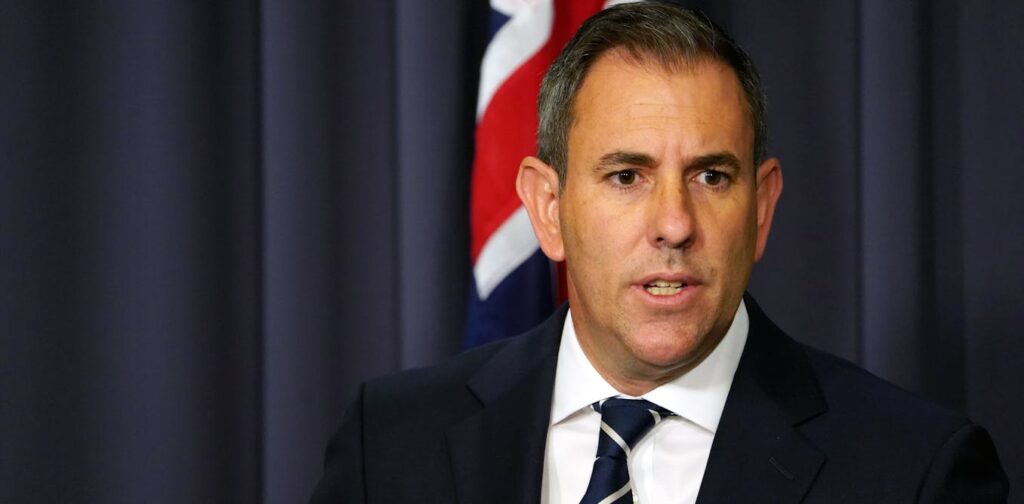
The mid-year budget update, typically a focal point for economic discussions, has been overshadowed this week by the tragic terror attack in Bondi. Treasurer Jim Chalmers has addressed both the government’s response to the attack and the future of Australia’s economy in a comprehensive discussion.
Government’s Response to the Bondi Terror Attack
The Bondi terror attack has prompted urgent calls for action from the federal government. Jim Chalmers acknowledges the need for more robust measures against antisemitism and gun violence. “Even though the government has taken a number of steps to combat this hateful antisemitism, we know that there’s more work to do,” Chalmers stated. He emphasized the dual approach of addressing antisemitism while simultaneously tightening gun laws.
Chalmers highlighted the role of Jillian Segal, the government’s envoy, in these efforts, and stressed the importance of a comprehensive strategy. “This is not an either/or: dealing with antisemitism, tightening our gun laws. We have a responsibility to do both simultaneously,” he added.
Mid-Year Budget Update: Economic Challenges and Strategies
Turning to economic matters, Chalmers outlined the three major challenges facing Australia’s economy: rising inflation, the need to boost productivity, and managing global economic uncertainty. “The government has been conscious of ‘not making this inflation challenge worse,'” he noted, referencing the potential pressure on the Reserve Bank to adjust interest rates.
The issue with inflation is not government spending. That’s been made clear by the Reserve Bank, which has not mentioned public spending as a factor in their decisions for some time.
Chalmers also addressed concerns about the rise of illegal cigarettes and the resulting decline in tobacco excise revenue. He dismissed calls to reduce the tobacco tax, instead advocating for increased crackdowns on organized crime and the illegal tobacco market.
Future Economic Reforms and AI Opportunities
Looking ahead, Chalmers pointed to ten priority areas from August’s economic reform roundtable that will shape next year’s federal budget. He disputed claims of slow progress since the roundtable, citing reforms in environmental laws, artificial intelligence, and the construction code.
Chalmers expressed optimism about Australia’s potential in the artificial intelligence sector, highlighting recent productivity growth and investment in technology. “The AI revolution will be game changing, absolutely game changing,” he asserted, emphasizing the need to balance AI’s benefits with its risks, particularly in the labor market.
We’ve had now four consecutive quarters of productivity growth, at the same time as we’ve had this enormous ramp up in investment in technology.
Implications and Future Steps
The government’s approach to these challenges will have significant implications for Australia’s economic future. Chalmers’ commitment to addressing antisemitism and gun violence, alongside economic reforms, reflects a broader strategy to ensure national security and economic stability.
As the nation looks to 2026 and beyond, the government’s ability to navigate these complex issues will be crucial. The mid-year budget update, while overshadowed by recent events, offers a glimpse into the government’s plans for economic resilience and growth.
With the next federal budget on the horizon, all eyes will be on how these priorities translate into actionable policies. The coming months will be critical in shaping Australia’s economic landscape and addressing the pressing issues highlighted by Chalmers.