



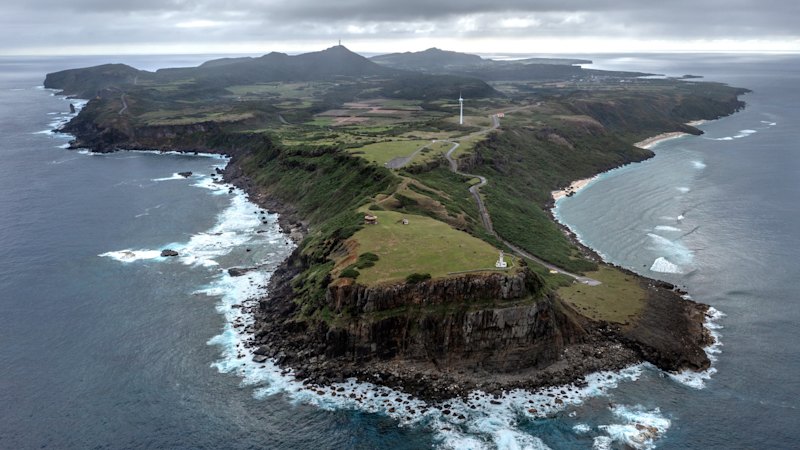
As military tensions between China and Japan escalate to levels unseen in over a decade, the small Japanese island of Yonaguni finds itself at the forefront of a strategic military buildup. Located just 110 kilometers east of Taiwan, Yonaguni is the southernmost point of an archipelago that stretches north to Japan’s main islands, a distance comparable to the California coastline. This military expansion follows a series of provocative actions, including China’s missile tests near Yonaguni, prompted by former US House Speaker Nancy Pelosi’s visit to Taipei in 2022.
In response, Japan has accelerated its most significant military buildup in four decades across the 160-island Ryukyu chain. This includes the deployment of missile batteries, radar towers, and ammunition storage facilities, as well as the enhancement of military assets on Kyushu, Japan’s southernmost main island. New deployments include F-35 fighter jets and long-range missiles, alongside the expansion of the Amphibious Rapid Deployment Brigade, Japan’s equivalent to the US Marine Corps.
Strategic Implications and Local Concerns
The rapid militarization of these islands has heightened tensions between Asia’s largest economies. Beijing has increased pressure on Japanese Prime Minister Sanae Takaichi to retract comments suggesting Japan might use military force if China attempts to seize Taiwan. The situation remains precarious, with recent incidents such as a Chinese fighter jet locking its weapons-targeting radar on Japanese aircraft, underscoring the risk of miscalculation.
Koichi Isobe, a former lieutenant general in Japan’s Ground Self-Defence Force, emphasized the necessity of a strong stance against China.
“China’s People’s Liberation Army is undoubtedly building up its ability to force Taiwan into submission,” he stated. “Japan, the United States, and other Western countries must show China their strong resolve to oppose any actions that seek to change the status quo.”
Yonaguni, known for its natural beauty and wildlife, is transforming with new military infrastructure, including housing for troops stationed at a base established in 2016. The local population of around 1,500 has expressed mixed feelings about the military presence. At a recent community meeting, residents were briefed by Defense Ministry officials on the necessity of deploying troops and advanced weaponry, including anti-air missiles and electronic warfare systems.
Historical Context and Regional Dynamics
Japan’s military strategy is deeply intertwined with its historical context and alliances. The country’s pacifist constitution, adopted in 1947, has long been a cornerstone of its post-World War II identity. However, in 2015, Japan made a significant legal shift under then-Prime Minister Shinzō Abe, allowing military aid to friendly nations if Japan’s survival is threatened. This policy change, known as “collective self-defense,” is particularly relevant given Japan’s proximity to Taiwan and reliance on US security guarantees.
Kyoko Hatakeyama, a former Japanese government analyst and current professor of international relations, highlighted the stakes involved.
“If we decline the US request, that would mean the end of the alliance,” she explained. “And the United States might not even protect Japan in the case of China’s attack on Japan.”
The military buildup has sparked debate within Japan’s parliament, with opposition figures labeling the strategy a “missile archipelago.” Defense Minister Shinjiro Koizumi has defended the deployments as consistent with international norms, aimed at reducing the likelihood of attacks on Japan.
China’s Historical Claims and Japan’s Response
The tension over Taiwan traces back to post-World War II agreements, which Chinese President Xi Jinping has sought to reinterpret in China’s favor. Xi has argued that wartime declarations like the Potsdam and Cairo Declarations affirm China’s sovereignty over Taiwan. Some Chinese officials have also questioned Japan’s sovereignty over the Ryukyu Islands, including Yonaguni, citing historical documents.
Japan, along with the US and Taiwan, rejects these claims, citing the San Francisco Peace Treaty of 1951 as the definitive legal framework. This treaty placed the Ryukyu Islands under US administration before returning them to Japan in 1972. However, China dismisses the treaty as invalid, maintaining its claims over disputed territories such as the Senkaku Islands.
Local and International Reactions
Within Japan, the military buildup has sparked diverse reactions. On Okinawa, the center of US and Japanese military power, protests have emerged, led by figures like Hiroyuki Teruya, who fears a repeat of the devastating Battle of Okinawa in 1945. Teruya advocates for diplomacy over militarization, warning against turning Okinawa into a battlefield once more.
Conversely, younger Japanese generations appear more supportive of increased defense spending. A recent poll indicated strong backing for Prime Minister Takaichi’s defense plans among younger demographics, highlighting a generational shift in attitudes towards military policy.
On Yonaguni, the debate over military presence reached a climax in a recent mayoral election. The newly elected mayor, Tsuneo Uechi, has taken a cautious stance on further militarization, balancing the need for defense with the community’s concerns about psychological stress.
As tensions persist, Japan’s strategic positioning and alliances will play a crucial role in shaping the region’s future. The developments on Yonaguni and the broader Ryukyu Islands underscore the delicate balance Japan must maintain between deterrence and diplomacy in an increasingly volatile geopolitical landscape.