




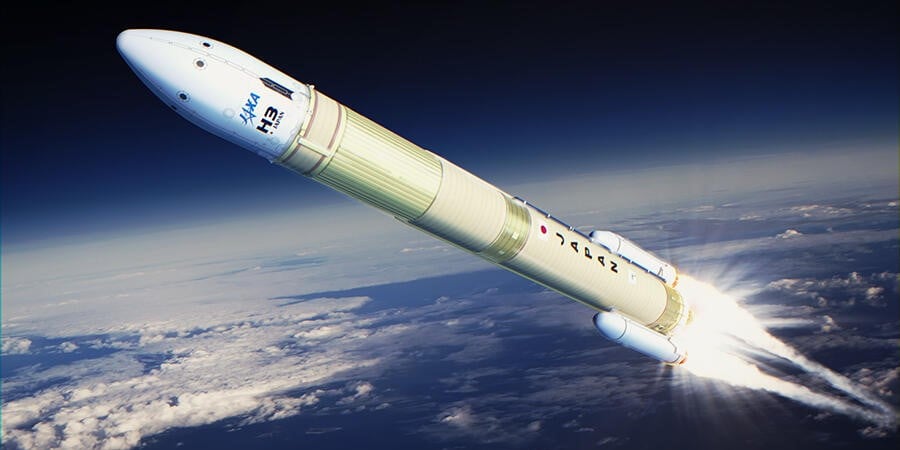
Japan’s Aerospace Exploration Agency (JAXA) has launched a Special Task Force to investigate the failed launch of its H3 rocket on Monday. The incident marks a significant setback for Japan’s space ambitions, as the H3 was carrying a crucial satellite intended to enhance the country’s navigation capabilities.
The launch was the eighth for the H3, a medium-lift rocket developed by JAXA to replace the aging H-IIA launcher. The H-IIA had a remarkable track record, with fifty launches from 2001 to 2025 and only one failure. The H3, designed for versatility, can operate with or without additional solid-fuel boosters, making it suitable for a wide range of missions.
Recurring Issues with the H3 Rocket
The first flight of the H3 in March 2023 ended in failure when the rocket did not receive the command to ignite its second stage, forcing JAXA to destroy the vehicle. Despite this rocky start, the next six H3 missions were successful. However, during Monday’s launch, JAXA reported that “the second stage engine’s second ignition failed to start normally and shut down prematurely.”
This latest failure has resulted in a 25 percent failure rate for the H3, a concerning statistic for Japan’s space program and its international partners.
“The H3 now has a 25 percent failure rate, a problem for Japan and the world.”
Implications for Japan’s Space Ambitions
The failure of the H3 rocket is particularly troubling for Japan as the mission carried a satellite named QZS-5. This satellite was to be part of Japan’s seven-satellite navigation constellation, aimed at reducing reliance on foreign navigation services. The setback not only affects Japan’s strategic goals but also its contributions to international space collaborations.
Japan is a key partner in the Artemis program, a US-led initiative to establish a human presence on the Moon. JAXA was slated to use the H3 to launch a water-spotting satellite, LUPEX, in 2027 as part of this program. The failure of the H3 raises questions about the reliability of Japan’s contributions to such international efforts.
Comparisons and Future Prospects
Japan’s space endeavors are part of a broader trend of increasing international collaboration in space exploration. JAXA’s partnership with India’s Space Research Organization (ISRO) on the LUPEX mission exemplifies this trend. Meanwhile, ISRO is preparing for its own launch of the LVM3 rocket, carrying AST SpaceMobile’s BlueBird Block-2 satellite, which will provide cellular broadband services accessible with everyday smartphones.
The failure of the H3 highlights the challenges faced by space agencies worldwide in developing reliable launch vehicles. As space becomes an increasingly strategic domain, the pressure to succeed mounts.
“Monday’s mission carried a single satellite named QZS-5, which was to form part of Japan’s seven-satellite navigation constellation.”
Looking Ahead
JAXA’s immediate focus will be on the findings of its Special Task Force and implementing necessary changes to ensure the reliability of future H3 launches. The agency’s ability to address these technical challenges will be crucial for maintaining its role in international space projects and achieving its national space objectives.
As the global space race intensifies, Japan’s ability to overcome these setbacks will be a testament to its resilience and innovation in the field of aerospace exploration.