



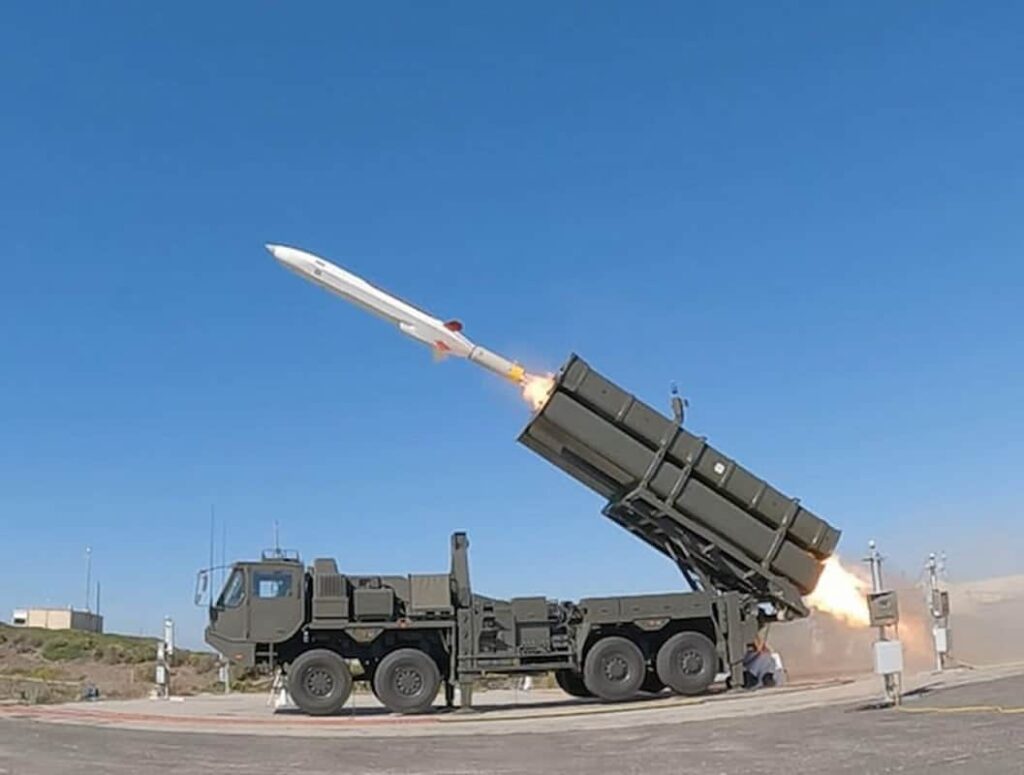
On December 19, the Acquisition, Technology & Logistics Agency (ATLA) of the Japanese Ministry of Defense announced the successful completion of the development for the land-based variant of the Improved Type 12 Surface-to-Ship Missile. This marks a significant milestone in Japan’s defense capabilities, as the country continues to enhance its missile technology amidst regional security challenges.
Japan has been keen to introduce a variety of domestic and foreign stand-off missiles in recent years. However, the limited capacity of local testing ranges has posed a challenge, particularly for long-range missile tests. Until a more suitable domestic range becomes operational, ATLA has been conducting live firing tests overseas. The agency plans to establish a new test range near Minamitori-shima to address these limitations.
Successful Testing in the United States
As part of the missile’s development, ATLA conducted live firing tests at the Point Mugu Sea Range in Southern California from October 8 to November 27. During this period, seven Improved Type 12 missiles were launched, benefiting from the range’s vast scale and support assets. This testing environment allowed Japan to thoroughly evaluate the missile’s performance under realistic conditions.
The completion of the land-based variant paves the way for the Japan Ground Self-Defense Force to equip the 5th Surface-to-Ship Missile Regiment (SSMR) at Camp Kengun in Kumamoto Prefecture with the first operational rounds next year. Subsequent deployments are planned for the 8th SSMR in Oita Prefecture and the 7th SSMR in Okinawa Prefecture.
Expanding Capabilities Across Defense Forces
Beyond the land-based variant, the Improved Type 12 missile will also be integrated into Japan’s air and maritime defense systems. The Air Self-Defense Force plans to equip the first batch of Mitsubishi F-2s with the air-launched variant at Hyakuri Air Base by fiscal year 2027. Meanwhile, the Maritime Self-Defense Force’s Akizuki-class destroyer, JS Teruzuki (DD-116), is slated to receive the sea-based variant following its upgrade.
In addition, the Kongo-class guided missile destroyer, JS Chokai (DDG-176), is set to complete its integration of the U.S. Tomahawk cruise missile next year, with live firing tests scheduled at Point Mugu in the summer.
Strategic Implications and Future Developments
Japan’s advancements in missile technology come at a time of heightened regional tensions and evolving security dynamics in East Asia. The improved Type 12 missile, with its extended range and enhanced capabilities, represents a strategic enhancement of Japan’s defense posture.
According to defense analysts, the development of these missiles underscores Japan’s commitment to bolstering its self-defense capabilities while maintaining strong alliances, particularly with the United States. The collaboration in testing and integration highlights the importance of international partnerships in advancing military technology.
“The successful completion of the Improved Type 12 missile demonstrates Japan’s technological prowess and strategic foresight in addressing regional security challenges,” said a defense expert familiar with the program.
Looking ahead, Japan’s focus will likely remain on overcoming domestic testing limitations and further integrating advanced missile systems across its defense forces. The establishment of a new test range near Minamitori-shima will be crucial in enabling more comprehensive testing and development of future missile technologies.
As Japan continues to navigate a complex security environment, the deployment of the Improved Type 12 missile across its defense branches signifies a proactive approach to ensuring national security and regional stability.