



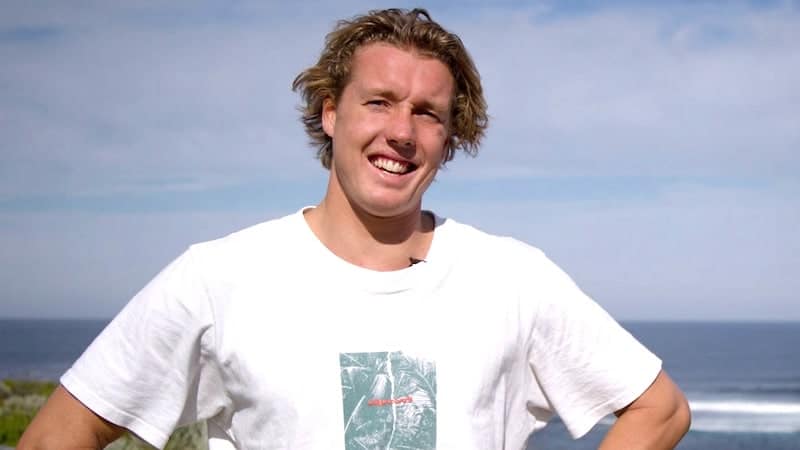
In a candid and expletive-laden critique, Australian surfer Jacob Willcox has voiced his frustration with the World Surf League’s (WSL) Challenger Series, particularly targeting the conditions at Huntington Beach. “Teahupo’o was firing, and I’m at Huntington surfing these one-foot shit waves,” Willcox lamented, highlighting the stark contrast between the renowned waves of Tahiti and the often underwhelming surf at the California event.
This outspoken criticism marks a significant shift from the WSL’s previously tight-lipped culture, where dissent was rare and often discouraged. The league, once compared to a “magnificent Wall of Positive Noise,” is now facing increasing scrutiny from its athletes.
The Challenger Series: A Grueling Path
While many surf enthusiasts are familiar with the Championship Tour, featuring the world’s top surfers in exotic locations like Hawaii and Fiji, the Challenger Series remains lesser-known. This series serves as a proving ground for aspiring surfers, who must navigate less glamorous venues such as Huntington Beach.
Willcox’s comments were featured in a recent profile by The Guardian, which delved into the challenges faced by Challenger Series competitors. Fellow surfer Sophie McCulloch also shared her experiences, painting a picture of a grueling and often unfair journey.
“It can be brutal,” Willcox continued. “You can go there (Portugal in this case), the waves can be absolutely dogshit, and you might not get a chance.”
Surfonomics and the Threat of Climate Change
Beyond the immediate challenges of the WSL, the surf community is grappling with broader issues, particularly the impact of climate change on surf breaks. The National Oceanic and Atmospheric Administration (NOAA) reports that sea levels are rising at approximately 2.5mm per year, threatening the very waves that surfers rely on.
The Save the Waves Coalition has released a comprehensive study on the economic impact of surfing in Santa Cruz, California. The report, supported by the Ocean Protection Council, highlights that surfing generates $194 million annually in the area.
“The data and analysis revealed that all 31 surf breaks evaluated will see a decrease in surfable conditions at 1 foot of sea level rise. Even more alarming, at 3 feet of sea level rise more than half of all the surf breaks will be significantly diminished or lost completely,” the report states.
Shaun Burns, a former WSL journeyman and coordinator for the coalition, hopes the findings will spur California officials into action, advocating for increased surf reserves and better coastal management.
Artificial Reefs: A Solution or a Stopgap?
In response to the changing tides, some communities are exploring artificial reefs as a potential solution. Pacifica, California, is considering such a project to combat sand loss and preserve its surf breaks. Similar initiatives have been successful in places like Palm Beach, Australia.
However, as UC Santa Cruz professor Gary Griggs warns, these measures may only offer temporary relief. “We have to acknowledge that the climate is changing,” Griggs said. “Sea levels are rising, erosion is increasing, and storms are worsening each year.”
Facing the Future: A Call to Action
The surf community is at a crossroads, facing both internal challenges within the WSL and external threats from climate change. As athletes like Jacob Willcox speak out, there is a growing call for transparency and reform within the league.
Meanwhile, the Save the Waves study provides a compelling argument for policymakers to prioritize coastal conservation. As Burns aptly puts it, “The economic value of a wave, and all 31 surf breaks in Santa Cruz, can be communicated to non-surfers, especially policymakers who make decisions based on numbers.”
As the surf season approaches, the community must navigate these complex issues, balancing the thrill of the sport with the need for sustainable practices and advocacy.