




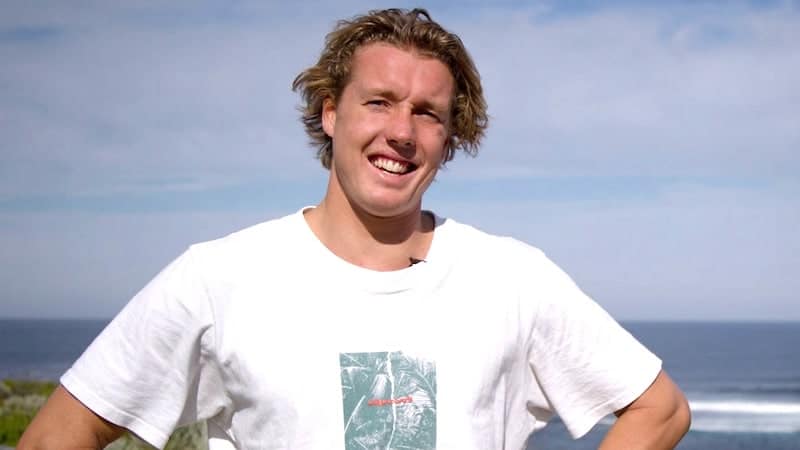
Jacob Willcox, a prominent figure in the surfing world, has recently made headlines with his candid criticism of the World Surf League’s (WSL) Challenger Series. The Australian surfer expressed his frustration over the conditions at Huntington Beach, California, where competitors are often faced with small, unsatisfactory waves. His comments have sparked a broader conversation about the challenges faced by surfers in this series.
During an interview, Willcox did not hold back his feelings, stating, “Teahupo’o was firing, and I’m at Huntington surfing these one-foot [expletive] waves.” He acknowledged the iconic status of Huntington Beach but emphasized the disparity in wave quality compared to other renowned surfing locations. “In those moments, it drives you to want to be better,” he added, highlighting the motivation that such challenges can bring.
The WSL’s Changing Landscape
The WSL has undergone significant changes over the years, moving away from its once tightly controlled narrative. Previously, the league maintained a facade of perfection, often compared to a “Wall of Positive Noise.” However, recent revelations, including Willcox’s comments and reports of champions being required to pay for their own trophies, indicate a shift towards greater transparency.
The Challenger Series, often overshadowed by the Championship Tour, serves as a proving ground for aspiring surfers. Unlike the Championship Tour, which features world-class surfers competing in prime locations like Hawaii and Tahiti, the Challenger Series often takes place in less ideal conditions. This has led to criticism from participants who feel that the series does not adequately prepare them for the top-tier competitions.
Economic and Environmental Impacts
Meanwhile, the surfing community is grappling with broader issues beyond competition logistics. Climate change poses a significant threat to surf breaks worldwide. The National Oceanic and Atmospheric Administration (NOAA) reports that sea levels are rising at approximately 2.5mm per year, with projections suggesting a 24cm increase along the California coast by 2050. This rise in sea level could drastically alter surf conditions, impacting both the environment and local economies.
According to a study by the Save the Waves Coalition, surfing in Santa Cruz, California, generates $194 million annually. However, a sea-level rise of just one foot could decrease surfable conditions, potentially reducing revenue by up to 40%.
Efforts are underway to address these challenges. The Save the Waves Coalition, in partnership with Black Surf Santa Cruz, has conducted a study to highlight the economic value of surfing and advocate for the protection of surf breaks. Shaun Burns, a former WSL journeyman, emphasized the importance of surfonomics in influencing policy decisions. “Coastal policy should aim to support decisions and infrastructure that encourage more Californians to visit surf breaks,” Burns stated.
Innovative Solutions and Future Directions
In response to the environmental threats, some communities are exploring innovative solutions. For instance, Pacifica, California, is considering the construction of an artificial reef to combat sand loss and enhance surf conditions. This initiative aims to preserve both the natural environment and the economic benefits derived from surfing.
However, experts like UC Santa Cruz professor Gary Griggs caution against relying solely on such measures. “We have to acknowledge that the climate is changing,” Griggs warned, advocating for a managed retreat as a long-term solution to rising sea levels and increased erosion.
As the surfing community navigates these complex challenges, Willcox’s outspoken criticism serves as a reminder of the need for continued dialogue and innovation. Whether through policy changes, environmental initiatives, or community engagement, the future of surfing will depend on the collective efforts of surfers, policymakers, and environmentalists alike.
In the meantime, surfers around the world prepare for the upcoming big wave season, hoping for favorable conditions and a chance to showcase their skills on a global stage.