


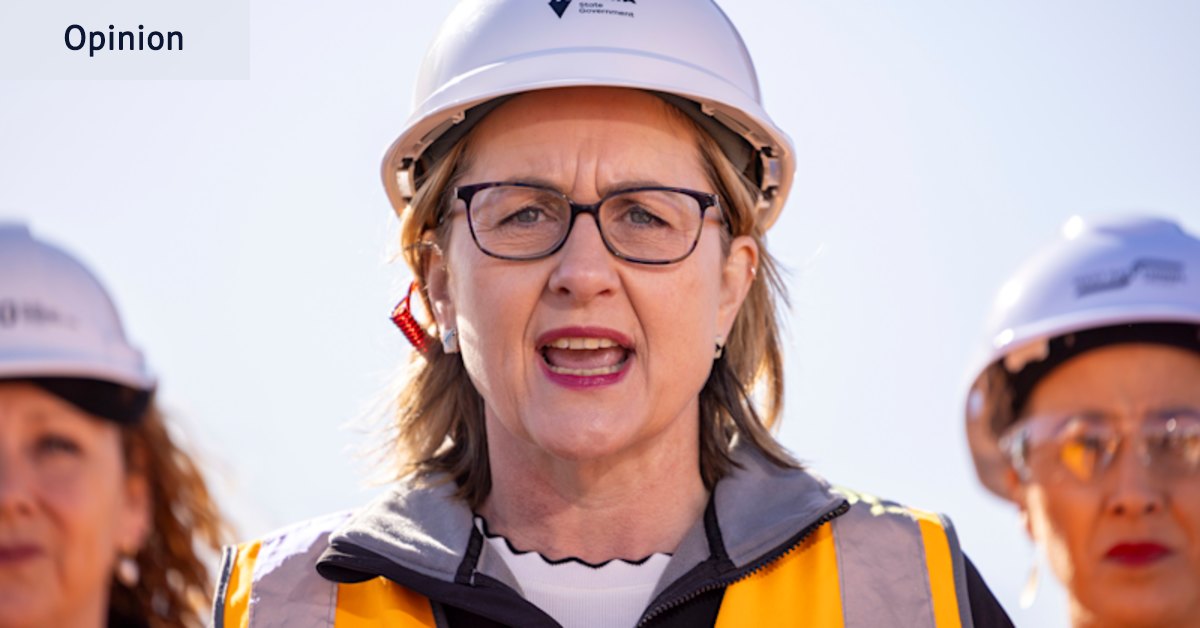

In a strategic move that could significantly impact the upcoming state election, Victorian Premier Jacinta Allan has announced new work-from-home (WFH) legislation. This legislation, set to be introduced in July, will amend Victoria’s Equal Opportunity Act to make it unlawful for employers to discriminate against employees who choose to work from home two days a week. The announcement comes as the state gears up for the November 28 election, with the government keen to attract voters by addressing modern workplace needs.
The legislation positions Victoria as the only Australian state to offer such a legal right, reflecting a broader trend towards flexible working arrangements that gained momentum during the COVID-19 pandemic. However, this initiative is not without its critics, who warn of potential long-term implications for employment in a rapidly evolving technological landscape.
The Intersection of Technology and Employment
The Victorian government’s push for more data centers, alongside its WFH legislation, highlights a complex relationship between technology and employment. According to Danny Pearson, the Victorian Minister for Economic Jobs and Growth, the state is in a “race” to attract tech investments, particularly in data centers, which he describes as “factories of the 21st century.”
These facilities, while essential for supporting modern digital infrastructure, require fewer workers than traditional factories. Moreover, the AI applications housed within these centers could potentially eliminate more jobs than they create. This concern is echoed by experts who warn of AI’s growing capacity to replace cognitive work traditionally performed by humans.
AI’s Impact on White-Collar Jobs
Industry experts, including Matt Shumer, CEO of a global AI company, have sounded alarms about AI’s potential to disrupt white-collar employment. Shumer predicts significant job losses in sectors such as law, finance, communications, and software engineering, where tasks are primarily computer-based.
“AI isn’t replacing one specific skill. It’s a general substitute for cognitive work,” Shumer stated, highlighting the broad scope of AI’s impact.
Recent developments, such as AI developer WiseTech Global’s decision to reduce its workforce by a third, underscore the immediacy of these concerns. As AI technology continues to advance, the pressure on jobs that can be performed remotely—and thus are more susceptible to automation—intensifies.
Work-from-Home: A Double-Edged Sword?
The popularity of WFH arrangements has surged, particularly among parents seeking better work-life balance. However, the same jobs that offer the flexibility of remote work are often the ones most vulnerable to automation. This paradox presents a challenge for policymakers who must balance immediate electoral gains with long-term employment stability.
While the Victorian Public Service already includes WFH rights in its enterprise agreement, and many private sector companies offer similar arrangements, the Allan government’s decision to legislate these rights is seen as a strategic electoral move. It capitalizes on the public’s preference for flexibility while positioning the government as a champion of modern work practices.
Political Strategy and Public Perception
The decision to legislate WFH rights appears to be a calculated response to previous electoral outcomes. Last year’s federal election saw significant backlash against politicians perceived as opposing WFH benefits, with Peter Dutton’s stance on the issue notably unpopular. By advocating for WFH rights, the Allan government aims to secure the support of working families and urban voters.
“If you asked the latest GPT model to devise a policy that would be widely popular, cost the budget nothing, and wedge the Victorian opposition, it would probably come up with legislated work from home,” a political analyst noted.
Looking Ahead: Balancing Innovation and Employment
As Victoria navigates the intersection of technological innovation and employment, the implications of its policies will extend beyond the election. The challenge lies in fostering a tech-friendly environment that attracts investment while safeguarding employment opportunities for its residents.
While the immediate focus remains on the upcoming election, the long-term impact of these policies on Victoria’s workforce and economy will be closely scrutinized. The government must ensure that its pursuit of technological advancement does not inadvertently accelerate job displacement, particularly in sectors vulnerable to AI-driven automation.
As the state moves forward, the balance between embracing technological progress and protecting employment will be a key determinant of its economic and social landscape. The outcome of the November election will likely influence how these priorities are navigated in the years to come.