


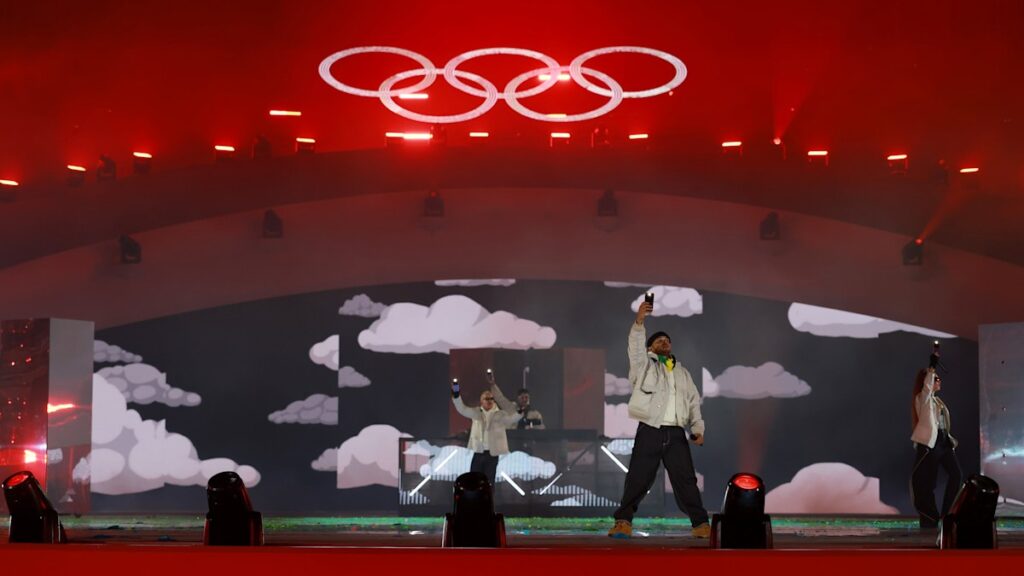
Italy bid a heartfelt farewell to the Winter Olympics with a captivating open-air ceremony at the ancient Verona Arena on Monday. The event celebrated the fusion of art and athleticism, marking the conclusion of a Games praised for its innovative approach to hosting. Co-hosted by Milan and Cortina d’Ampezzo, the Games unfolded across northern Italy, culminating in a record-breaking haul of 30 medals for the host nation.
The conclusion of the Milano Cortina Games signals a transition to the French Alps, which will host the 2030 Winter Olympics. The upcoming Games are expected to follow a similar model, utilizing existing venues to minimize environmental impact. This approach reflects a growing trend in Olympic planning aimed at sustainability and resource efficiency.
International Praise and Future Challenges
International Olympic Committee President Kirsty Coventry expressed her gratitude to Italy, stating,
“Grazie Italia per questi Giochi magici! (Thank you Italy, for these magical Games). You delivered a new kind of Winter Games and you set a very high standard for the future.”
As Coventry oversees her first Olympics, she highlighted the Games as a benchmark for future events.
Looking ahead, the next Summer Olympics will take place in Los Angeles in two years. The IOC plans to develop a new business model while navigating the complex intersection of sport and politics, a challenge that continues to evolve.
Celebrating Italian Achievements
The “Beauty in Action” closing ceremony featured performances by renowned Italian ballet dancer Roberto Bolle and DJ/producer Gabry Ponte, who paid tribute to opera and dance music. Prime Minister Giorgia Meloni praised the Games on social media, writing,
“The Olympics have given us unforgettable emotions and a sense of pride that will remain with Italy for a long time to come.”
She emphasized the prestige the event brought to the nation.
The ceremony took place in the historic Roman amphitheater in Verona, a city immortalized by William Shakespeare’s “Romeo and Juliet.” Security was heightened around the 2000-year-old Arena, with access restrictions and aerial surveillance ensuring the safety of attendees.
Protests and Public Sentiment
Despite the celebratory atmosphere, the Games were not without controversy. Hours before the closing ceremony, hundreds marched through Verona protesting housing costs and environmental concerns linked to the Winter Olympics. Organized by university groups and associations, the “Olympics? No thanks” rally criticized the event for its impact on local communities and ecosystems.
Nonetheless, the closing ceremony maintained a relaxed and festive tone, with performances by Italian singer Achille Lauro and Gabry Ponte energizing the crowd. Ticket prices ranged from 950 euros to 2,900 euros, reflecting the event’s high-profile nature.
Positive Reception and Future Aspirations
Feedback from athletes and officials has been overwhelmingly positive. US freestyle skier Christopher Lillis commended the organization, saying,
“I would say … to Italy, I think that they did an absolutely fantastic job hosting the Olympics.”
The Games’ venues, hospitality, and atmosphere received particular praise.
As the Olympic cauldrons in Milan and Cortina d’Ampezzo are extinguished, anticipation builds for the upcoming Paralympics, scheduled from March 6-15. Verona’s mayor, Damiano Tommasi, expressed his motivation to pursue a bid for future Summer Games in Italy, reflecting a broader ambition to continue Italy’s Olympic legacy.
With the successful conclusion of the Milano Cortina Games, Italy has set a precedent for future hosts, balancing tradition and innovation while fostering a spirit of international camaraderie.