


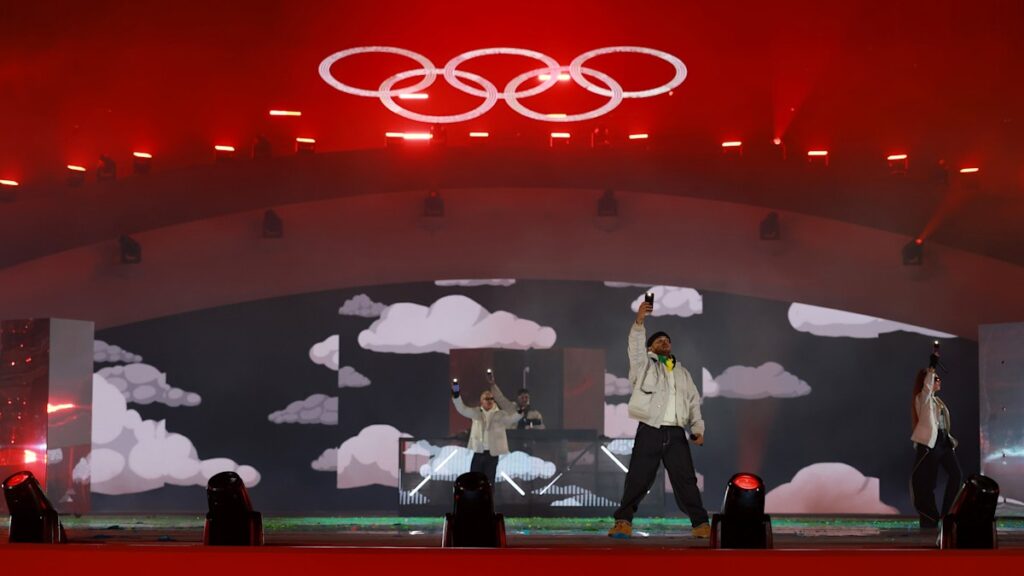
Italy bid a heartfelt farewell to the Winter Olympics on Monday with a breathtaking open-air ceremony held in the ancient Verona Arena. The event celebrated both artistic and athletic achievements, marking the end of a Games that have been praised as a model for future Olympic events. The Milano Cortina Games, co-hosted by Milan and Cortina d’Ampezzo, successfully unfolded across a vast region of northern Italy, culminating in a record-breaking haul of 30 medals for the host nation.
The baton now passes to the French Alps, which are expected to emulate Italy’s strategy of utilizing multiple existing winter sports venues in 2030, aiming to minimize environmental impact. International Olympic Committee President Kirsty Coventry expressed gratitude, stating,
“Grazie Italia per questi Giochi magici! (Thank you Italy, for these magical Games). You delivered a new kind of Winter Games and you set a very high standard for the future.”
Celebrating Italian Excellence
The closing ceremony, aptly titled “Beauty in Action,” featured a stunning aerial performance by renowned Italian ballet dancer Roberto Bolle, alongside tributes to opera and dance music by DJ/producer Gabry Ponte. Prime Minister Giorgia Meloni praised the Games for instilling a sense of pride and prestige in Italy, noting on social media that the organization had “brought prestige to the entire nation.”
Meloni was among the audience in the historic Roman amphitheatre, a venue known for its operatic and pop concerts, located in the heart of Verona—a city immortalized as the setting for Shakespeare’s “Romeo and Juliet.” Security was heightened around the 2000-year-old Arena, with barriers and a helicopter patrol ensuring safety. However, some tourists were caught off guard by restricted access to the main Piazza Bra.
Protests and Public Sentiment
Despite the celebratory atmosphere, the event was not without controversy. Hours before the closing ceremony, hundreds marched through Verona to protest against rising housing costs and environmental concerns associated with the Winter Games. The “Olympics? No thanks” rally was organized by university groups and associations critical of the event’s impact on local ecosystems and social inequality.
Nevertheless, the closing ceremony maintained a relaxed and festive tone. Italian singer Achille Lauro joined Gabry Ponte to energize the crowd, with ticket prices ranging from 950 euros to 2,900 euros. The weather cooperated, offering a chilly yet dry evening for the festivities.
Future Aspirations and Positive Feedback
Verona’s mayor, Damiano Tommasi, expressed enthusiasm for the ceremony, suggesting it could inspire a future bid for the Summer Games in Italy. Reflecting on Italy’s Olympic history, he noted the absence of the Summer Games since Rome hosted them in 1960, and the city’s withdrawn bid for the 2024 Games.
The innovative approach of the Milano Cortina Games, spreading events over a wide area, received positive feedback from athletes. US freestyle skier Christopher Lillis commended Italy’s hosting, highlighting the quality of the venues, food, and welcoming atmosphere. Olympic flames have burned in Milan and Cortina d’Ampezzo since the Games commenced on February 6, and while they will be extinguished on Monday, they will reignite for the Paralympics, scheduled for March 6-15.
As the world looks ahead to the next Winter Olympics, the legacy of the Milano Cortina Games will likely influence future hosts in balancing environmental considerations with the grandeur of the Olympic spirit.