




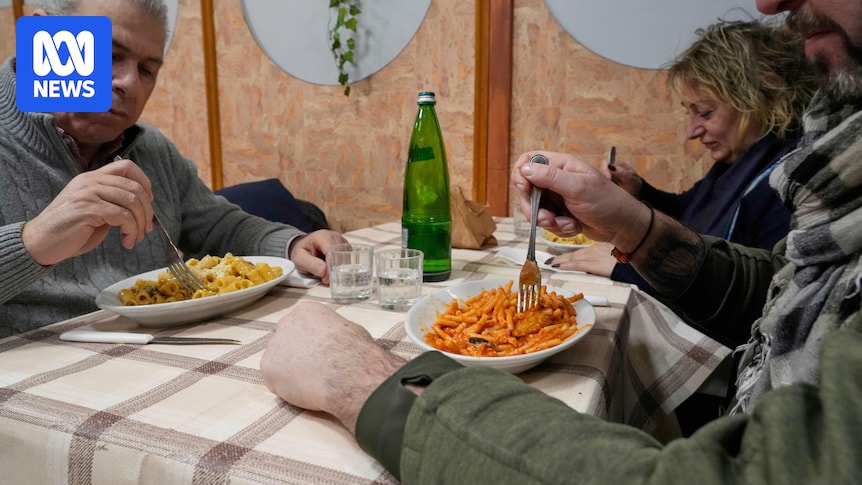
The United Nations’ cultural agency has bestowed a prestigious honor upon Italian cuisine, recognizing it as part of the world’s “intangible” cultural heritage. This designation celebrates not only the globally cherished flavors of pizza, pasta, and tiramisu but also the rich traditions and rituals that surround Italian food preparation and consumption.
UNESCO’s decision to include Italian cooking in its list of traditional practices and expressions underscores the cultural importance Italians place on the act of cooking and eating. While Italy is already well-represented on UNESCO’s list of World Heritage sites with landmarks such as the Colosseum and Pompeii, this new recognition highlights the country’s culinary rituals.
Rituals and Traditions
The UNESCO citation did not focus on specific dishes or regional specialties. Instead, it highlighted the cultural significance of the rituals associated with Italian cuisine. These include the cherished Sunday family lunch, the tradition of grandmothers teaching grandchildren the art of folding tortellini dough, and the communal act of sharing a meal.
“Cooking is a gesture of love, a way in which we tell something about ourselves to others and how we take care of others,” said Pier Luigi Petrillo, a member of the Italian UNESCO campaign and professor of comparative law at Rome’s La Sapienza University.
Italian Premier Giorgia Meloni celebrated the designation, emphasizing its reflection of Italian identity. “Because for us Italians, cuisine is not just food or a collection of recipes. It is much more: it is culture, tradition, work, wealth,” she stated.
Global Recognition of Cultural Practices
UNESCO convenes annually to consider new candidates for its lists of “intangible heritage.” These lists include a representative list, practices in “urgent” need of safeguarding, and a list of good safeguarding practices. This year, the committee meeting in New Delhi reviewed 53 nominations for the representative list, which already featured 788 items.
Among other nominees were Swiss yodelling, the hand loom weaving technique used for Bangladesh’s Tangail sarees, and Chile’s family circuses. Italy’s submission emphasized the “sustainability and bio-cultural diversity” of its cuisine, noting the value placed on seasonality, fresh produce, and minimizing waste.
“For me, Italian cuisine is the best, top of the range. Number one. Nothing comes close,” said Francesco Lenzi, a pasta maker at Rome’s Osteria da Fortunata restaurant, near Piazza Navona.
Historical and Cultural Context
Italy’s culinary traditions have evolved over centuries, influenced by regional diversity and historical interactions with other cultures. While some argue that spaghetti has roots in China, Italians have transformed noodles into a global phenomenon, showcasing their culinary ingenuity.
Francesco Lenzi credits his passion for Italian cooking to his grandmother, whom he fondly remembers as the “queen of this big house by the sea” in Camogli, a small village on the Ligurian coast. “I remember that on Sundays she would make ravioli with a rolling pin,” he recalled. “This stayed with me for many years,” he added, reflecting on the enduring impact of familial culinary traditions.
Implications and Future Outlook
The UNESCO designation not only honors Italian cuisine but also underscores the importance of preserving cultural heritage in an increasingly globalized world. As countries continue to share and adapt culinary practices, the recognition of Italian cooking serves as a reminder of the deep cultural roots and communal values embedded in food traditions.
Looking ahead, this recognition may inspire other nations to seek similar acknowledgments for their culinary practices, fostering a greater appreciation for the diverse tapestry of global food culture. Meanwhile, Italy’s culinary community continues to celebrate its rich heritage, ensuring that the rituals of cooking and sharing meals remain vibrant for generations to come.