



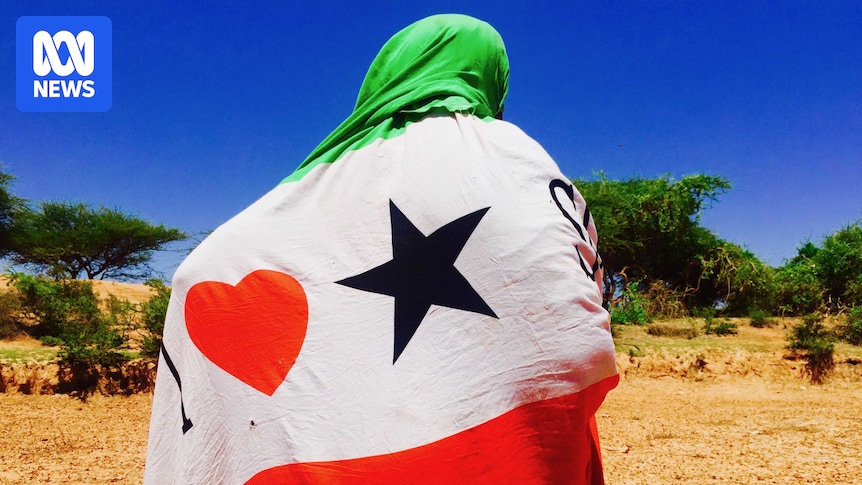
Somalia’s foreign ministry has strongly condemned Israel’s recent recognition of its northern region, Somaliland, as an independent state, citing concerns over regional stability. The ministry described Israel’s move as a “deliberate attack” on Somalia’s sovereignty, warning that it could “undermine regional peace”.
In a formal statement, the Somali government emphasized that such “illegitimate actions” could exacerbate political and security tensions in the region. Israel’s recognition of Somaliland as an “independent and sovereign state” was announced on Friday, accompanied by an agreement to establish diplomatic ties. This marks the first official recognition for Somaliland, a significant milestone for the region’s leader, President Abdirahman Mohamed Abdullahi, who has prioritized international recognition since taking office last year.
International Reactions and Crisis Talks
The announcement has prompted a flurry of diplomatic activity. Sources within the Somali prime minister’s office revealed that the government convened a crisis meeting on Friday evening. Several countries have also condemned Israel’s decision. According to one source, Somalia is in communication with its key international partners to discuss the issue.
Israeli Prime Minister Benjamin Netanyahu’s office confirmed the recognition, stating it aligns with the spirit of the Abraham Accords—agreements brokered by former US President Donald Trump to normalize ties between Israel and several Arab nations. Netanyahu extended an invitation to President Abdullahi to visit Israel, underscoring the potential for a “strategic partnership”.
Arab Nations and Regional Organizations Respond
Arab nations have swiftly denounced the move. Türkiye, a close ally of Somalia, criticized Israel’s action as part of an “expansionist policy” and interference in Somalia’s domestic affairs. Egypt’s foreign ministry reported that its top diplomat engaged in discussions with counterparts from Türkiye, Somalia, and Djibouti, all of whom condemned the recognition and reaffirmed their support for Somalia’s unity and sovereignty.
The Gulf Cooperation Council (GCC), a regional bloc of six nations, issued a statement condemning the Israeli move as a “grave violation” of international law and a threat to regional stability. The GCC’s Secretary-General, Jasem Mohamed Albudaiwi, warned that this recognition could set a dangerous precedent, potentially leading to increased tensions and conflicts in the Horn of Africa.
The Saudi-based Organisation of Islamic Cooperation (OIC) also expressed its “categorical rejection” of Israel’s decision, emphasizing the importance of maintaining peace and stability in the Horn of Africa.
Strategic and Economic Implications
Analysts suggest that strategic considerations may have motivated Israel’s decision to recognize Somaliland. The Institute for National Security Studies highlighted Israel’s need for allies in the Red Sea region, particularly in light of potential future conflicts involving Yemen’s Iran-backed Houthi rebels. Somaliland’s strategic location could offer Israel access to an operational area near conflict zones.
Economic factors also play a role. Israel’s recognition could pave the way for economic cooperation, providing Somaliland with opportunities for foreign investment and aid—a significant development for a region that has struggled with isolation since its unilateral declaration of independence in 1991.
“Israel requires allies in the Red Sea region for many strategic reasons, among them the possibility of a future campaign against the Houthis,” noted the Institute for National Security Studies.
Historical Context and Future Prospects
Somaliland’s quest for international recognition dates back to its declaration of independence from Somalia in 1991. Despite establishing its own currency, passports, and military, the region has faced decades of diplomatic isolation. Last year, a deal with Ethiopia to lease a stretch of coastline for a port and military base further strained relations with Somalia.
Israel’s efforts to strengthen ties with Middle Eastern and African nations have been ongoing. The Abraham Accords, signed during Trump’s presidency, saw countries like the United Arab Emirates and Morocco normalize relations with Israel. However, recent conflicts, particularly in Gaza, have complicated these diplomatic efforts.
As the situation unfolds, the international community will be watching closely to see how this recognition impacts regional dynamics and whether it leads to further diplomatic breakthroughs or increased tensions.