



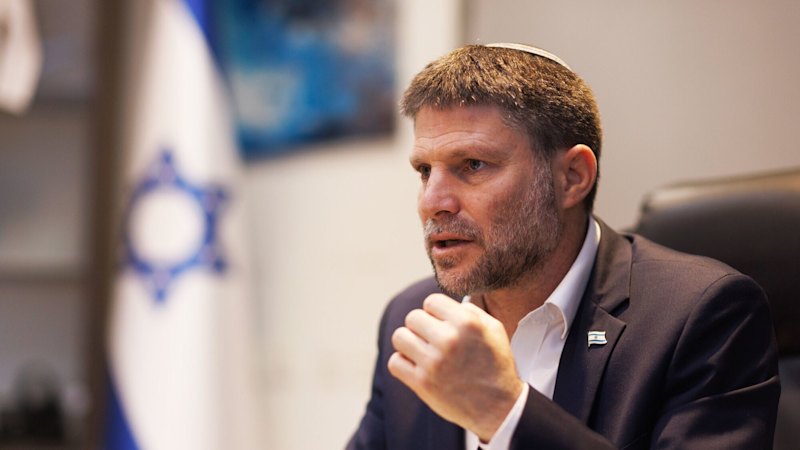
Tel Aviv: In a move that has intensified international scrutiny, Israel’s cabinet has approved a proposal for 19 new Jewish settlements in the occupied West Bank. This decision, announced by the country’s far-right Finance Minister Bezalel Smotrich, is part of a broader push by the government to expand construction in the disputed territory, further complicating the prospects for a future Palestinian state.
The latest approval marks a significant increase in settlement activity, with the total number of new settlements reaching 69 over recent years—a record high. This expansion comes amid a backdrop of heightened tensions and ongoing violence in the region, as well as international calls for peace and stability.
Settlement Expansion: A Historical and Political Context
The decision to approve these settlements comes as the United States encourages Israel and Hamas to progress with the second phase of a Gaza ceasefire, which was initiated on October 10. The US-brokered plan aims to establish a “pathway” to a Palestinian state, a goal that the new settlements seem to undermine.
Historically, settlements have been a contentious issue, with many in the international community considering them illegal under international law. The recent cabinet decision also includes the retroactive legalization of certain settlement outposts and the establishment of new settlements on land previously evacuated by Palestinians.
Notably, two of the settlements, Kadim and Ganim, were initially dismantled in 2005 as part of Israel’s disengagement plan from the Gaza Strip. However, efforts to resettle these areas have persisted, especially after the Israeli government repealed the 2005 act that barred Israelis from returning to these locations.
Impact on Palestinian Statehood Prospects
The expansion of settlements is seen as a direct challenge to the viability of a Palestinian state. According to Peace Now, an anti-settlement watchdog, the number of settlements in the West Bank has increased by nearly 50% under the current far-right government. As of 2022, there were 141 settlements; the latest approval brings this number to 210.
Israel captured the West Bank, along with East Jerusalem and Gaza, during the 1967 war. These areas are claimed by Palestinians as part of their envisioned future state. The presence of more than 500,000 Jewish settlers in the West Bank and over 200,000 in East Jerusalem complicates any potential negotiations for a two-state solution.
Escalating Violence and International Reactions
The approval of new settlements coincides with a surge in violence against Palestinians in the West Bank. According to the United Nations, there has been an alarming increase in settler attacks, particularly during the olive harvest season. These attacks have included the burning of cars, desecration of mosques, and destruction of cropland.
During October, settlers launched an average of eight attacks daily, the highest since the UN began collecting data in 2006.
Meanwhile, the Israeli military has intensified operations in the West Bank following a Hamas-led attack on October 7, 2023, which sparked the ongoing conflict in Gaza. The Palestinian Health Ministry reported that two Palestinians, including a 16-year-old, were killed in recent clashes with Israeli forces.
Religious and Humanitarian Dimensions
Amidst the political turmoil, religious leaders are striving to maintain a sense of community and hope. Cardinal Pierbattista Pizzaballa, the top Catholic leader in the Holy Land, recently visited Gaza’s only Catholic Church to celebrate a pre-Christmas Mass. His visit underscores the role of religious institutions as beacons of stability in a region fraught with conflict.
The Holy Family Parish in Gaza City has become a refuge for both Christians and Muslims, providing shelter to hundreds displaced by the conflict. Despite the destruction, there is a palpable desire among the community for renewal and peace.
“It is different this time,” Cardinal Pizzaballa remarked. “I saw the new desire for a new life.”
As the situation continues to evolve, the international community remains watchful. The recent developments in settlement expansion are likely to influence future diplomatic efforts and the broader quest for peace in the Middle East.