
Standing beneath the imposing stone walls of one of the most ancient and revered sites in the West Bank, Yishai Fleischer bluntly assessed its significance in modern times. “It’s something that should be bringing people together, but oftentimes places like this actually make people jealous and tear them apart,” he said. Fleischer’s remarks at the Tomb of the Patriarchs in Hebron, south of Jerusalem, underscore the ongoing tensions as Israeli settlers push for control over the West Bank, a region home to millions of Palestinians.
The Tomb of the Patriarchs, believed to be the burial place of the prophet Abraham—a significant figure in Judaism, Islam, and Christianity—is a site of both religious reverence and political contention. The structure, divided into a synagogue and a mosque, symbolizes the complex history of control and conflict in the region. Fleischer’s view reflects a broader sentiment within the Israeli settler movement and parts of Israeli society that claim all land west of the Jordan River as Jewish land, a belief fueling legislative pushes to annex the West Bank.
Political Dynamics and International Reactions
This push for annexation has found support within Benjamin Netanyahu’s coalition, often described as the most right-wing government in Israel’s history. Despite backing Israel on various fronts, former U.S. President Donald Trump opposed the annexation, stating in September, “I will not allow Israel to annex the West Bank.” However, many argue that de facto annexation has already occurred due to Israel’s extensive control over the region and governmental support for Jewish settlers.
Earlier this week, Israel approved 19 new settlements in the occupied West Bank, including the re-establishment of two dismantled settlements from two decades ago. These settlements, considered illegal under international law, are seen by many in the Israeli government and settler movement as rightful Jewish land. “The Jewish people are resettling this land, this is the heartland of our story,” Fleischer asserted, emphasizing the deep-rooted connection to the territory.
Palestinian Perspective and Rising Tensions
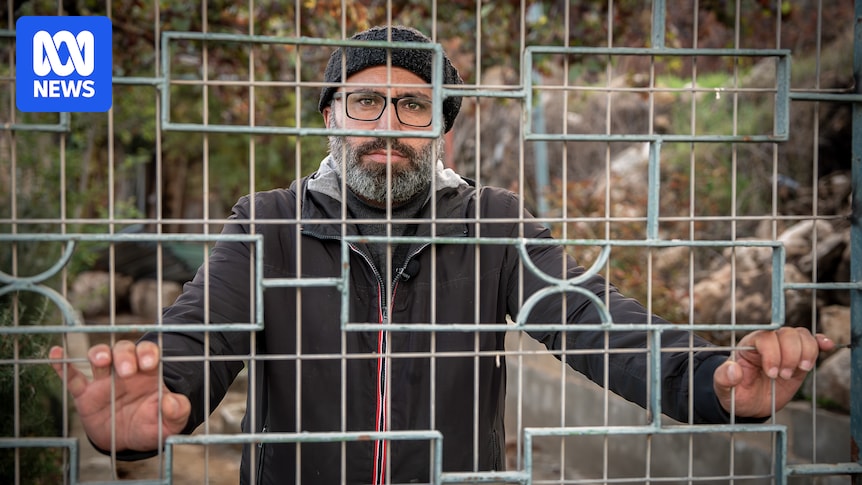
On a hill overlooking the Tomb, anti-settlement activist Issa Amro’s home is encased in tall fencing, a necessary measure, he argues, to protect against settler attacks ranging from rock throwing to fire bombings. “My neighborhood is caged, my city is caged, and my country is caged,” Amro lamented. Attempts to visit his home were blocked by Israeli soldiers, highlighting the restricted access and control exercised by Israeli forces in Palestinian areas.
Amro described Israel’s control over the West Bank as “apartheid,” noting a significant deterioration in the situation since October 7, 2023. “Israeli soldiers got all the support to do whatever they can, because they can do it without any accountability,” he said, accusing Israeli authorities of ignoring settler and soldier misconduct. “The Israeli government now is acting outside the Israeli law and even the international law,” he added.
Annexation Efforts and International Implications
Efforts to impose Israeli sovereignty on the West Bank have been ongoing for decades, but recent months have seen a shift in tone and urgency. Israeli Finance Minister Bezalel Smotrich and National Security Minister Itamar Ben-Gvir, both sanctioned by countries including Australia for their rhetoric towards Palestinians, have been at the forefront of this push. Smotrich introduced the proposal for 19 new settlements to the Israeli cabinet, framing it as “correct and moral Zionism.”
Smotrich’s role includes approving and expanding settlements, a task he has pursued vigorously since taking office. Reports indicate he is advocating for substantial funding for settlements in the upcoming Israeli budget. In October, the Israeli parliament gave preliminary approval to a bill that would effectively annex the West Bank, coinciding with U.S. Vice-President JD Vance’s visit to Israel. Vance criticized the timing, stating, “The West Bank is not going to be annexed by Israel.”
“Israel would lose all of its support from the US if that happened,” Trump warned, underscoring the potential diplomatic fallout.
Human Rights Concerns and Future Prospects
Across the West Bank, approximately half a million Jewish settlers reside in about 140 settlements and up to 300 outposts, with East Jerusalem included, the number rises to around 700,000. While these settlements are deemed unlawful under international law, they are supported by Israeli legislation, often receiving retroactive approval. The Palestinian Authority controls parts of the West Bank, but Israeli security forces maintain a significant presence throughout the region.
Violence by settlers against Palestinians has surged, with the United Nations recording the highest number of attacks since 2006. Fleischer, armed during his interview, downplayed the violence, attributing it to a small fraction of society. “If there’s illegal action being done, they’ll be taken care of,” he stated, criticizing international opposition to settlements as a threat to Jewish survival.
Michael Sfard, a leading Israeli human rights lawyer, highlighted the unprecedented intensity of Israeli actions in the West Bank. “We have the most radical government Israel has ever had,” he said, noting the powerful influence of the settler movement within the government. As tensions escalate, the international community watches closely, aware that the decisions made here could have far-reaching implications for regional stability and global diplomacy.