
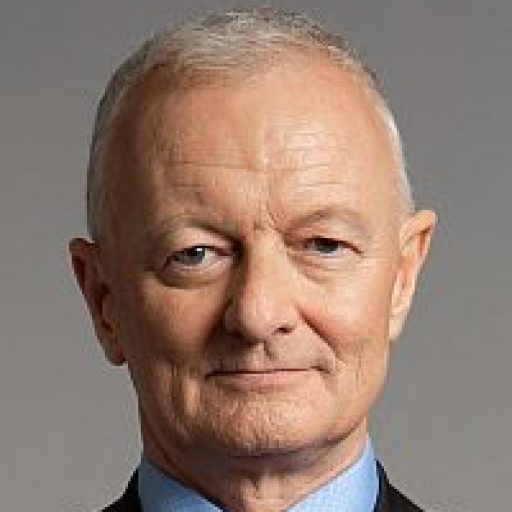


Standing beneath the imposing stone walls of one of the most ancient and revered sites in the West Bank, Yishai Fleischer offers a blunt assessment of its significance in modern times. “It’s something that should be bringing people together, but oftentimes places like this actually make people jealous and tear them apart,” he says.
Mr. Fleischer, an advocate for Israeli settlements, speaks from the Tomb of the Patriarchs in Hebron, a city south of Jerusalem. The site is believed to be the burial place of the prophet Abraham, a significant figure in Judaism, Islam, and Christianity, and is considered one of the holiest places in all three religions. Control of the building has shifted between conquering forces for centuries, and today it serves as both a synagogue and a mosque.
His description underscores the complex situation in the West Bank, where Israeli settlers are pushing for control over areas inhabited by millions of Palestinians. “It’s a Jewish building on top of Jewish tombs, and the Jewish people have been living at this town and praying here at this tomb for the last 3,500 years,” he argues.
Israeli Settler Movement and Political Push
The belief that all land west of the Jordan River is inherently Jewish has fueled efforts within Prime Minister Benjamin Netanyahu’s coalition, often referred to as the most right-wing government in Israel’s history, to propose legislation for the formal annexation of the West Bank. Despite backing Israel on various issues, former U.S. President Donald Trump opposed this move, stating, “I will not allow Israel to annex the West Bank.”
However, many argue that annexation is already a reality due to Israel’s extensive control over the West Bank and its support for Jewish settlers. Recently, Israel approved 19 new settlements in the occupied West Bank, including the re-establishment of two settlements dismantled two decades ago.
“The Jewish people are resettling this land, this is the heartland of our story, this is the DNA of our people-hood,” Mr. Fleischer states. “We’re connected to this thing inextricably; we’re not going to be connected this way to Brooklyn or to Sydney or Melbourne. It’s not the same.”
Palestinian Perspective and Rising Tensions
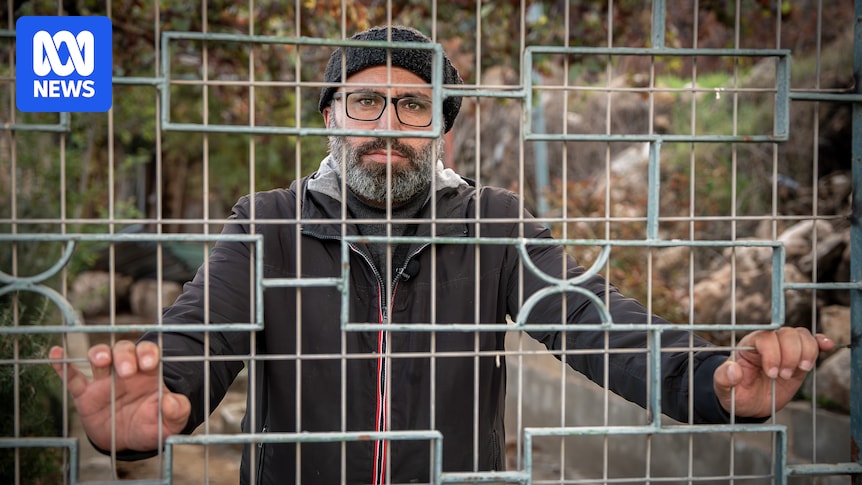
On a hill overlooking the Tomb, anti-settlement activist Issa Amro’s house is surrounded by tall fencing, which he claims is necessary to protect him from settler attacks, ranging from rock throwing to fire bombings. “My neighbourhood is caged, my city is caged, and my country is caged,” he laments.
Amro describes Israel’s control of the territory as “apartheid,” noting a significant deterioration in the situation since October 7, 2023. “Israeli soldiers got all the support to do whatever they can, because they can do it without any accountability,” he says, accusing Israeli authorities of turning a blind eye to settler and soldier misconduct.
“The Israeli government now is acting outside the Israeli law and even the international law, and for sure they are acting outside the Jewish principles and morals,” Amro asserts.
Annexation Efforts and International Reactions
Moves to impose Israeli sovereignty over the West Bank have been ongoing for decades, but recent months have seen an escalation. Israeli Finance Minister Bezalel Smotrich and National Security Minister Itamar Ben-Gvir, both sanctioned by countries including Australia for their rhetoric towards Palestinians, have been at the forefront of this push.
Smotrich introduced the proposal for 19 new settlements to the Israeli cabinet, declaring it “correct and moral Zionism.” He boasts of regulating 69 new settlements within three years, a record-breaking achievement.
Despite international opposition, including from the U.S., Israeli media reports that Smotrich is advocating for significant budget allocations to support settlements and outposts. Meanwhile, the Knesset has given preliminary approval to a bill that would effectively annex the West Bank, a move criticized by both domestic and international figures.
U.S. Vice-President JD Vance remarked, “The West Bank is not going to be annexed by Israel, the policy of the Trump administration is that the West Bank will not be annexed by Israel.”
Implications and Future Prospects
Across the West Bank, approximately half a million Jewish settlers reside in around 140 settlements and up to 300 outposts, many of which receive retroactive approval despite being unauthorized initially. When including East Jerusalem, the settler population rises to about 700,000.
While settlements are deemed illegal under international law, they are supported by Israeli legislation. The Palestinian Authority controls certain areas, but Israeli security forces maintain a significant presence throughout the territory, managing all entry and exit points, including the international border with Jordan.
Violence by settlers against Palestinians has surged, with the United Nations recording the highest number of attacks in October since it began keeping records in 2006. Fleischer, armed during his interview, downplays the violence, attributing conflict to Palestinian actions.
“We have the most radical government Israel has ever had, with the settler movement basically a very powerful element of this government,” comments Michael Sfard, a leading Israeli human rights lawyer.
The situation in the West Bank remains fraught with tension, as international pressure mounts against Israeli annexation efforts. The future of the region hangs in the balance, with both sides entrenched in their positions and the international community closely watching developments.