




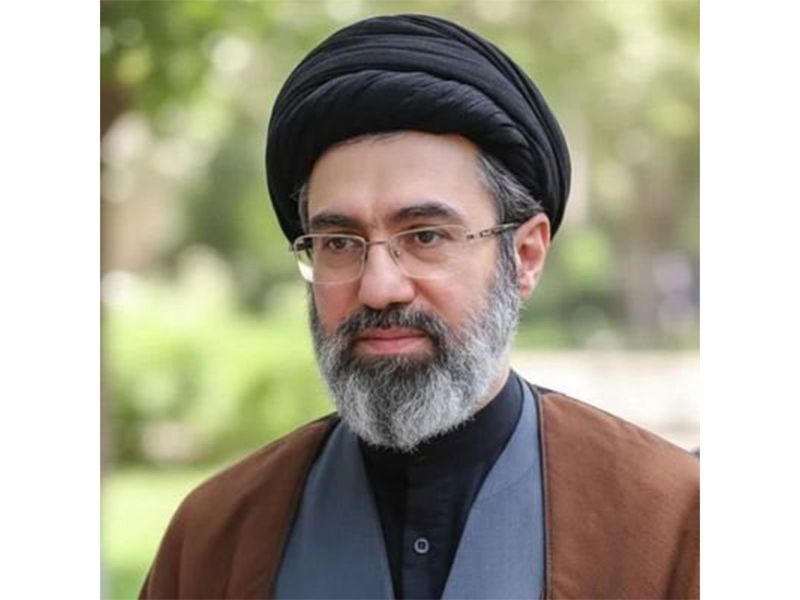
Iran’s newly appointed Supreme Leader, Ayatollah Mojtaba Khamenei, has firmly dismissed any offers of ceasefire or de-escalation, according to sources. This comes as Israel announced on Tuesday that it had killed two prominent Iranian officials: Ali Larijani, a key figure in Iran’s Supreme National Security Council, and Gen. Gholam Reza Soleimani, head of the Revolutionary Guard’s Basij militia.
Larijani, who was believed to be effectively running Iran following the assassination of Ayatollah Ali Khamenei on February 28, and Soleimani, who led the powerful internal security service, were reportedly killed in overnight strikes. Israeli Defence Minister Israel Katz confirmed the deaths, marking a significant blow to Iran’s leadership. In response, Tehran launched a series of missile and drone attacks targeting Gulf nations and Israel.
Escalating Tensions and International Reactions
Ayatollah Mojtaba Khamenei’s stance on retaliation against the United States and Israel was described as “very tough and serious” during his first foreign policy session. An Iranian official noted the leader’s commitment to revenge but did not specify if he attended the session in person.
Meanwhile, U.S. President Donald Trump expressed surprise at the scale of Iran’s retaliation, particularly its targeting of Gulf nations. “The US had not anticipated that Iran would strike beyond its immediate targets,” Trump remarked, highlighting the unexpected nature of Iran’s response. “They weren’t supposed to go after all these other countries in West Asia,” he added, noting the impact on Qatar, Saudi Arabia, UAE, Bahrain, and Kuwait.
Military Operations and Strategic Concerns
According to sources, Trump had been warned of inevitable Iranian retaliation, with concerns that Iran might attempt to close the Strait of Hormuz. In Washington, the Pentagon emphasized the breadth of its campaign, with the US Central Command reporting over 7,000 targets hit across Iran, including missile sites and naval assets.
Trump defended the joint airstrikes with Israel on February 28, arguing that the economic fallout was a “very small price to pay” to prevent a wider conflict. He warned that inaction could have led to a nuclear war, potentially escalating into World War III.
Regional Impact and Casualties
Elsewhere, Israel continued its operations in Lebanon and Iran, while the US Embassy in Baghdad faced another attack. Projectiles were also reported in Abu Dhabi, and a tanker was struck in Oman. Health authorities have reported approximately 1,300 deaths in Iran, 886 in Lebanon, and 12 in Israel since the conflict began. The US Central Command confirmed 13 US service members killed and roughly 200 wounded.
European Response and Diplomatic Efforts
European leaders have rejected Trump’s request for naval assistance to reopen the Strait of Hormuz. Leaders from the UK, Germany, Spain, and Italy have all declined to send ships to the strategic waterway. This refusal coincides with a joint statement from Canada, France, Germany, Italy, and the UK, urging de-escalation between Israel and Hezbollah in Lebanon.
Historical Context and Future Implications
The current tensions echo past conflicts in the region, where proxy wars and geopolitical rivalries have often led to broader confrontations. Experts warn that without diplomatic intervention, the situation could further destabilize the Middle East, affecting global oil supplies and regional security.
As the international community watches closely, the potential for escalation remains high. The coming days will be critical in determining whether diplomatic efforts can prevent a wider conflict or if the region will face further turmoil.