


In a dramatic escalation of tensions, Iran has effectively closed the Strait of Hormuz, a vital waterway for global oil and commodity transportation, following a series of military confrontations with the United States and Israel. The move comes as a culmination of long-standing strategic planning by Iranian “thinkers” and has sent shockwaves through global markets.
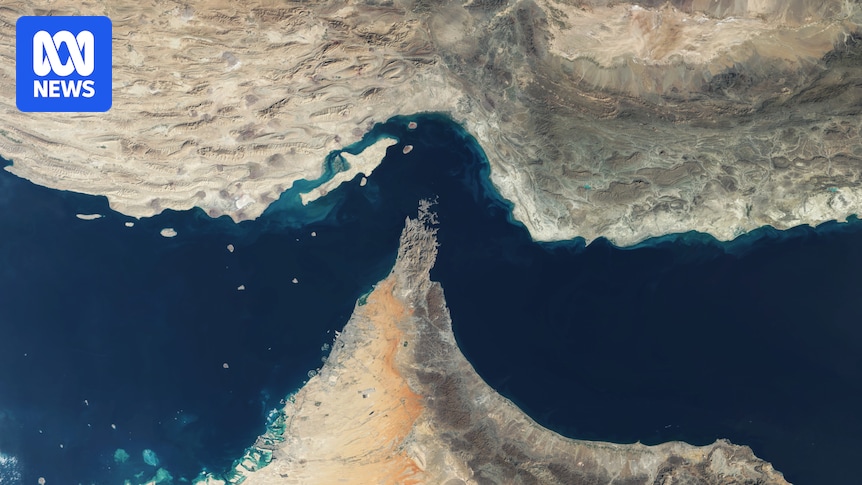
The Strait of Hormuz, at its narrowest point, spans just over 30 kilometers, yet it serves as a critical artery for Persian Gulf nations to export their oil to the Arabian Sea and beyond. This blockade threatens to disrupt not only regional stability but also the global economy, which heavily relies on the free passage of goods through this channel.
Historical Context and Strategic Importance
For decades, military analysts have warned that any conflict involving Iran could lead to the closure of the Strait of Hormuz. This strategic chokepoint, bordered by Iran to the north and Oman to the south, is essential for the transportation of a significant portion of the world’s oil supply.
Dr. Farzin Nadimi, an Iran military analyst with the Washington Institute for Near East Policy, emphasized the strait’s global significance. “This particular body of water is one of the most important strategic choke points in the world,” he stated, highlighting the potential for severe economic repercussions should the passage remain closed.
“From now on, all navigating through the Strait of Hormuz is forbidden,” announced Iran’s Revolutionary Guard, marking a significant escalation in the ongoing conflict.
The Impact of Military Actions
The closure follows a series of military operations, including a significant attack by Israel and the United States on Iranian regime headquarters. The conflict has already seen the loss of key Iranian figures, including Ayatollah Ali Khamenei, further fueling tensions.
Iran’s decision to close the strait has left many foreign ships stranded, with vessels either anchored in coves off Oman or within the Persian Gulf. The threat of attacks by Tehran, utilizing drones, anti-ship missiles, and unmanned surface vessels, has made navigation perilous.
According to Marine Traffic, the number of ships passing through the strait plummeted from over 2,000 in early February to just 166 by early March. This drastic reduction underscores the severity of the situation and the global reliance on this narrow waterway.
Global Economic and Political Repercussions
The closure of the Strait of Hormuz has already begun to impact global oil prices, causing significant economic strain. U.S. President Donald Trump faces mounting pressure as the economic ramifications of the blockade become increasingly apparent.
“Israeli Prime Minister Benjamin Netanyahu is a lot less concerned about the Strait of Hormuz. On the other hand, for President Trump, … there is a lot of economic pain in the US right now directly from the closure of the Strait of Hormuz and that rise in oil prices,” noted Jessica Genauer, an expert in international conflict.
The United States has responded with military strikes targeting Iranian facilities along the Persian Gulf coast. However, the asymmetric nature of the conflict presents significant challenges. Iran’s use of low-tech weapons against high-value targets exemplifies the difficulties faced by more powerful military forces in such engagements.
Iran’s Asymmetric Warfare Tactics
Iran’s control over the strait is managed by the IRGC Navy, which employs unconventional tactics to maintain its grip. The elite unit utilizes a combination of rocket launchers, submarines, and unmanned surface vessels, making it challenging for traditional military forces to counteract.
Dr. Nadimi explained the strategic advantage Iran holds by using fortified island clusters and rocky coastlines to launch surprise attacks. “They have created all these capabilities to take on and watch a more powerful enemy, which is the United States,” he said, highlighting Iran’s preparedness for such a conflict.
“The actor that has less military capability, by not losing, they essentially win or at least get to frame a military conflict as a win because they didn’t lose against this actor with far greater military capability,” Dr. Genauer observed, drawing parallels to historical conflicts where asymmetric warfare proved effective.
Looking Ahead: Potential Outcomes and Global Implications
The situation in the Strait of Hormuz remains precarious, with significant implications for global trade and political stability. The ongoing conflict tests the resolve of international powers and their ability to navigate complex geopolitical landscapes.
As the world watches, the potential for further escalation looms large. The strategic importance of the Strait of Hormuz cannot be overstated, and the outcome of this conflict will likely have lasting effects on global economic and political dynamics.
In the coming weeks, the international community will be closely monitoring developments, hoping for a resolution that restores stability and ensures the continued free flow of trade through this vital waterway.