

Amidst a significant internet blackout in Iran, a Telegram-based chatbot operated by Iran International has emerged as a crucial tool for communication, allowing users to submit messages that may be broadcast on television. This initiative defies the information blackout that has accompanied widespread protests across Iranian cities.
The chatbot was launched in late December, just before the protests began to spread, with the initial aim of collecting photos, videos, and testimonials from within Iran. However, as the internet shutdown began on January 8, cutting off much of the information flow, the chatbot’s role evolved to facilitate communication in the opposite direction.
Adapting to a Digital Blackout
Before the internet shutdown, Iran International reported receiving over ten messages per minute from users inside Iran, many sharing videos and firsthand accounts of the unrest. The tool became essential in relaying these events to the outside world, as foreign media faced strict reporting restrictions.
With most global websites blocked, social media unavailable, and SMS messaging down, many Iranians found themselves with little to no access to the internet. Although some could still make international phone calls, these connections were often unstable and costly. Consequently, families abroad began using the chatbot to send short personal messages, hoping their relatives in Iran would see them on satellite broadcasts, one of the few remaining channels for external information.
The Mechanics of the Chatbot
Iran International has long relied on staff to review and verify user-submitted material, but the growing volume of messages necessitated the introduction of automated tools. Mahdi Tajik, an editorial lead at the network, emphasized that the system does not store personal data, a concern for many users during periods of unrest.
“Within a day, more than 60,000 messages came in,” Tajik noted. “Many people were worried about their families. Many spoke about hope and about freedom being near.”
Users inside Iran who managed to briefly connect to the internet reported that seeing these messages provided them comfort, reinforcing the chatbot’s role as a lifeline for separated families.
Personal Messages Amidst Political Turmoil
The messages often include personal details, addressing specific individuals by name and city. For example, one message read, “My dear husband, Shabnam and I are fine. I hope you are well in Behbahan.” Another from New Zealand stated, “Marjan… I hope you are okay. I found no way to reach you. I hope you see this message.”
These notes, frequently sent by people whose family members are still in Iran, focus on reassurance rather than grim news, highlighting the human aspect of the crisis.
Satellite Television: A Remaining Lifeline
Satellite television remains one of the few ways information can still enter Iran, although authorities have attempted to limit access by seizing satellite dishes in some areas. Meanwhile, Iranians abroad have rallied in cities across Europe, North America, and Australia to support the protesters, calling for international pressure on Tehran.
Despite the limitations of the chatbot, which does not allow two-way communication and offers no guarantee that messages will reach their intended recipients, it remains one of the few methods for families to connect across borders and the digital divide.
International Reactions and Controversies
The protests in Iran have sparked international demonstrations, with Iranian communities abroad holding massive rallies in the US, UK, and Canada. European countries have summoned Iranian ambassadors, while officials in Germany and other states have issued strong statements criticizing Tehran’s handling of the unrest.
Meanwhile, controversial comments by Roger Waters, co-founder of Pink Floyd, have drawn criticism. Waters suggested that calls for political change in Iran were not representative of the public, attributing the protests to economic pressures. His remarks were met with backlash from Iranian users online, who accused him of misrepresenting the protests’ scale and slogans.
“The people of Iran want regime change. The people of Iran are tired of Islam being imposed on them,” an online petition in response to Waters’ comments stated.
Iranian rapper Shahin Najafi and musician Arash Sobhani also criticized Waters, arguing that his comments aligned with the Iranian regime’s narratives.
The Broader Impact of the Protests
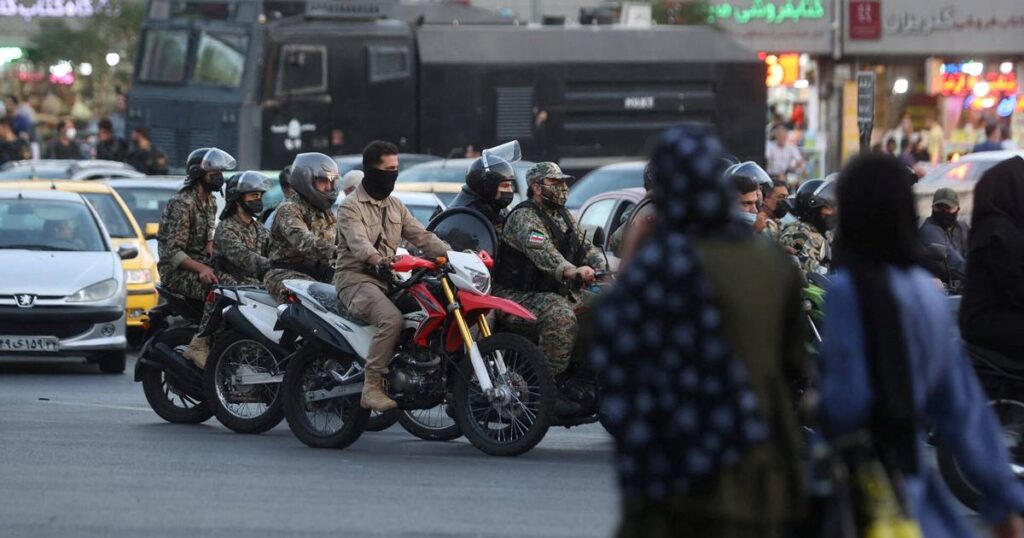
The protests, which began on December 28, have continued despite sweeping security measures and a nationwide internet blackout, now in its 12th day. According to NetBlocks, an internet monitoring group, international connectivity remains minimal, with authorities testing a heavily filtered domestic intranet.
Iranian authorities have not publicly detailed the restrictions’ scope or duration, which activists say have severely limited communication, emergency services, and independent verification of events. The judiciary has warned of swift punishment for protesters, with charges such as moharebeh (enmity against God) carrying severe penalties, including the death sentence.
Amidst this turmoil, the chatbot represents a digital resistance, offering a glimmer of connection and hope for families separated by borders and a digital iron curtain.