


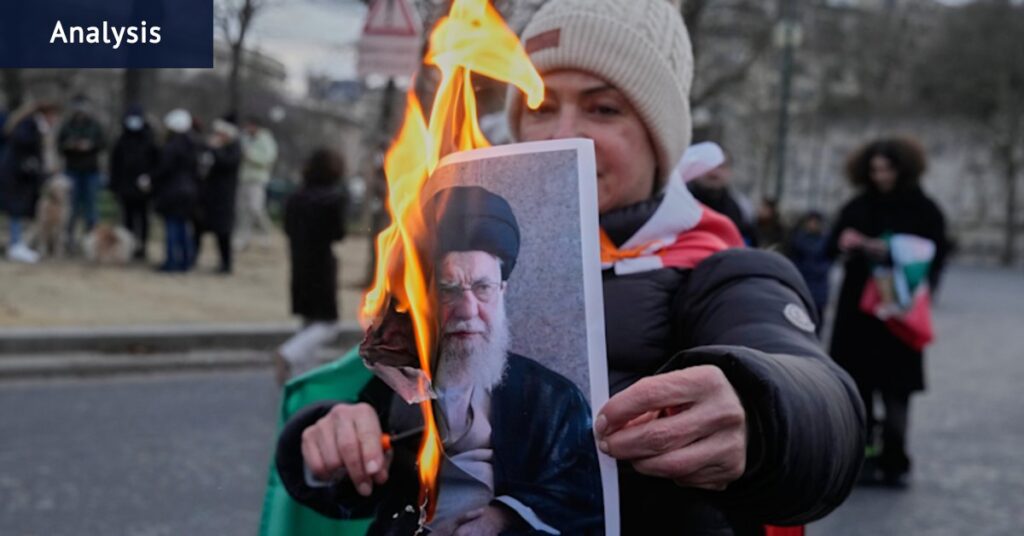
As night falls across Iran, the streets come alive with the fervor of protests that have captured the world’s attention. Leaders from every corner of the globe are closely monitoring the developments, as the possibility of a regime change in the Islamic Republic looms—a shift that could dramatically alter global geopolitics and energy markets.
The regime of Supreme Leader Ayatollah Ali Khamenei, accustomed to quelling dissent, now faces a formidable challenge. The demonstrations, which began two weeks ago, have rapidly spread, with hundreds of thousands reportedly defying threats and a severe crackdown to voice their grievances. From the bustling capital of Tehran to numerous other cities across this nation of 90 million, the call for change grows louder.
International Reactions and Economic Implications
The protests are not occurring in isolation. US President Donald Trump, buoyed by recent geopolitical maneuvers, has expressed support for the demonstrators. His administration has issued repeated warnings to Iran, signaling a potential return to regime change policies. Meanwhile, the global oil market reacts with volatility; Brent crude prices surged over 5% last week, reflecting fears of supply disruptions from OPEC’s fourth-largest producer.
“This is the biggest moment in Iran since 1979,” said William Usher, a former CIA senior Middle East analyst. “The regime is in a very tough spot right now, and the primary driver is the economy.”
According to the US-based Human Rights Activists News Agency, the protests have already resulted in over 500 deaths and more than 10,000 arrests. The Iranian authorities have attempted to stifle the unrest by blocking internet and phone networks, yet the public’s outrage over economic mismanagement and corruption remains unabated.
Geopolitical Stakes and Regional Dynamics
The potential fall of Iran’s regime would reverberate beyond its borders, posing a significant setback for Russian President Vladimir Putin, who has recently lost other regional allies. Meanwhile, Israel, having engaged in a US-assisted air campaign against Iran earlier this year, maintains close communication with European governments regarding the unfolding situation.
For oil traders, the stakes are high, though it remains uncertain if key oil-producing regions like Khuzestan have been affected by the unrest. Reza Pahlavi, the exiled son of Iran’s former shah, has called for petroleum workers to strike, echoing the pivotal oil strikes that contributed to his father’s downfall in 1978.
“There is also growing concern in the market that the US, with Trump at the helm, could exploit the chaos to attempt to overthrow the regime, as we have seen in Venezuela,” noted Arne Lohmann Rasmussen, chief analyst at A/S Global Risk Management.
Potential Outcomes and Future Scenarios
The implications of a regime change in Iran are profound. Emerging markets investor Mark Mobius suggests that a complete governmental overhaul would be the best outcome, while ongoing internal conflict would be the worst. The specter of a power vacuum, reminiscent of the Arab Spring’s aftermath, is a concern for Gulf Cooperation Council (GCC) nations, which have sought to stabilize relations with Iran in recent years.
“A collapse appears unlikely for now. Iranians are frightened of chaos, having seen it wreak havoc in neighboring Iraq and Syria,” said Dina Esfandiary, a Middle East analyst with Bloomberg Economics.
Despite the regime’s weakened state due to economic woes and external pressures, it retains a formidable military arsenal and the backing of the Islamic Revolutionary Guard Corps. Any external military intervention could potentially strengthen the regime’s domestic standing, as seen during past conflicts.
As President Masoud Pezeshkian extends an olive branch to the protesters, offering condolences and calling for dialogue, skepticism remains high. The supreme leader and security forces continue to issue threats, underscoring their readiness to maintain control by force if necessary.
“I don’t think a collapse of the regime would be pretty,” cautioned William Usher. “Short-term, I could imagine some fracturing of the country as ethnic minority groups and some provinces pursue autonomy from Tehran.”
The world watches as Iran stands at a crossroads, with the potential for significant geopolitical shifts on the horizon. Whether the current regime can withstand the mounting pressure or if a new political landscape will emerge remains to be seen.