




Iran has reportedly mobilized 1,000 new “strategic drones” across its military forces, a move interpreted as a countermeasure against potential U.S. air strikes. This development was confirmed by Tasnim, a state-affiliated news agency linked to the Islamic Revolutionary Guard Corps (IRGC), although no images have been released to maintain “military secrets.”
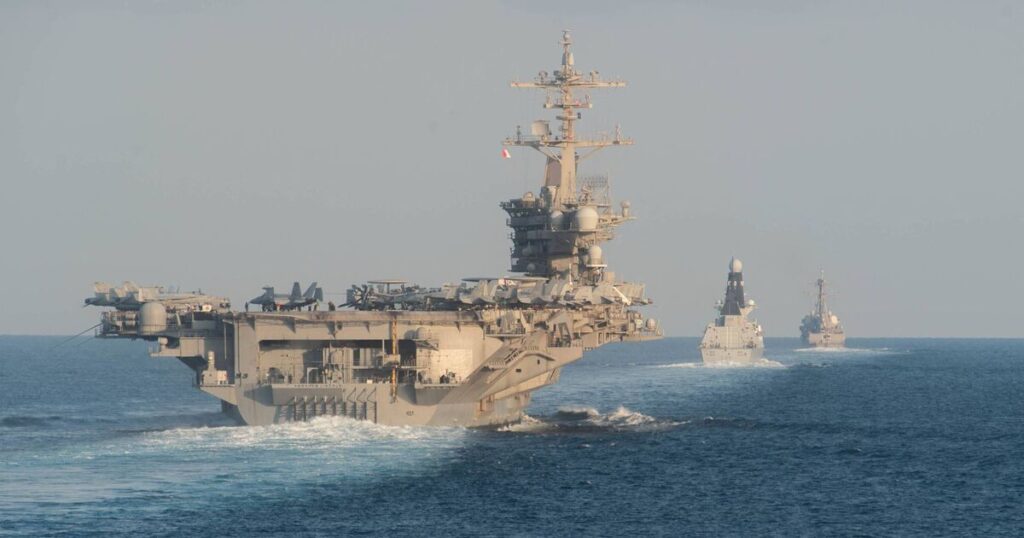
The deployment comes in response to former President Donald Trump’s announcement of sending a naval “armada” to the Gulf Coast. The fleet, led by the Aircraft Carrier Abraham Lincoln, signifies a significant escalation in the region’s military tensions.
Escalating Military Postures
In a statement on Truth Social, Trump declared that the naval forces are prepared to execute a “far worse” strike than the previous Operation Midnight Hammer, which targeted Iran’s nuclear facilities. He emphasized the fleet’s readiness to act swiftly and decisively, urging Iran to negotiate a deal to prevent further conflict.
“A massive Armada is heading to Iran… It is a larger fleet, headed by the great Aircraft Carrier Abraham Lincoln, than that sent to Venezuela,” Trump stated. “Hopefully, Iran will quickly ‘Come to the Table’ and negotiate a fair and equitable deal – NO NUCLEAR WEAPONS.”
Iranian officials swiftly responded to Trump’s remarks, with a senior adviser to Supreme Leader Ali Khamenei warning that any military action would be considered an act of war, promising an immediate and unprecedented response.
Historical Context and Recent Developments
This latest military maneuvering follows a series of threats and counter-threats between the U.S. and Iran. Tensions have been mounting since the U.S. withdrawal from the Iran nuclear deal in 2018, with subsequent sanctions exacerbating the situation. In recent months, Iran has faced internal unrest, with protests leading to significant casualties and international scrutiny.
Trump’s threats have evolved from addressing domestic unrest in Iran to focusing on its nuclear and missile programs. Despite initial hesitance, the former president’s renewed focus on military intervention underscores the ongoing volatility in U.S.-Iran relations.
Expert Opinions and Analysis
Military analysts suggest that the deployment of drones by Iran is a strategic move to enhance its defensive capabilities. Drones have become a crucial component of modern warfare, offering surveillance and strike capabilities that can offset conventional military disadvantages.
According to Dr. Michael Stephens, a Middle East security expert, “Iran’s drone deployment is a clear signal of its intent to deter U.S. aggression. These drones can serve both defensive and offensive roles, complicating any military calculus by the U.S.”
Potential Implications and Future Outlook
The current escalation raises concerns about a potential military confrontation in the Gulf region, which could have far-reaching implications for global security and energy markets. The Strait of Hormuz, a critical chokepoint for oil shipments, could become a flashpoint if hostilities were to break out.
Diplomatic efforts to de-escalate tensions have thus far been unsuccessful, with both sides maintaining firm stances. The international community continues to call for dialogue and restraint to prevent a full-scale conflict.
Looking ahead, the situation remains precarious. The U.S. and Iran are at a critical juncture, with the potential for either diplomatic resolution or further military escalation. Observers are closely watching for any shifts in policy or rhetoric that might indicate a change in direction.
As this story develops, the world waits to see if cooler heads will prevail or if the Gulf region will once again find itself on the brink of war.