



When addiction and mental health disorders coexist—a condition known as dual disorder—scientific evidence suggests that integrated psychological treatment significantly enhances clinical outcomes and reduces the risk of relapse. Recent studies published in the Journal of Clinical Medicine confirm that integrated psychological treatment, where the same team simultaneously addresses both substance use disorder and other mental health disorders, is more effective than treating them separately.
The research, conducted by an international consensus team promoted by the World Association on Dual Disorders and the Spanish Society of Dual Disorders, includes contributions from researchers at the Faculty of Psychology and the Institute of Neurosciences (UBneuro) at the University of Barcelona, CEU Cardenal Herrera University, Bellvitge University Hospital, and the European University of Madrid.
Understanding Dual Disorder
Dual disorder refers to the coexistence of a substance use disorder—such as alcohol or drug addiction—and a mental health disorder, such as depression, anxiety, or schizophrenia. These disorders often interact and influence each other. In some cases, substance use begins as an attempt to alleviate pre-existing discomfort; in others, it precipitates or exacerbates mental health symptoms. Treating only one disorder often results in partial improvement and a higher risk of relapse.
In contemporary clinical practice, the concept also encompasses behavioral addictions, such as gambling disorder, which share clinical and neurobiological mechanisms with substance addictions. According to studies, more than 90% of adults with dual disorder do not receive specific, coordinated treatment for both disorders.
“This lack of a comprehensive approach can hinder recovery and increase the risk of relapse. The consensus highlights that the separation between services or treatments does not always reflect the clinical reality of these individuals,” says Professor Ana Adan, co-author of the studies and member of the Department of Clinical Psychology and Psychobiology at the Faculty of Psychology and UBneuro.
Effective Interventions for Dual Disorders
The studies reviewed available scientific evidence and concluded that psychological treatment is effective for dual disorders. The interventions with the strongest scientific support include motivational interviewing, cognitive-behavioral therapy, relapse-prevention strategies, and multicomponent programs tailored to each individual.
Specific combinations were also analyzed, such as dual disorders associated with anxiety disorders, post-traumatic stress disorders, neurodevelopmental disorders, or personality disorders. In many cases, cognitive-behavioral therapy is the first-line treatment, although researchers note that further research is needed in some areas.
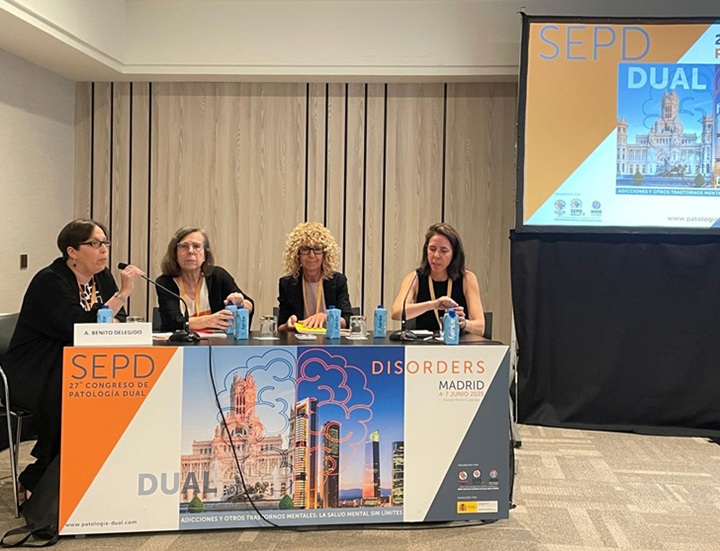
“When addiction and mental health disorders are treated separately, the risk of repeated relapses is higher. An integrated approach helps break this cycle of relapse and improves treatment adherence,” explains researcher Ana Benito, first author of the articles and a member of the Spanish Society of Dual Disorders.
Moving Forward with Evidence-Based Approaches
The research team emphasizes that there are still few randomized clinical trials, and many studies have methodological limitations. Therefore, a research agenda was established at the consensus conference to improve the quality of the available evidence. The participation of professionals from Bellvitge University Hospital in this international consensus reinforces the center’s commitment to evidence-based, integrated, person-centered care.
“Dual disorders require multidisciplinary teams and an integrated approach. Treating the addictive disorder and the mental health disorder separately can limit the effectiveness of treatment. Coordination and personalization of intervention are key. In this regard, the consensus provides a clear scientific framework for moving towards more coordinated, effective, and tailored care for each situation,” concludes Ana Benito.
The findings from these studies underscore the importance of integrated treatment for individuals with dual disorders, offering a path forward for more effective and holistic healthcare solutions.
Reference articles:
- Benito, Ana; Jiménez-Murcia, Susana; Tirado-Muñoz, Judit; Adan, Ana. “WADD-SEPD Consensus on Psychological Treatment of Dual Disorders I: General Recommendations, Most Used Therapies, and Severe Mental Disorders”. Journal of Clinical Medicine, January 2026. DOI:10.3390/jcm15020730.
- Benito, Ana; Jiménez-Murcia, Susana; Tirado-Muñoz, Judit; Adan, Ana. “WADD-SEPD Consensus on Psychological Treatment of Dual Disorders II: Neurodevelopmental, Anxiety, Post-Traumatic Stress, Somatic Symptom, Eating, and Personality Disorders and Recommendations for Future Research”. Journal of Clinical Medicine, January 2026. DOI: 10.3390/jcm15031105.