

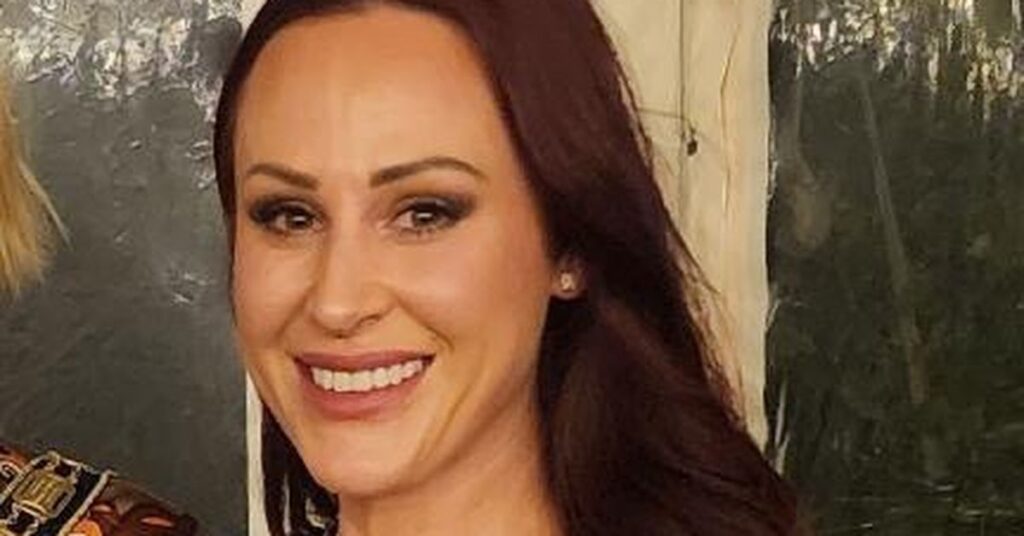
When Danielle Calvaresi was just 13 years old, her grandmother passed away, leaving a lasting impression on the future embalmer. She recalls seeing her grandmother before the funeral, describing her appearance as “grey and waxy”—an image that has stayed with her for over three decades. This moment, however, sparked a passion that would shape her career.
Today, Calvaresi is a Funeral Consultant and Vice Chairman of the Australian Institute of Embalming. “I just began a fascination, and I wanted to be able to do the job so people would be able to have a positive last view of their loved one,” she explained in an interview. “Because I think that is really, really important, because it will always stay with you if it’s negative.”
The Path to Embalming
Calvaresi’s journey to becoming an embalmer was not straightforward. Initially, she pursued a career as a beauty therapist. However, after the birth of her daughter a decade later, she decided it was time to follow her true calling. She secured a position at a funeral home, and when a mortuary technician left, she began gaining experience in the mortuary.
Eventually, Calvaresi was able to enroll in an embalming course, a specialized education available only to those already employed in a funeral home. This training opened the door to a deeper understanding of the profession.
Debunking Myths and Misconceptions
Many people mistakenly believe that embalming is merely about applying makeup, but Calvaresi clarifies that it is a complex scientific process. “There is a big science behind it because it depends on how long they’re going to be in your care for, what they passed away from, the condition they were in when they came into your care,” she said. “There are a lot of factors you have to take into consideration when choosing the chemical.”
Thanks to portrayals in film and television, embalmers are often seen as “creepy people” working in dimly lit basements. Calvaresi counters this stereotype, emphasizing that embalmers are “very normal” people. “I’m sure there are a few oddballs out there somewhere, but everyone that I know, we’re just normal people,” she added.
The Emotional and Psychological Impact
Performing the duties of an embalmer requires a technical rather than emotional approach. “If you get emotionally caught up, you won’t last in the business, unfortunately,” Calvaresi noted. “You have to be able to sort of put up a wall … to make sure it’s going to be a positive viewing experience.”
Despite this professional detachment, the job can be emotionally taxing. Calvaresi admits that some cases are “quite traumatic,” and she relies on debriefing with coworkers to cope. “Humour is a big thing. Not at the expense of anyone, of course, but you’ll notice a lot of people in the funeral industry are some of the funniest people you will meet,” she said. “We need to be able to lean on each other for that emotional support, so we’re not taking it home, so we can switch off before we leave.”
Reflections on Life and Death
Calvaresi’s work has inevitably influenced her perspective on mortality. While she, like anyone, hopes to live a long life, her experiences in the field have given her a “different view on life,” prompting her to question her choices more deeply than most.
Yet, it is the memory of her grandmother that fuels her dedication to her work. “I’ve been in the position where they haven’t looked peaceful, and it does leave sort of like a mark on you,” she reflected. “So, being able to give families that one last chance to hold their hand, to see their face one more time, it just gives me goosebumps even just saying it. That’s what keeps me coming back.”
This article was produced in partnership with CareerOne, highlighting the unique and often misunderstood profession of embalming through the eyes of a dedicated professional.