




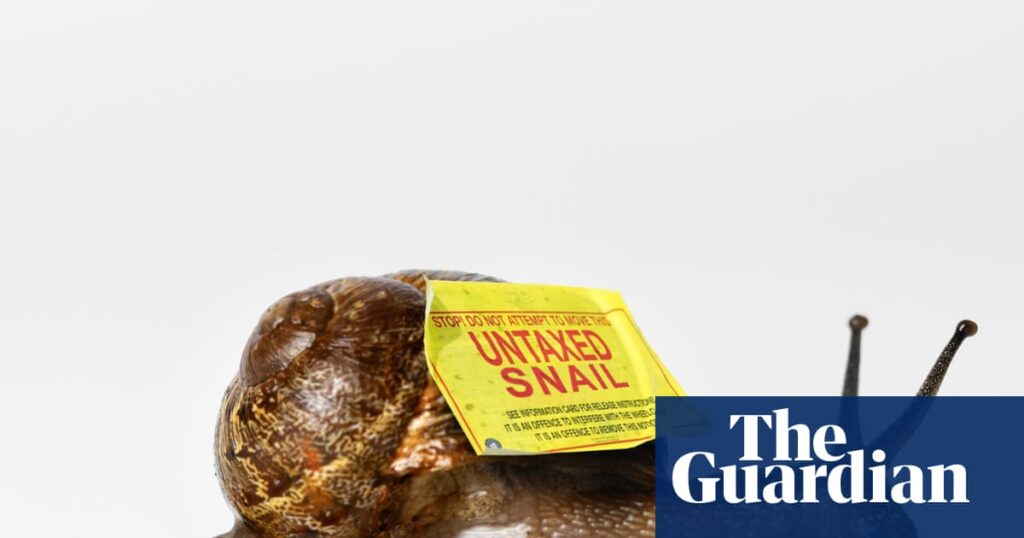
On a damp October afternoon in rural Lancashire, an unusual meeting unfolds in a local pub. Terry Ball, a 79-year-old former shoe salesman turned snail farmer, sits across from a journalist, recounting his audacious tax avoidance scheme. With him is Giuseppe, a man with a colorful past linked to the Naples mafia. Together, they discuss the peculiarities of snail farming and its unexpected role in Ball’s elaborate plan to evade taxes.
Ball’s method is as unconventional as it is bold. By setting up shell companies that ostensibly breed snails in vacant office spaces, he exploits a legal loophole that classifies these properties as farms, thereby exempting them from business rates. “They’re sexy things,” Ball chuckles, describing the rapid reproduction of snails when left to their own devices. This scheme, inspired by a late-night reading of tax guidance, has allowed Ball to dodge millions in taxes, much to the chagrin of local councils.
The Snail Farm Scheme Unveiled
The snail farm operation is a testament to Ball’s ingenuity and disdain for the taxman. At the heart of this scheme is the classification of snail farms as “fish farms,” a legal definition that dates back to the 1980s. This categorization, originally intended to cover oyster farms, inadvertently includes land-based snail farms, thus qualifying them for tax exemptions.
Ball’s snail farms are scattered across London, with Winchester House on Old Marylebone Road serving as a prime example. Here, snails reside in sacks branded with L’Escargotiere, the name of Ball’s farm. The office block, awaiting redevelopment, buzzes with the low hum of snails munching on lettuce, their sole purpose being to facilitate tax avoidance.
From Shoes to Snails: Ball’s Journey
Ball’s story is one of reinvention and resilience. Born into poverty in postwar Blackburn, he followed in his father’s footsteps in the shoe business, eventually branching out on his own. His ventures took him to Italy, where he encountered the Neapolitan mafia, establishing a mutually beneficial relationship that would later influence his business practices.
In the late 2000s, Ball’s frustration with business rates led him to explore alternative methods of tax avoidance. Inspired by former Conservative minister Michael Gove’s critique of Gordon Brown’s tax policies, Ball embarked on a mission to outsmart the taxman. His snail farming enterprise, launched in 2018, was a culmination of years of experimentation and determination.
Legal Loopholes and Mafia Connections
Ball’s connections to the mafia add an intriguing layer to his story. Giuseppe, his employee, has a history intertwined with the Camorra, Naples’ dominant criminal organization. Ball’s past involvement with mafia figures, including hiding fugitives in Lancashire, underscores the complexity of his operations.
Despite his ties to organized crime, Ball insists he was never formally in business with the mafia. Instead, he claims they exchanged favors, with Ball providing refuge to mafia members while benefiting from their connections. This relationship, while legally ambiguous, highlights the blurred lines between legitimate business and criminal enterprise.
Facing the Future: Ball’s Legacy
As Ball approaches his 80th birthday, he remains unrepentant about his tax avoidance tactics. “I just do it for devilment,” he says, relishing the challenge of outwitting authorities. His operations continue to attract scrutiny, with Westminster council actively pursuing legal action against his companies for unpaid taxes.
Ball’s story raises questions about the efficacy of current tax laws and the ease with which individuals can exploit loopholes. Adam Hug, leader of Westminster city council, has called for stronger measures to combat tax avoidance schemes like Ball’s. “We will be on the trail of the snail racketeers,” Hug asserts, emphasizing the need for comprehensive reform.
As the interview concludes, Ball reflects on his legacy. Despite his financial struggles, he takes pride in his ability to challenge the system and maintain a sense of humor in the face of adversity. “I’ve had a laugh,” he says, embodying the spirit of a man who refuses to be defeated by life’s challenges.
This article originally appeared in London Centric, a new investigative news outlet reporting on the people and money that make London.