
A groundbreaking road safety device has been introduced at Queensland’s Bribie Island, a popular tourist destination, just in time for the bustling summer holiday season. Despite being home to a modest population of 22,000, Bribie Island attracts hundreds of thousands of vehicles annually, leading to an increase in wildlife collisions.
The City of Moreton Bay had previously installed high fences around critical areas to mitigate this issue. However, these measures proved insufficient in entirely preventing wildlife from venturing onto the roads. Bernadette May, the coordinator of green infrastructure for the city, explained to Yahoo News that the fences are intended to guide wildlife towards safer crossing points. Yet, there are always sections of fencing that allow animals to slip through.
“You try your best, but you’re always going to have situations where wildlife finds itself on the wrong side of the fence,” May stated. “That’s when it becomes a real issue, because they get stressed.”
Introducing Kangaroo Safety Hatches
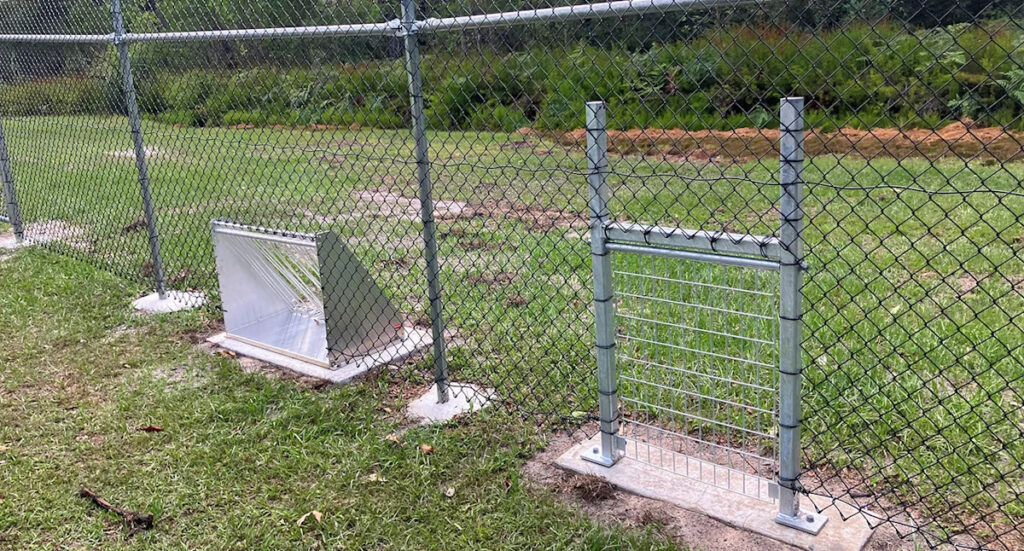
To address this persistent problem, the council has trialed a new line of one-way kangaroo safety hatches. These devices allow animals that have wandered onto the road to escape but prevent them from re-entering.
The Scope of Kangaroo Collisions
Collisions with animals are a significant concern in Australia. In 2024 alone, there were 12,000 claims to insurer IAG across Queensland, New South Wales, the Australian Capital Territory, South Australia, and Western Australia. Kangaroos were involved in 85 percent of these incidents.
Previously, the council had installed 16 smaller koala escape hatches along its roads. These were set up ahead of last year’s breeding season when male koalas roam in search of mates and new territory. Camera monitoring at two sites confirmed that these hatches were utilized by koalas and echidnas, and notably, there were no collisions involving koalas near the hatches.
Expanding the Initiative
This year marked the first trial of larger devices specifically designed for kangaroos and wallabies. Seven hatches were installed at four locations, with some created by Endeavour Veterinary Ecology (EVE) and others designed internally.
The success of these trials has prompted the council to consider expanding the installation of these devices to more locations. There is optimism that other local government areas might adopt similar measures.
Expert Insights and Future Prospects
Natasha Banville, EVE’s technology manager, emphasized the significant impact of these simple devices in protecting wildlife. She suggested that they could potentially be implemented nationwide.
“When it’s estimated that around 10 million native animals are killed on Australian roads each year due to vehicle collisions, research with trials like these are key to reduce human-wildlife conflict on our roads, which are catastrophic, not just for wildlife, but for people on the road too,” Banville said.
Looking Ahead
The introduction of these innovative wildlife escape hatches represents a promising step towards reducing animal-vehicle collisions in Australia. As the council considers broader implementation, the initiative could serve as a model for other regions grappling with similar challenges.
Meanwhile, the ongoing trials and research will continue to provide valuable insights, potentially leading to further advancements in road safety measures designed to protect both wildlife and humans.