



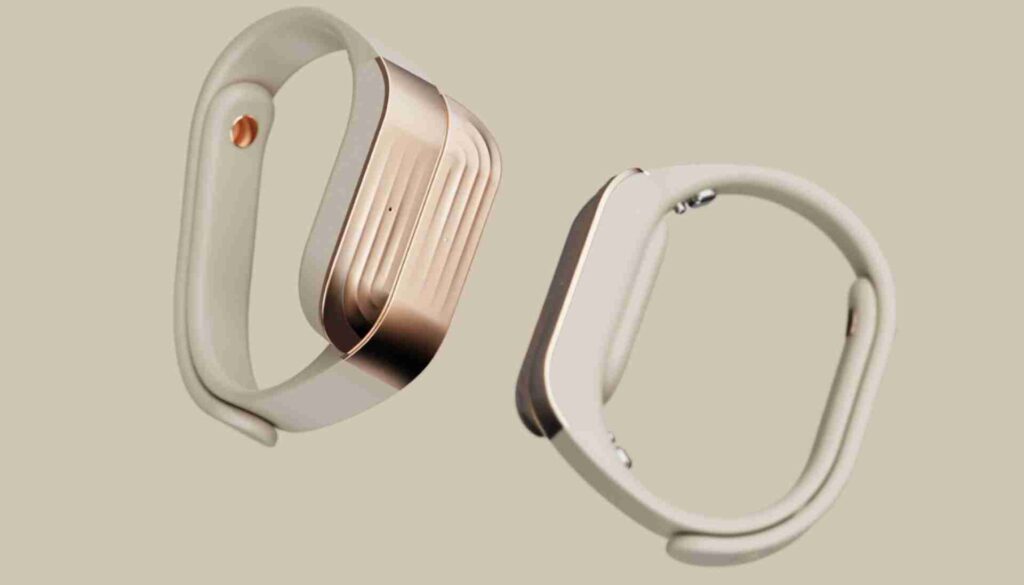
Two Stanford graduates have unveiled an innovative wearable device named Clair, designed specifically to monitor and report on women’s hormone levels. This groundbreaking device emerges in response to the persistent issue of women being overlooked or misdiagnosed in medical settings due to a lack of comprehensive understanding of women’s health. Historically, fitness trackers have been predominantly designed with men in mind, with only recent efforts to incorporate women’s health into the conversation. Clair aims to revolutionize this space by centering women’s health tracking through advanced technology.
Clair utilizes proprietary technology that employs multimodal sensing, integrating 10 biosensors and 500 biomarkers to provide users with insights into their hormonal health. This data can optimize fertility tracking, enhance athletic training efficiency, or monitor hormonal conditions. Unlike traditional methods that rely on invasive blood or urine testing, Clair claims to track hormones such as estrogen, progesterone, LH, and FSH non-invasively. The technology is further enhanced by artificial intelligence trained on a diverse range of women’s health conditions, enabling it to cater to unique health needs.
How Clair Works
Clair’s technology not only tracks hormone levels but also measures standard data collected by most fitness wearables, including temperature, heart rate, sleep, and breathing. This data is contextualized within a user’s hormone levels to understand their impact on overall health. The Clair app is set to launch this month for beta testing, with the device expected to be available for purchase by late 2026. Currently, potential users can reserve their spot with a $1 down payment and $185 upon product launch, half of the retail price of $369. Access to certain features will require a paid subscription.
Clair vs. Other Health Monitoring Devices
Current fitness trackers, even those marketed to women, typically use standard metrics like skin temperature and cycle information to infer hormone changes. While these can provide a general idea of hormonal states, Clair offers real-time, accurate hormone readings, providing women with detailed insights into their bodies.
The Need for Female-Focused Health Technology
Historically, medical research has been predominantly conducted on men, with findings generalized to women. Even in the health tech sector, most wearables have been designed with men in mind before being adapted for women. Clair CEO and co-founder Jenny Duan emphasized, “Women have been making health decisions with almost no hormonal data. Imagine managing diabetes without ever checking glucose; that’s essentially what women have been asked to do with their reproductive and metabolic health.” Clair aims to change this by empowering women with a deeper understanding of their bodies and the significant impact of hormone changes on their overall health.
Implications for the Wearable Tech Industry
Clair represents a pioneering step in creating a women-focused wearable that leverages new technology to provide insights into a crucial aspect of health that has been largely misunderstood or ignored. This device could serve as a catalyst for major brands to develop truly women-centric health devices, beyond just aesthetic considerations like style and size, as seen with Garmin’s Lily line. As fitness wearable brands strive to outpace competitors and offer comprehensive health insights, mastering hormone detection could position a major player like Garmin at the forefront of the industry.
However, Clair must first prove its efficacy upon debut. Should it succeed, integrating similar technology or acquiring Clair in its early stages could enable a leading brand to dominate a significant demographic eager to enhance and optimize their health.
As the health tech landscape continues to evolve, Clair’s introduction may mark a pivotal moment in how women’s health is monitored and understood, potentially setting a new standard for future innovations in the industry.