

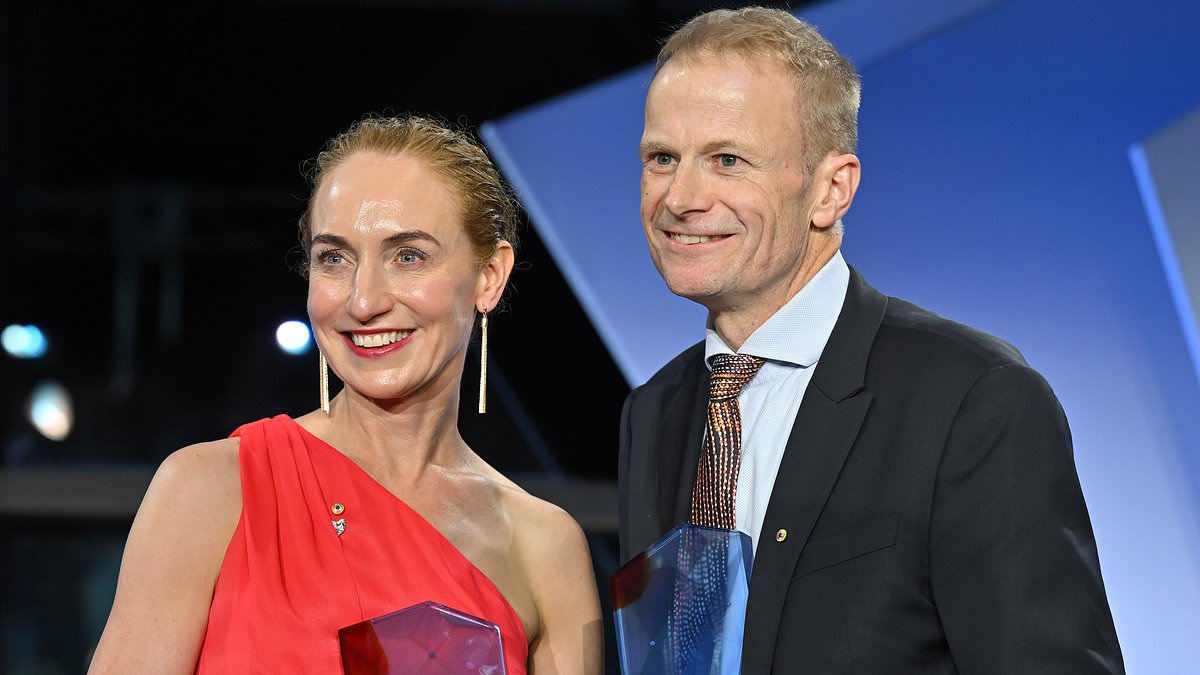

Two distinguished faculty members from the Oregon Health & Science University (OHSU) have been awarded $750,000 grants to support their groundbreaking research projects. The grants, part of the OHSU Faculty Excellence and Innovation Awards, aim to propel innovative research with the potential to significantly advance human health. The awards, funded by the Silver Family Innovation Fund, will be distributed over three years to support promising early- and middle-stage research.
The 2026 awardees include Alireza Karimi, Ph.D., assistant professor of ophthalmology at the OHSU Casey Eye Institute, and Elizabeth Moss, Ph.D., assistant professor of anesthesiology and perioperative medicine at the OHSU School of Medicine. Their work addresses critical health challenges, from glaucoma-induced blindness to cognitive decline in neurodegenerative disorders.
Recognizing Innovative Research
The OHSU Faculty Excellence and Innovation Awards are designed to honor exceptionally creative research that can drive significant advancements in human health. According to Bonnie Nagel, Ph.D., OHSU interim chief research officer, “These scientists are tackling important challenges to human health, from irreversible blindness caused by glaucoma to better understanding mechanisms underlying cognitive decline in neurodegenerative disorders.”
The selection process involved nominations from OHSU deans, center and institute directors, and department chairs, with applications reviewed by prominent scientists nationwide. This rigorous process ensures that only the most promising and innovative projects receive funding.
Alireza Karimi: Pioneering Glaucoma Research
Glaucoma affects over 80 million people globally, including more than 3 million in the United States. It results from increased pressure inside the eye due to a malfunctioning drainage system. Current treatments focus on lowering eye pressure but do not address the root cause, often requiring lifelong management.
Alireza Karimi’s research aims to restore the eye’s natural pressure-regulating abilities, potentially eliminating the need for continuous treatments. His innovative approach combines engineering, computer modeling, biology, and genetics. Karimi’s lab has developed an “outflow-on-a-chip,” a device that mimics the eye’s drainage system, to identify malfunctioning components and test new treatments.
“Our goal is to restore the eye’s natural ability to regulate pressure, moving beyond lifelong drops and surgeries toward a potentially curative therapy that could preserve sight for millions,” Karimi said.
Karimi’s contributions include advanced imaging methods, AI tools for assessing glaucoma risk, and new gene-editing therapies. He co-founded OutFlowGen, a startup focused on developing gene therapies to preserve vision. The Faculty Excellence award will accelerate the translation of these discoveries into treatments that could protect vision for millions.
Elizabeth Moss: Unraveling Sensory Processing in the Brain
Elizabeth Moss’s research explores how the brain processes sensory information, crucial for perception, learning, and thinking. Unlike computers, the brain’s flexible and variable activity allows it to adapt to changing environments and function reliably even with incomplete information.
Moss uses the sense of smell in mice as a model to study how brain cells process signals and how attention reshapes these processes. Her work has significant implications for understanding sensory changes linked to Alzheimer’s and Parkinson’s diseases, potentially guiding new approaches to early detection or treatment.
“It’s going to make it possible to bring in people with complementary skills and expertise. It also gives us the freedom to study biological computations across multiple scales simultaneously and follow the science where it leads,” Moss said.
Moss’s previous discoveries showed that smells are encoded by neuron activity patterns and that the brain retains information about recent odors, aiding memory and distinction in complex environments. The new award will allow her team to connect basic understanding of sensory information to pressing health challenges.
Looking Forward: Impact and Future Directions
The OHSU Faculty Excellence and Innovation Awards underscore the importance of supporting innovative research that addresses critical health challenges. By funding projects like those of Karimi and Moss, OHSU is fostering a culture of creativity and discovery that could lead to significant advancements in medical science.
As these researchers continue their groundbreaking work, the potential for transformative impacts on human health is immense. The awards not only provide financial support but also encourage collaboration and exploration of new scientific frontiers.
With ongoing funding from national institutes and foundations, both Karimi and Moss are well-positioned to make significant contributions to their respective fields. Their research holds promise for improving treatment options and enhancing our understanding of complex health issues.
As the scientific community eagerly anticipates the outcomes of their work, these awards highlight the critical role of innovative research in shaping the future of healthcare.