




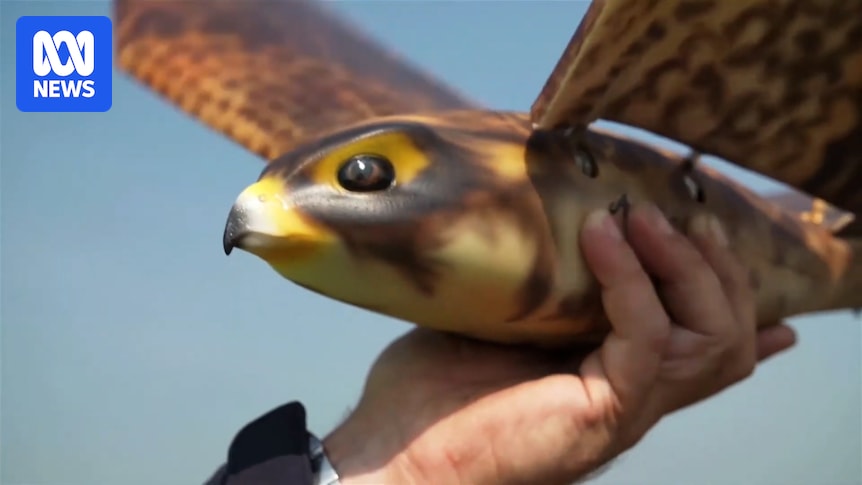
In a groundbreaking effort to safeguard Australia’s fruit and almond orchards, Canadian-made drones designed to mimic peregrine falcons are being deployed. These drones, available in both fixed-wing and flapping wing models, utilize bio-mimicry technology to deter smaller birds from invading and damaging the crops.
The innovative approach comes as many parts of Victoria have experienced minimal rainfall over the past year, prompting birds to seek alternative food sources in agricultural areas. The drones, resembling natural predators, effectively scare off species such as corellas and cockatoos, which are notorious for causing significant crop losses.
Field Testing in Australian Conditions
AERIUM Analytics president Jordan Cicoria has confirmed that field-testing of these drones in Victoria and South Australia has demonstrated their resilience to the Australian climate. “These trials were never about proving whether the technology works — we already know that,” Cicoria stated. “We’re collecting data on the effectiveness of the robot against a range of bird species that cause significant fruit and crop loss in Australia.”
With a decade of operational experience in the mining and aviation industries, these drones have already proven their worth. “In airports, for example, it’s helped significantly reduce bird strikes and prevent birds from landing in dangerous areas,” Cicoria explained. The challenge now lies in translating this success to the agricultural sector, adapting the technology to specific crops and farming systems.
Positive Results in the Field
Ardmona farmer and Victorian Fruit Growers chairman Mitch McNab, who cultivates apples, pears, and stone fruit, has been trialing the drone technology as the harvest season commenced. “So far, we’ve seen reasonably positive results,” McNab reported, noting an increase in bird activity around Goulburn Valley orchards this year due to drier conditions.
“This year has been drier, and birds are clearly looking for alternative food sources: irrigated horticultural crops like apples, pears, and stone fruit become very attractive in those conditions,” he said. Typically, crop losses to birds range from 1 to 3 percent, but this year, losses are estimated to be closer to 3 to 5 percent.
Exploring Cooperative Solutions
To make the technology more accessible, McNab is considering a cooperative model to balance the costs associated with purchasing, maintaining, and operating the drones. “The capital cost of purchasing a drone and having someone operate it isn’t always justifiable for individual growers, especially in lower-pressure years,” he noted. “A shared or cooperative approach would allow better utilization of the technology, and I think that’s something Fruit Growers Victoria and Goulburn Valley growers would seriously consider.”
Implications for the Future
The introduction of these falcon drones represents a significant advancement in agricultural technology, offering a sustainable solution to a persistent problem. As climate conditions continue to fluctuate, the need for innovative methods to protect crops becomes increasingly urgent. The success of this initiative could pave the way for broader adoption across different agricultural sectors, potentially transforming how farmers manage wildlife threats.
Looking ahead, the collaboration between technology providers and agricultural communities will be crucial in refining and expanding the use of such drones. As more data is collected and analyzed, the potential for these drones to become a staple in modern farming practices grows, promising a future where technology and nature work in harmony to sustain vital food sources.