




Despina Linaraki, a lecturer in architecture, has shifted her focus from designing city skyscrapers to creating structures for the underwater world. Swapping her position at Columbia University in New York for the Gold Coast, Linaraki is merging her architectural expertise with a passion for marine science and coral reefs.
“In architecture, you build to last hundreds of years or to protect people from environmental conditions,” the Griffith University researcher explained. “But when you go on these [coral] islands, you see it is a very dynamic ecosystem.”
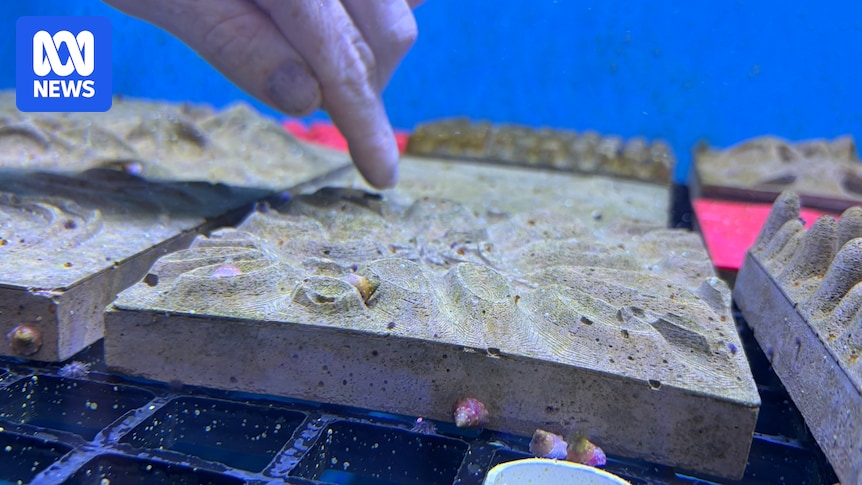
Dr. Linaraki’s latest research, published in the peer-reviewed journal Architecture, explores how artificial structural shapes can aid coral survival as reefs globally face degradation. Coral larvae can float for weeks, but their survival often depends on finding a secure, solid structure on a reef to settle on. Inspired by coral polyps, Dr. Linaraki has developed 75 prototype structures in various designs, colors, and materials.
Corals ‘Choosy’ About Settling
To assess the effectiveness of these prototypes for coral larvae attachment and growth, Dr. Linaraki collaborated with Australia’s largest land-based coral farm at Burnett Heads near Bundaberg, 400 kilometers north of Brisbane. Monsoon Aquatics, which works with hundreds of coral species, has successfully spawned more than a dozen cultured corals from its Bundaberg farm.
Dr. Linaraki reported promising results, with initial findings suggesting settlement rates on the tiles could be four times higher on average than standard flat ceramic tiles.
“It reinforces that corals, particularly coral larvae and planulae, are a lot more clever than what you think, and choosy,” said Monsoon Aquatics head scientist Jonathan Moorhead. “And they have to be because for a lot of corals, once they settle, that’s their forever home, so if they make the wrong choice, that can be life or death for them.”
Dr. Moorhead emphasized that understanding which structures different corals prefer could accelerate the development of cultured corals. Monsoon Aquatics director Daniel Kimberley noted that this knowledge would provide aquaculturists “a huge advantage” by improving efficiency in processes like tile creation.
“It’s another brick in the wall we’re building to help reduce our reliance on wild coral, but also more importantly, scale up our reef restoration work,” Kimberley said.
Solution Needs All Fields
Jennifer Matthews from the University of Technology Sydney’s future reefs research team highlighted the importance of interdisciplinary approaches in coral management strategies. “Coral reefs have immense cultural and social value, as well as their economic and ecological values,” Dr. Matthews stated. She acknowledged the potential for reef science to learn from architecture.
“[Corals] build entire reef structures [which] you can see from space, so maybe they are the biggest architects in the world,” she remarked.
Dr. Matthews noted that while the research is theoretical, it shows promise for practical restoration strategies. “One of the biggest bottlenecks for coral larvae is finding that safe place to live and call home, so without that, you are limiting their survival,” she said. “Projects like this that are looking to reduce that loss at that stage are really important for reef restoration and rebuilding degraded reefs.”
Implications for the Future
The exploration of artificial structures for coral settlement represents a significant step forward in reef restoration efforts. As coral reefs face increasing threats from climate change, pollution, and human activity, innovative solutions like those developed by Dr. Linaraki and her team are crucial.
Looking ahead, the integration of architectural principles with marine science could pave the way for more effective and sustainable reef restoration techniques. By understanding and mimicking the natural preferences of coral larvae, researchers and aquaculturists can enhance the resilience and recovery of these vital ecosystems.
The ongoing collaboration between architects, marine scientists, and aquaculture experts underscores the need for a multidisciplinary approach to address the complex challenges facing coral reefs today. As these efforts continue to evolve, they offer hope for the preservation and restoration of one of the planet’s most valuable natural resources.