




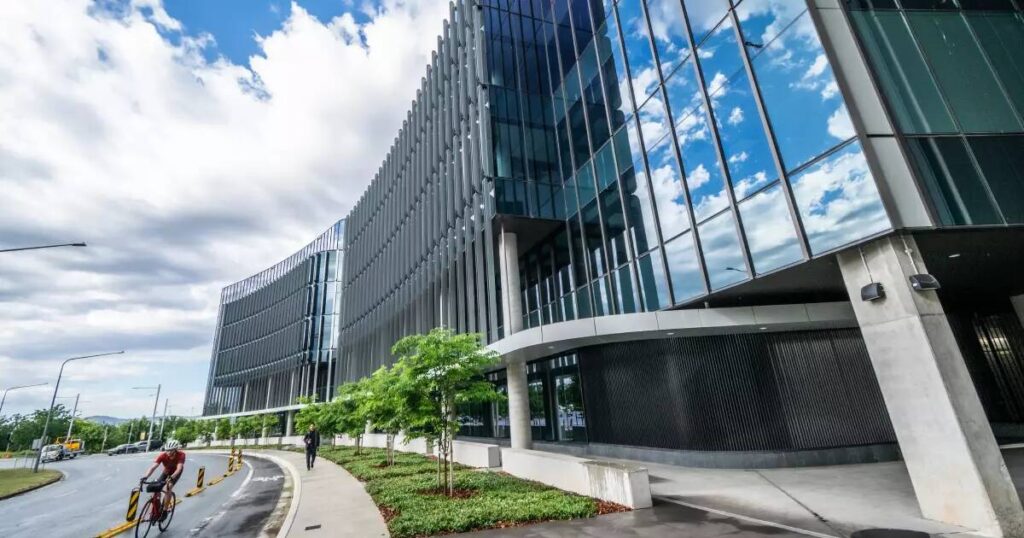
A significant shift in workplace dynamics is underway as the Department of Infrastructure and Transport prepares to downsize its Canberra offices. This move comes in response to data revealing that only about 25 to 35 percent of its 1,900 Canberra-based staff are working from the office on any given day. The announcement was made during a public works committee hearing last week.
The department is planning a major relocation, with over 1,000 staff set to move to the newly developed One City Hill on Vernon Circuit by 2027. Meanwhile, the expiry of current office leases, including the prominent Nishi building, has accelerated the transition to more compact office spaces around City Hill.
Transition to New Office Spaces
Starting as early as next month, staff will begin moving into offices at 7 London Circuit. This transition will occur in stages, ultimately accommodating 843 employees. The building, which was completed late last year, is currently undergoing a $23.4 million fit-out, anticipated to be completed between May and June. The fit-out aims to create a flexible working environment with modern meeting rooms and sensory areas, while also adhering to government-mandated energy ratings.
During a Senate estimates committee meeting on Monday, Nationals senator Matt Canavan highlighted concerns about the fit-out costs, noting that the expenditure of $2,413 per square meter exceeds government guidelines.
Long-term Plans and Financial Implications
In addition to the immediate move, the department plans to utilize a second office space at One City Hill, located approximately 200 meters from 7 London Circuit. This site will become operational in 2027, with plans for a $33 million fit-out, equating to $3,358 per square meter, to accommodate more than 1,200 staff.
The financial implications of these moves have sparked debate, particularly regarding the cost-effectiveness of such investments in light of the growing trend towards remote work. The department’s focus on creating adaptable workspaces reflects a broader shift in workplace culture, driven by technological advancements and changing employee expectations.
Expert Opinions and Future Outlook
Experts suggest that the downsizing of office spaces is a reflection of a larger trend towards hybrid work models. According to workplace strategist Jane Doe, “Organizations are increasingly recognizing the benefits of flexible work arrangements, which not only reduce overhead costs but also enhance employee satisfaction and productivity.”
“The shift towards remote work is not just a temporary response to the pandemic; it represents a fundamental change in how we view workspaces,” Doe added.
As the Department of Infrastructure and Transport navigates these changes, the move is seen as a potential model for other government departments considering similar adjustments. The emphasis on sustainable and flexible office environments aligns with broader governmental goals to reduce carbon footprints and improve workplace efficiency.
Conclusion: What Lies Ahead
The transition to new office spaces in Canberra marks a significant step for the Department of Infrastructure and Transport. As the department adapts to evolving work patterns, it sets a precedent for future office planning and utilization across the public sector. The success of this transition will likely influence similar strategies in other departments, as they seek to balance cost, efficiency, and employee well-being in a rapidly changing work environment.
Looking ahead, the department’s ability to implement these changes effectively will be closely monitored, providing valuable insights into the future of workspaces in the public sector.