
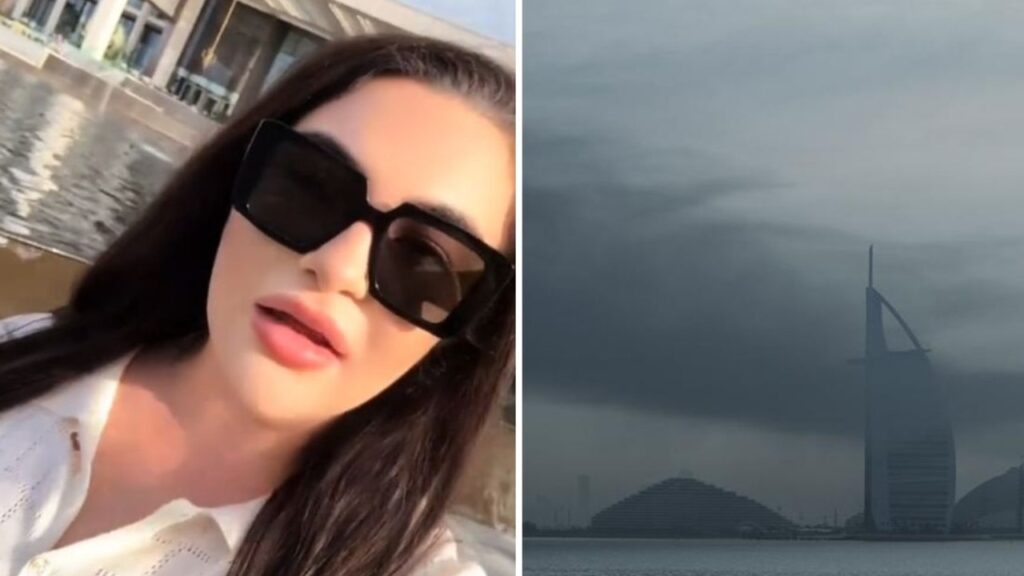
Influencers residing in Dubai have openly criticized fellow internet creators who have chosen to flee the United Arab Emirates following Iran’s missile strikes. As missile interceptions continue over the city, a divide has emerged among influencers, with some labeling those who left as “ungrateful” and akin to “headless chickens.”
This backlash follows two weeks of heightened tension among Dubai-based influencers, who have been scrutinized for their responses to the crisis. Australian influencer Louise Starkey faced significant criticism after stating, “it’s not meant to be happening here,” when missiles first targeted Dubai’s elite.
Influencers’ Divided Reactions
French influencer Maddy Burciaga, who has a following of 2.7 million, admitted to leaving her dog behind in the rush to evacuate, citing excessive paperwork as the reason. Meanwhile, British creator Mitchell Armstrong has taken a contrasting stance, asserting that his luxurious lifestyle remains unchanged despite the ongoing threats.
“Our routine over the last two weeks has not changed. My routine has not changed,” Armstrong declared in a recent post, emphasizing his ability to continue enjoying amenities like the sauna and steam room in his $2.1 million apartment building. He mocked those who fled, describing them as people “running around like headless chickens.”
“All the rich guys, all the guys making money, printing bread either profited off the war or made more money because we are more locked in,” Armstrong said.
Despite his claims, Dubai and other parts of the UAE have experienced a resurgence of missile interceptions since his post last Friday.
Voices of Criticism and Support
Armstrong is not alone in his criticism. Influencer Soudi Al Nadak, with over one million followers, shared her experience, highlighting the current calm in Dubai. “As you can see, it is very quiet and peaceful in Dubai at the moment, but for those people who want to leave, let them leave. I just think they are very ungrateful,” she stated in a recent post.
Al Nadak argued that the home countries influencers are returning to may not offer better safety than Dubai. “I still feel very grateful that I live in one of the safest countries in the world. Like, there is quite literally nowhere else I would rather be right now,” she said, receiving supportive comments from her followers.
Official Warnings and Social Media Restrictions
Before the conflict, approximately 20,000 Australians were living in Dubai. On Thursday, Australian Foreign Affairs Minister Penny Wong advised those comfortable staying to carefully consider their options. “Our view, our advice is if you can secure a seat on a commercial flight, you should take it,” Ms. Wong urged.
The UAE’s strict social media regulations have also come into focus. A British tourist was among at least 21 individuals charged under cybercrime laws after allegedly filming Iranian missile strikes in Dubai. Despite deleting the footage, he was caught in a crackdown, according to the campaign group Detained in Dubai.
Radha Stirling, CEO of Detained in Dubai, described the charges as “extremely vague but serious on paper.”
Under UAE cybercrime laws, individuals can face charges for posting, resharing, or commenting on content deemed to incite public opinion or disturb public security. The UAE Public Prosecution has warned that posting conflict footage from “unknown sources” could lead to fines and imprisonment.
As of February, individuals posting any sponsored content in the UAE must obtain an advertiser permit and adhere to 20 mandatory content standards.
Looking Ahead
The ongoing situation in Dubai highlights the complex interplay between social media influence, public perception, and geopolitical tensions. As influencers continue to navigate these challenges, the broader implications for digital content creators in conflict zones remain significant.
With the UAE’s strict regulations and the potential for further escalations, influencers and residents alike must weigh their options carefully, balancing personal safety with professional obligations.