




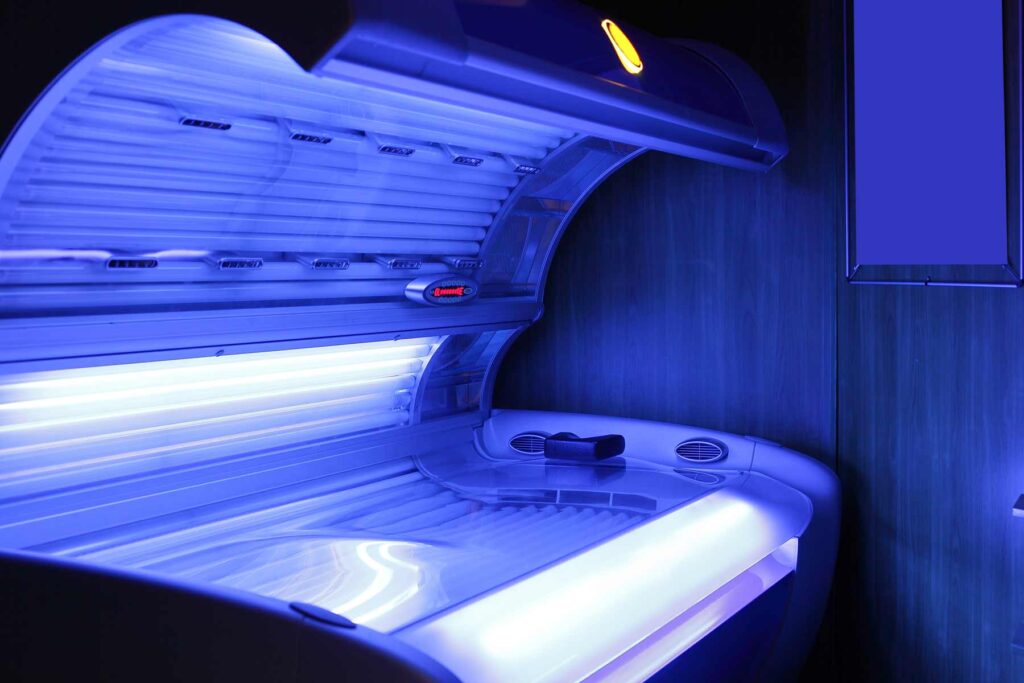
New research reveals that indoor tanning, a popular practice among young adults, accelerates genetic aging of the skin, leading to cellular mutations that could potentially develop into cancers, including the highly lethal melanoma. The study, conducted by researchers from UC San Francisco and Northwestern University, was published on December 12 in the journal Science Advances.
While it is well-known that users of tanning beds have an increased risk of skin cancer, this study is the first to demonstrate that young indoor tanners experience genetic changes that result in more mutations in their skin cells than individuals twice their age. According to Bishal Tandukar, PhD, a UCSF postdoctoral scholar in Dermatology and co-first author of the study, “We found that tanning bed users in their 30s and 40s had even more mutations than people in the general population who were in their 70s and 80s. In other words, the skin of tanning bed users appeared decades older at the genetic level.”
Genetic Mutations and Cancer Risks
The study highlights the dangers of ultraviolet (UV) radiation, which is present in both natural sunlight and artificial sources like tanning beds. These mutations can lead to skin cancer, the most common cancer in the United States, as reported by the American Cancer Society. Melanoma, although accounting for only about 1% of skin cancers, is responsible for the majority of skin cancer-related deaths, with approximately 11,000 Americans dying annually due to melanoma, primarily from UV exposure.
Rates of melanoma have surged alongside the popularity of tanning beds, particularly affecting young women, who are the primary clientele of the tanning industry. Despite numerous countries effectively banning tanning beds and the World Health Organization classifying them as a group 1 carcinogen, akin to tobacco smoke and asbestos, they remain legal and widely used in the U.S.
Study Methodology and Findings
The researchers analyzed medical records from over 32,000 dermatology patients, examining their tanning bed usage, history of sunburn, and family history of melanoma. Additionally, they obtained skin samples from 26 donors and sequenced 182 cells. The findings were alarming: young tanning bed users had more skin mutations than people twice their age, particularly in areas like the lower back, which receives minimal sunlight but significant exposure from tanning beds.
“The skin of tanning bed users was riddled with the seeds of cancer — cells with mutations known to lead to melanoma,” said senior author A. Hunter Shain, PhD, associate professor in the UCSF Department of Dermatology.
Shain emphasized the importance of limiting mutation accumulation, stating, “We cannot reverse a mutation once it occurs, so it is essential to limit how many mutations accumulate in the first place. One of the simplest ways to do that is to avoid exposure to artificial UV radiation.”
Implications and Preventive Measures
The study underscores the need for increased awareness and preventive measures against the use of tanning beds. With the genetic aging of skin posing a significant health risk, public health campaigns could focus on educating young adults about the dangers of artificial UV exposure. The research also calls for stricter regulations on tanning bed usage, aligning with international standards where such practices are banned or heavily restricted.
Authors of the study include a team from UCSF: Delahny Deivendran, Limin Chen, PhD, Jessica Tang, PhD, Tuyet Tan, Harsh Sharma, PhD, Aravind K. Bandari, PhD, Noel Cruz-Pacheco, MS, Darwin Chang, Annika L. Marty, MS, Adam Olshen, PhD, Natalia Faraj Murad, PhD, and Iwei Yeh, MD, PhD. Co-first author Pedram Gerami, MD, is affiliated with Northwestern University, Chicago.
The study received funding from the National Cancer Institute, the National Institute of Arthritis and Musculoskeletal and Skin Diseases, the Department of Defense Melanoma Research Program, and the Melanoma Research Alliance. No conflicts of interest were reported.
As the conversation around skin cancer prevention continues, this study provides a crucial piece of evidence highlighting the genetic consequences of indoor tanning. The findings may prompt further research and policy changes aimed at reducing the incidence of skin cancer and protecting public health.