
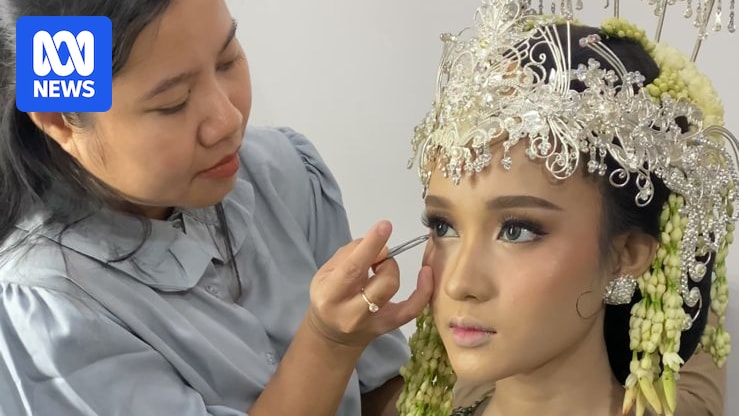
In Indonesia, the traditional trajectory of life—education, marriage, and family—is increasingly being questioned as marriage rates continue to decline. A decade ago, Talitha Rarasty, a makeup artist for wedding events, viewed marriage as a life milestone. “It’s like an achievement and a template in human life,” she said. Yet, as she approaches her 36th birthday, she remains unmarried, reflecting a broader societal trend.
Statistics from Indonesia’s Central Statistics Agency reveal a significant drop in marriage rates over the past decade. In 2014, 2.1 million Indonesians tied the knot, but by 2024, that number had fallen to just 1.47 million. As of December, less than 30 percent of Indonesians aged 16 to 30 were married, highlighting a shift in priorities among the youth.
Economic and Cultural Influences
Desintha Dwi Asriani, a sociologist at Gadjah Mada University, explains that marriage today involves more than just a wedding and children. “Things like housing, raising children, and daily expenses become key considerations that make people feel that getting married requires substantial economic resources,” she noted. Despite these challenges, marriage remains culturally significant in Indonesia, where it is seen as a reflection of maturity and moral standing.
The economic barriers are evident, with many young Indonesians facing difficulties in securing stable jobs and affordable housing. “Nowadays, people need to work hard to be sustainable,” said Angeline Chandra, co-founder of Cindo Match, a matchmaking service. “Especially in Indonesia, where buying a house is very difficult for certain income groups, which affects the desire to get married.”
Challenges of Modern Dating
While marriage remains a priority for many, finding a partner has become increasingly complex due to issues with online dating. Ms. Rarasty’s experiences with dating apps were fraught with challenges, including encounters with married men and scam artists. “When I was younger, I didn’t feel as sceptical toward men,” she said. “But now, there’s so much information about men [and their red flags] and scams [on the dating apps], so I’ve become more careful before taking any steps.”
Relationship coach Rastrianez, who goes by a single name, observed that negative online dating experiences have sparked fear among young people. “Marriage is scary” became a social media trend, particularly on TikTok, where users expressed concerns about infidelity and meeting the wrong person. The abundance of options on dating apps also contributes to overthinking and indecision.
Innovative Approaches to Matchmaking
In response to these challenges, some Indonesians are turning to alternative matchmaking methods. Cindo Match has gained attention for displaying singles’ CVs in shopping centers, inspired by China’s traditional “marriage markets.” The service charges a fee for customers to view real images and contact details of potential partners, emphasizing face-to-face interactions over digital ones.
Ms. Chandra reported that these face-to-face matchmaking events have been surprisingly successful, with at least 40 couples dating and two marriages resulting from her service. “Dating apps [are] a big no-no because there’s a lot of scams and quite a few of my members actually got scammed too,” she said. Her clients, primarily millennials, prefer offline interactions due to their busy schedules.
Government Initiatives and Future Outlook
To address the economic barriers to marriage, Indonesia’s Ministry of Religion has begun funding mass weddings. These events provide couples with dowries, food packages, wedding gifts, and even business start-up funds. “They will stay at a free hotel tonight and get 2 million rupiah ($166) to start a business,” said Religious Affairs Minister Nasaruddin Umar after a recent mass wedding.
However, Dr. Asriani believes that society’s view of marriage needs broader analysis and discussion by the government. “If the government seeks to increase the marriage rate, they should think about how to improve the appeal [beyond offering financial help],” she suggested.
Meanwhile, Ms. Rarasty remains hopeful about her future. “I’ve tried my best, I’ve looked after myself, worked hard, and kept myself open,” she said. “But I believe it’s not the time yet, so I will make peace with the situation and enjoy my life as a single woman.”