



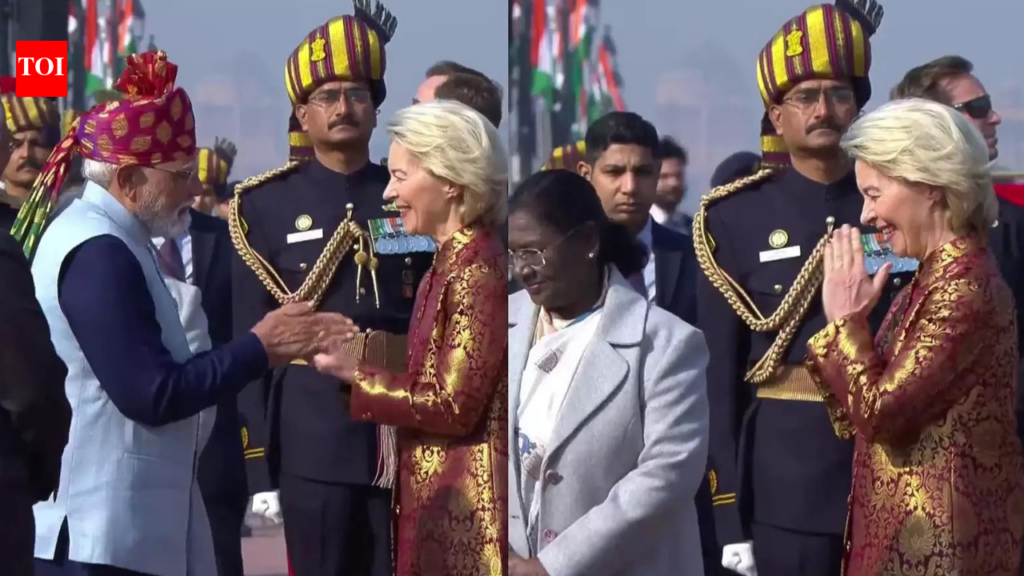
NEW DELHI: India and the European Union have successfully concluded negotiations for a comprehensive free trade agreement (FTA) encompassing goods, services, and various other areas of collaboration. The announcement is expected to be made by leaders from both sides on Tuesday, according to Commerce Secretary Rajesh Agrawal. “It will be a balanced, forward-looking deal for better economic integration with the EU. It will propel trade and investment between both sides,” Agrawal stated on Monday. This agreement, which has been in the works for over 18 years, gained renewed momentum in 2024, partly due to the impact of former US President Donald Trump’s reciprocal tariffs.
The deal signifies a significant step in economic relations between India and the EU, aiming to enhance trade and investment flows. While the agreement is finalized, it is anticipated to take a few months for ratification and is likely to be implemented by early 2027. Over the next two weeks, both parties will work on refining the text of the agreement, which will undergo legal scrutiny over the following 5-6 months before being signed.
Historical Context and Strategic Implications
The negotiations for this FTA have been a long and arduous journey, with discussions initially starting over 18 years ago. The talks were stalled multiple times due to disagreements over key sectors such as agriculture and dairy. However, the shifting global trade dynamics, especially under the influence of protectionist policies from major economies like the United States, have pushed both India and the EU to seek closer economic ties.
The agreement is not just about reducing tariffs but also about strategic alignment. According to Maroš Šefčovič, the European Commissioner for Trade and Economic Security, the FTA aims to establish resilient supply chains and reduce dependencies that are considered risky. “We are looking at ways which would help us find solutions, create new supply chains, and make an even better business case for European car makers, while opening new possibilities for cooperation,” Šefčovič noted.
Key Provisions and Economic Impact
One of the significant outcomes of the FTA is India’s expected zero-duty access to several critical product segments such as textiles, leather, and marine products. In exchange, India has agreed to concessions in sectors like automobiles, wines, and spirits. Šefčovič mentioned that the agreement aims for a full or partial tariff reduction on 97-99% of goods, while considering sensitivities in specific sectors.
The automotive industry is a focal point of this agreement, with the EU seeking a combination of lower tariffs on a specified number of vehicles and a phased reduction approach. “India is a smaller market compared to the EU but is growing rapidly. The auto sector is crucial for both sides,” Šefčovič explained. The FTA is expected to bolster the automotive sector by fostering cooperation between Indian small car manufacturers and European automakers specializing in larger, technologically advanced vehicles.
Next Steps and Future Prospects
While the agreement marks a significant milestone, the path to implementation involves several procedural steps. The agreement will need to be ratified by the European Parliament. However, officials have clarified that it will not require approval from each member state of the 27-nation bloc, as it does not involve “mixed competence.”
The announcement comes amid broader efforts by both India and the EU to strengthen their economic and strategic partnerships. The FTA is expected to create jobs, enhance economic growth, and provide a robust framework for future cooperation. As both sides prepare for the agreement’s implementation, the focus will be on ensuring that the deal delivers on its promise of deeper economic integration and mutual benefits.
As the world watches, the successful implementation of this FTA could serve as a model for other regions seeking to navigate the complexities of global trade in a rapidly changing economic landscape.