




India and the European Union (EU) have successfully concluded negotiations on a landmark Free Trade Agreement (FTA), poised to significantly enhance bilateral trade and economic cooperation. The announcement was made by Commerce Secretary Rajesh Agrawal on Monday, marking a pivotal moment in India-EU relations.
The trade agreement, described as balanced and forward-looking by Agrawal, aims to bolster economic integration between India and the EU. “Negotiations have been successfully concluded. The deal has been finalised,” Agrawal stated, emphasizing the potential for increased trade and investment flows.
Finalization and Implementation Timeline
The legal scrubbing of the FTA text is currently underway, with efforts to expedite the signing of the pact. The agreement is expected to be signed within this year and could come into effect by early next year, pending approval from the EU Parliament and the Indian Union Cabinet.
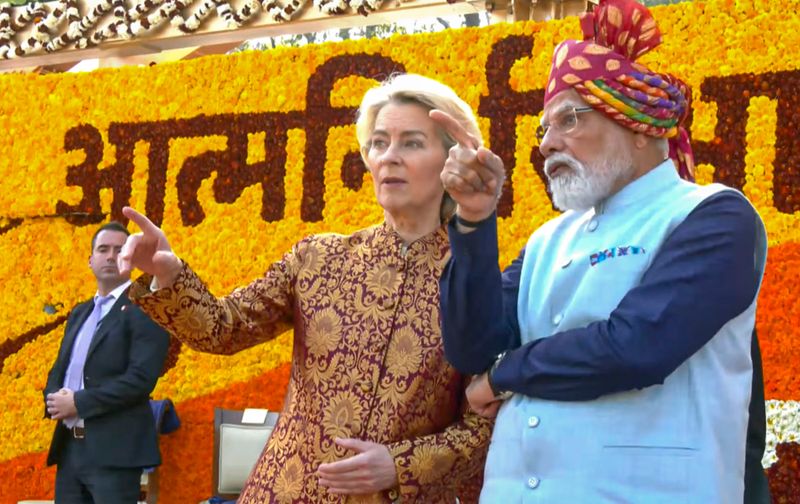
This development follows 18 years of negotiations, which began in 2007. Commerce and Industry Minister Piyush Goyal has hailed the FTA as “the mother of all deals” India has signed to date. A formal announcement is anticipated at the upcoming India-EU Summit, where European Commission President Ursula von der Leyen and European Council President Antonio Costa will engage in talks with Prime Minister Narendra Modi.
Economic Implications and Sectoral Impact
The FTA is expected to provide duty-free access to numerous Indian goods, particularly from labor-intensive sectors such as textiles, chemicals, gems and jewelry, electrical machinery, leather, and footwear. Currently, the EU imposes an average tariff of 3.8% on Indian goods, with higher duties on specific sectors.
The EU’s tariffs on Indian goods are about 3.8%, but labor-intensive sectors attract about 10% import duty. India’s weighted average duty on EU goods is about 9.3%.
In contrast, India maintains a weighted average duty of 9.3% on EU goods, with especially high tariffs on automobiles and parts, plastics, and chemicals. The FTA aims to reduce or eliminate these duties on over 90% of goods traded, while also liberalizing trade in services such as telecommunications and transportation.
Strategic and Global Trade Context
This pact is particularly significant in light of recent global trade disruptions, notably the United States’ imposition of high tariffs. The FTA is expected to aid Indian exporters in diversifying markets and reducing reliance on China. Additionally, negotiations are ongoing for agreements on investment protection and Geographical Indications (GI).
The India-EU FTA encompasses 24 chapters, covering trade in goods, services, and investment. In 2024-25, bilateral trade in goods between India and the EU reached USD 136.53 billion, with India enjoying a trade surplus of USD 15.17 billion.
India’s bilateral trade in goods with the EU was USD 136.53 billion in 2024-25, making the EU India’s largest goods trading partner.
Looking Ahead: Opportunities and Challenges
The EU, with a GDP of approximately USD 20 trillion and a population exceeding 450 million, stands as a major global trade player. Meanwhile, India, with its population of 1.4 billion, exported USD 437 billion in goods and USD 387.5 billion in services in 2024-25.
India’s major exports to the EU include petroleum products, electronics, textiles, machinery, and pharmaceuticals. Conversely, key imports from the EU consist of machinery, electronics, aircraft, and medical devices.
India’s major goods exports to EU in FY2025 included petroleum products (USD 15 billion); electronics (USD 11.3 billion); textiles (USD 1.6 billion); machinery, computer (USD 5 billion).
The FTA presents a transformative opportunity for both economies, fostering deeper economic ties and providing a framework for future cooperation. As the agreement moves towards implementation, stakeholders anticipate a new era of trade relations between India and the EU.